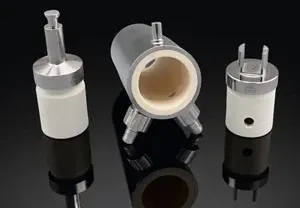
The solenoid valve is the last honest link in any shutdown chain — when the command comes, fuel stops. Woodward's family covers the duty in three recognizable builds: the SA-3838 universal solenoid for general service, the 5852-1062 wide-temperature build (-20 to +105°C) for environments that punish standard elastomers, and the 8250-1501 dedicated 12 V fuel-shutoff valve with IP65 sealing. Selecting among them is a three-question exercise: what medium, what temperature, what voltage and ingress world.
Universal service: the SA-3838
The universal build covers the general solenoid duties of engine and process panels — air, light fuel duties, general service where the media list is conventional. Its virtue is availability and cross-application familiarity; its discipline is checking the medium against the seal class like every valve decision.
Wide temperature: the 5852-1062
The -20 to +105°C window is the feature with a reason: outdoor skids, engine rooms without climate grace, and media that arrives hot or stays cold. Elastomer choice and coil class follow the temperature, and the 5852 build carries both — the valve for installations whose season, not just their process, tests the seals.
Dedicated fuel shutoff: the 8250-1501
The 12 V fuel-shutoff build is the shutdown-chain specialist: automotive-class 12 V operation for mobile and small genset architectures, IP65 sealing for the washdown and weather world, and a valve purpose-built to close on command and stay closed. Where the shutdown function is the valve's entire job, the dedicated build is the honest answer.
The decision rule
Medium first, temperature second, voltage and ingress third — in that order, because seals fail before coils and coils before connectors. All three land in the plant's solenoid valve population, and the shutdown logic upstream treats them identically.
Can one valve serve fuel and lube duty?
Only where the seals and the body rating accept both chemistries — the 5852 family's multi-media coverage exists for exactly that flexibility. The dedicated shutoff build stays dedicated; shutdown valves earn their reliability by not being generalists.
Why 12 V on a shutdown valve?
Mobile and small-set architectures run 12 V natively, and the shutdown chain inherits the battery's world — the valve that works when the alternator does not is the one specified for that grid. IP65 arrives with the same logic: the valve lives where the weather lives.