Industrial dust and fume extraction systems consume 20–40% of a factory's total electrical load. A 100,000 CFM baghouse running at full speed 24/7 because nobody knows whether half the welding stations are idle burns roughly $40,000–80,000 per year in fan energy alone. The control decision — local standalone or cloud-connected — determines whether that number can be cut in half. This article compares the two architectures across the dimensions that matter: energy cost, maintenance responsiveness, and the real difficulty of implementing remote access without creating a cybersecurity exposure.
What Local Control Does Well
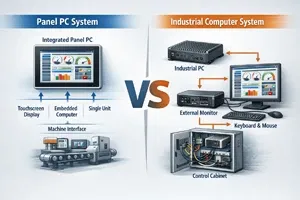
A local PLC or dedicated extraction controller directly wired to VFDs, damper actuators, and differential pressure sensors provides deterministic response — a pressure drop across a filter bank triggers a pulse-jet cleaning cycle within milliseconds, with no dependency on network latency or server availability. Local systems are self-contained: if the plant network goes down, extraction continues. For single-zone systems — one dust collector serving one process line — a local controller with a basic HMI is usually the lowest-cost option that meets the functional requirement. Maintenance staff can walk up to the panel and see filter differential pressure, fan speed, and damper position without logging into anything.
Where Local Control Falls Short
The limitations surface when the system scales. A factory with twelve dust collectors, eight fume extraction arms, and four welding stations spread across three buildings needs a unified picture. Local-only control means each unit is an island: filter change schedules are tracked on paper or in separate spreadsheets, a fan bearing that runs 15°C hotter than last month goes unnoticed until it fails, and energy-saving strategies like demand-based fan speed modulation across zones require manual coordination that rarely happens. The data exists — every VFD generates it, every pressure transmitter outputs it — but it stays trapped inside each local panel.
When Cloud-Based Monitoring Delivers Measurable ROI
Cloud connectivity breaks the data silos. A centralized dashboard aggregates differential pressure trends across all collectors, energy consumption per zone, filter remaining life estimates, and maintenance alerts. The ROI comes from three sources, all quantifiable:
- Energy savings: Coordinated VFD control across zones, driven by real-time occupancy of extraction points, typically reduces fan energy by 30–50%. At $0.10/kWh and 100,000 CFM, that is $30,000–50,000 per year.
- Filter life extension: Pulse-jet cleaning on a fixed timer over-cleans filters, shortening their life. Cloud-based cleaning triggered by actual differential pressure — measured and trended over months — extends filter life by 20–40%. A baghouse filter set that costs $8,000 replaced every 18 months instead of every 12 months saves $2,700 per year per collector.
- Unplanned downtime reduction: Bearing temperature trending, vibration monitoring, and differential pressure anomaly detection catch failures weeks before they happen. One avoided production stop pays for the cloud subscription for years.
The Architecture Question: Cloud-Only or Hybrid?
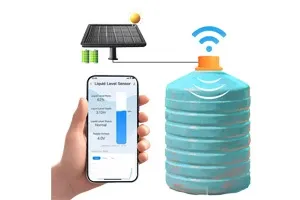
A purely cloud-dependent architecture — where the extraction system stops if the internet connection drops — is unacceptable in production environments. The correct model is hybrid: a local controller runs the extraction process autonomously, while a parallel data path streams operational metrics, alarms, and trend data to a cloud platform for visualization, analytics, and remote notification. The local controller handles the millisecond-level control; the cloud handles the hour-level and week-level analysis. The Fumex Sync Control Unit exemplifies this architecture — it provides automatic ventilation control locally with 24V operation and damper actuation, while its remote communication capability enables centralized monitoring without putting the extraction process at the mercy of WAN latency.
What About Cybersecurity?
Connecting an extraction controller to the cloud creates an attack surface that did not exist when the system was isolated. The mitigation is not to avoid connectivity — it is to enforce outbound-only data flow. The controller pushes data to the cloud via MQTT or HTTPS; it never accepts inbound control commands from the cloud unless explicitly configured for remote setpoint adjustment, and even then, the local controller maintains an independent high-limit safety interlock. For sites with strict IT/OT separation, a managed industrial Ethernet switch with VLAN segmentation isolates extraction traffic from the business network while allowing the cloud gateway a single, firewall-controlled egress point.
Decision Framework: Local vs Cloud by System Scale
| System Profile | Recommended Architecture | Key Justification |
|---|---|---|
| 1–2 collectors, single building | Local control only | Walk-up access sufficient; cloud ROI below breakeven |
| 3–5 collectors, multi-zone | Hybrid: local + cloud monitoring | Coordinated VFD scheduling justifies connectivity cost |
| 6+ collectors, multi-building | Hybrid mandatory | Centralized filter management and energy analytics pay back in <12 months |
| Compliance-regulated (pharma, food) | Hybrid with validated data logging | Cloud audit trail supports 21 CFR Part 11 / ISO 8573 compliance |
The choice between local and cloud-based extraction control is not binary — it is a question of what data you need, how fast you need it, and whether the energy and maintenance savings of centralized visibility exceed the cost of connectivity hardware and a gateway. For single-collector installations, local control wins on simplicity. For multi-zone facilities where filter changes are tracked on whiteboards and fan energy is an unmanaged cost, a hybrid architecture with local control autonomy and cloud analytics pays for itself within the first year. Browse our gas and particulate monitoring catalog for extraction-related instrumentation, or explore HMI and industrial PCs for local control panel solutions.