A flexible pouch with a 15-micron pinhole passes visual inspection, holds its contents on the shelf for three weeks, and then arrives at the customer's loading dock with a colony of mold inside the headspace. The leak was too small to see, too slow to drip, but large enough for airborne bacteria to enter. Vacuum-based leak detection — specified in ASTM D3078 and D4991 — is the standard method for finding these invisible package defects before the product leaves the factory. This article explains what each method measures, what they miss, and how to choose between them.
Why Vacuum? The Physics of Package Leak Detection
A sealed package at atmospheric pressure contains gas (air or modified-atmosphere headspace) at roughly 14.7 psi. Submerge that package in a vacuum chamber, evacuate the chamber, and the pressure differential between the inside of the package and the evacuated chamber drives gas or product to escape through any leak path. The key insight: the vacuum does not "suck" the leak open — it increases the pressure differential across the package wall, forcing the internal gas to flow outward through any defect. A package that shows no visible leak at atmospheric pressure differential can produce a vigorous stream of bubbles or a measurable pressure rise when the differential is increased from zero to 10–15 psi equivalent.
The physics is governed by the Hagen-Poiseuille equation for laminar flow through a capillary: the volumetric leak rate is proportional to the fourth power of the defect diameter and the pressure differential across the defect. A 10-micron pinhole under a 13.5 psi differential (typical for ASTM D3078 at 25 inHg vacuum) has 100× the leak rate of the same pinhole at 1 psi differential. The vacuum amplifies the leak signal into a detectable range.
ASTM D3078: Bubble Emission Method
ASTM D3078 is the workhorse method for flexible and semi-rigid packages — pouches, blister packs, IV bags, and tray-sealed products. The test is straightforward: submerge the package in a transparent vacuum chamber filled with water or another immersion fluid, pull a vacuum (typically 15–25 inHg, depending on the package type and specification), and watch for bubbles. A steady stream of bubbles from a specific location on the package surface marks the leak site.
The method's strength is its simplicity and visual certainty. There is no sensor calibration, no interpretation algorithm — the operator sees the bubbles or does not. The method locates the leak site (unlike decay methods, which say "this package leaks" but not "the leak is at the corner seal 3 mm from the edge"), which enables root-cause analysis: was the sealing bar temperature too low? Is there product residue on the seal area?
Its weakness is sensitivity variation. The detection threshold depends on the operator's visual acuity, the vacuum level, the immersion fluid surface tension, and the package headspace volume. A flat pouch with minimal headspace may not contain enough gas to produce visible bubbles even if the leak is large. The method is also destructive for products that cannot be immersed in water.
ASTM D4991: Vacuum Decay Method
ASTM D4991 measures the pressure change inside a vacuum chamber after evacuation. A sealed package is placed in a test chamber, the chamber is evacuated to a target vacuum level, and a high-resolution pressure transducer monitors the chamber pressure for a defined dwell time (typically 10–60 seconds). If the package leaks, gas escapes from the package into the chamber, causing the chamber pressure to rise — the "vacuum decay." A pressure rise above the acceptance threshold (typically 0.1–5 Pa/s, calibrated against a known leak standard) flags the package as defective.
This is a quantitative, sensor-based method that gives a numerical leak rate, not a binary bubble/no-bubble observation. It is operator-independent — the pass/fail decision is based on a calibrated pressure transducer, not a human watching a water bath. And it is non-destructive for the product (the package is not submerged), making it suitable for in-process sampling or 100% inline testing on high-value products.
The trade-off: vacuum decay cannot locate the leak site. It says the package leaks at a rate of X Pa/s; it does not say where. For troubleshooting a sealing process, you still need D3078 or a tracer-gas method (helium sniffer or CO2 detection) to find the leak location. Vacuum decay testing also requires a chamber with precision-machined seals and a high-accuracy pressure transducer — a more expensive instrument than the bell jar and vacuum pump used for D3078.
Method Selection: When to Use Each
| Criterion | ASTM D3078 (Bubble) | ASTM D4991 (Vacuum Decay) |
|---|---|---|
| Leak location | Yes — visual bubble stream | No — only leak rate |
| Quantitative result | No — binary pass/fail | Yes — numerical leak rate |
| Operator dependence | High — visual judgment | Low — transducer-based |
| Product contact with fluid | Yes — package submerged | No — dry test |
| Minimum detectable leak | ~10–15 μm pinhole | ~5–10 μm pinhole |
| Typical test cycle | 15–30 seconds | 30–120 seconds |
| Inline automation | Difficult (submersion) | Practical (dry chamber) |
Use D3078 for: seal-process development and troubleshooting (you need to know where the leak is), low-cost periodic QA sampling, non-moisture-sensitive products where immersion is acceptable, and validation of D4991 results when a quantitative failure needs visual confirmation.
Use D4991 for: automated inline testing at production speed, high-value products where immersion damage is unacceptable, products with minimal headspace that cannot generate D3078 bubbles, and any application requiring a calibrated, auditable numerical leak rate for regulatory submission.
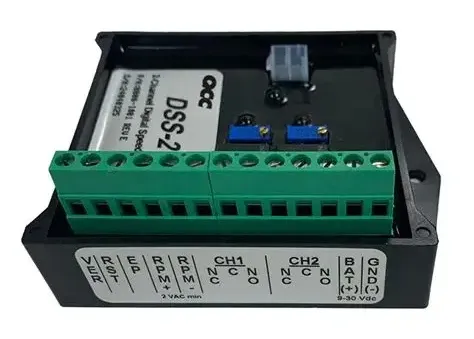
Vacuum measurement and control instruments like the Pfeiffer Vacuum DPG 202 panel-mount PID controller provide the precision pressure monitoring and control capability needed for vacuum-decay test chambers, integrating directly with vacuum pump systems and chamber vent valves for automated test sequencing.
D3078 tells you where the leak is. D4991 tells you how bad it is. A well-engineered package testing program uses D3078 during process development and D4991 for ongoing production verification — each one doing what the other cannot.