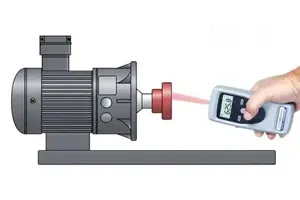
The magnetic pickup's pulse is honest at the gear and fragile on the wire: long runs, shared trays and ground loops degrade exactly the signal the governor's life depends on. Woodward's ecosystem answers with two architectures — the 1751-6058 four-channel MPU isolation transformer, and the 5464-658 digital speed-sensor module with its calibration-free conversion — and choosing between them is choosing how the speed signal survives its journey.
The isolation route: analog, amplified, defended
The 1751-6058 takes raw MPU signals, isolates them at 2500 VAC class, and hands the governor clean analog pulses — the architecture for shared panels where ground potential differences and switching noise ride every cable. Four channels per module make it the fleet answer: four engines' MPUs, one conditioned panel. Its discipline is analog: gain, filtering and installation symmetry remain the engineer's craft.
The digital route: convert early, calibrate never
The 5464-658 converts at the module — digital speed data leaving the module instead of fragile analog waves — and its calibration-free design deletes a recurring commissioning task. Where the governor generation accepts digital speed input, this is the lower-maintenance architecture: the signal that arrives is the signal that was measured, immune to the analog journey.
The decision rule
Legacy governors wanting analog pulses, shared panels, ground-loop suspicion: the isolation transformer. Modern digital-ready governors, noise-hostile plants, maintenance-light ambitions: the digital module. Both serve the same sensing ecosystem, and the MPU at the gear is identical — the journey is what differs.
Why isolate an MPU signal at all?
Ground potential differences across a plant can be volts — enough to ride on the microvolt MPU signal and lie to the governor. Isolation breaks the path; the 2500 VAC class is not decoration, it is the plant's reality in numbers.
Does the digital module work with any MPU?
With standard passive MPUs, yes — the module's input matches the sensor's pulse character. Very low tooth counts and exotic sensors want the datasheet check, like every signal-chain decision.