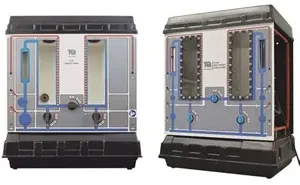
Between the pure-electric actuator and the full hydraulic system sits the electro-hydraulic governor actuator: an electric control stage commanding a hydraulic power stage, sized where fuel systems need torque that servomotors deliver reluctantly. The Woodward EGB-13P (8240-381 class) is the family's reference — 18 Nm of output, 20–160 mA command input, and a mechanical backup feature that keeps the fuel positioned if the electric stage fails. Its siblings EGB-10P and EGB-35P scale the same idea across torque classes.
Why electro-hydraulic at all
Large fuel systems — gas turbines, big diesels, steam-admission valves — need actuator work proportional to their size, and the physics is unforgiving: torque at the shaft, stiffness under load, and response without the inertia of a big motor armature. The EGB's hydraulic stage delivers that force from a compact package, while its electric stage keeps the precision and the signal compatibility of an electronic governor. The combination is why the family has governed heavy fuel systems for decades.
Mechanical backup: the honest failure story
The 13P's mechanical backup is the feature that separates it from smaller actuator families: on electric failure, a mechanical linkage holds or drives the fuel to a defined position — the engine does not find its fuel at the mercy of a dead actuator. For installations where the failure mode "actuator dead" must not equal "engine uncontrolled," the backup is the specification line that buys the sleep.
The decision rule
Torque class decides the family member: EGB-10P for the smaller shafts, 13P at 18 Nm for the heavy middle, 35P above. Electric-versus-electrohydraulic decides the architecture: if a servomotor of honest size fits the fuel system's torque and stiffness demand, stay electric; when the numbers say otherwise, the EGB's hydraulic stage is the honest answer. All integrate to the same governor control signal conventions — the 20–160 mA input is a standard language.
What maintenance does the hydraulic stage want?
Oil condition and pressure above all — the hydraulic stage is a small power plant. Filter service and contamination discipline dominate its maintenance story; the electric stage is nearly free of it.
When does the mechanical backup matter?
Whenever the engine's response to lost fuel control is dangerous or expensive — large gensets on critical buses, mechanical-drive turbines, marine propulsion. On a small pump engine, the backup is a comfort; on a train's drive, it is the spec.