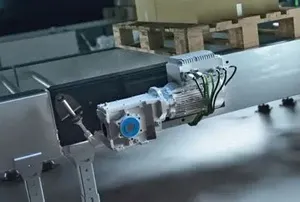
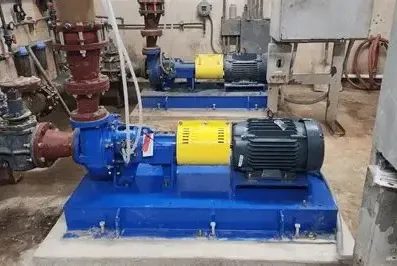
Governor architectures divide on one question: where the control intelligence lives. The DYNA world answers "separately" — a controller module like the DYN1-10754 class (PID control, 24 V) paired with a dedicated actuator such as the DYNA 2500, connected by signal and mechanics rather than by shared housing. Woodward's DPG line — the DPG-2201 among them — represents the integrated successor philosophy. Matching the split to the machine is a maintenance and a performance decision at once.
What the split buys
Serviceability first: the controller and the actuator fail at different rates and get replaced independently — a control failure is a module swap, an actuator wear-out is a mechanical job, and neither drags the other into the work order. Sizing second: the actuator matches the fuel system's torque and travel; the controller matches the control logic. Machines with unusual fuel geometry — the reason DYNA-class actuators exist — get exactly the actuator they need without compromising the control.
What integration buys back
Wiring, commissioning simplicity and a single part number: the integrated governor packages control and actuation with factory-matched dynamics. For standard engines in standard duties, that integration is faster to buy and easier to keep. The DPG generation's button-set operation adds a field-tuning story that pure DYNA pairs handle differently.
The decision rule
Non-standard fuel systems, heavy actuators, maintenance cultures that stock modules: the DYNA split. Standard engines, fleet simplicity, one-part-number procurement: the integrated DPG class. Both answer to the same governor signal conventions — 24 V control and standard command inputs — so the plant documents one interface even when the architectures differ per machine.
Can a DPG replace a DYNA pair one-for-one?
When the actuator torque class matches and the mounting suits, yes — the successor line's purpose is exactly that migration. Where the DYNA actuator exists because the fuel system is unusual, the pair remains the honest answer; integration cannot stretch to geometry.
What fails first in the split architecture?
Statistically the actuator — it lives in the fuel environment and moves all day. Which is the argument for the split: the failure you expect is the module you planned to replace.