
Product Specifications
- Brand
- Oring Industrial Networking Corp.
- Part Number
- OL-BT5GA1-NBG-UR
- Type
- NB-IoT/CAT M1 Smart Lighting Controller
- Input Voltage
- 110–240V AC, 50/60 Hz
- Output Load
- Max 2A, 0–10V Dimming + DALI 10 mA
- Power Consumption
- <1.35W Typical
- NB-IoT Bands
- B1/B2/B3/B4/B5/B8/B12/B13/B20/B28
- Protocols
- MQTT, CoAP
- Monitoring
- Vrms, Irms, Power Factor, Frequency, Power (W)
- Fault Detection
- Over/Under Voltage, Over/Under Current, Lamp/Driver Fault
- Sensors
- G-Sensor (Tilt), Ambient Temperature
- Protection
- EN 55032/55024, IEC 61000-4-2/3/4/5/6, Surge 2 kV
- Operating Temperature
- -20 to +50°C
Product Description
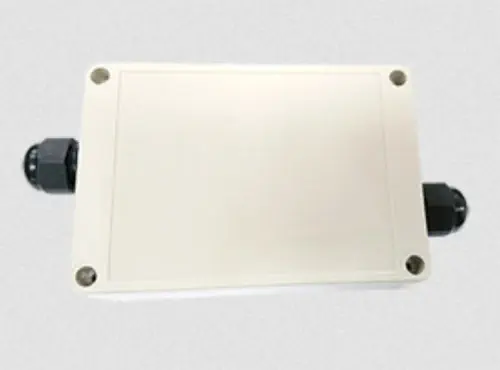
The OL-BT5GA1-NBG-UR is a cellular IoT smart lighting controller from Oring Industrial Networking Corp. (Taiwan) that connects individual street lamps to a central management platform over NB-IoT or CAT M1 LPWAN networks — no gateway, no concentrator, no local network infrastructure required. Each controller reports directly to the cloud via MQTT or CoAP protocols, making it suitable for geographically dispersed municipal lighting networks where installing and maintaining a parallel communications infrastructure would be cost-prohibitive. The 7-pin cable interface handles AC mains input (110–240V), switched lamp output (2A max), 0–10V dimming control, and an auxiliary DALI bus for digital luminaire communication.
What electrical parameters does the controller monitor?
Beyond simple ON/OFF/dimming control, the OL-BT5GA1-NBG-UR continuously measures and reports per-lamp electrical parameters: true RMS voltage, RMS current, power factor, line frequency, and active power in watts. This per-lamp metering transforms a street lighting network into a distributed power quality monitoring system — identifying failing lamps (rising current before burnout), damaged cables (falling power factor), and energy theft (unexpected load) at the individual luminaire level. Configurable over/under voltage and over/under current thresholds trigger automatic fault alerts. An integrated G-sensor detects pole tilt from vehicle impact or vandalism, generating immediate alarms.
How does the controller manage lighting schedules?
A predestinate schedule engine executes time-based and astronomical-clock lighting profiles autonomously — the controller continues operating its programmed schedule even if NB-IoT connectivity is temporarily lost. Smart power-saving mode reduces lamp output during low-traffic overnight hours based on configurable time windows. The 0–10V analog dimming output provides smooth, flicker-free brightness control compatible with standard LED driver dimming inputs, while the DALI output supports digital luminaires requiring bidirectional communication. EMC compliance to EN 55032/55024 and surge protection to 2 kV (IEC 61000-4-5) ensure reliable operation on electrically noisy street lighting circuits.
Oring OL-BT5GA1-NBG-UR NB-IoT/CAT M1 Smart Lighting Controller, 0-10V Dimming, 110-240V AC
Product Specifications
- Brand
- Oring Industrial Networking Corp.
- Part Number
- OL-BT5GA1-NBG-UR
- Type
- NB-IoT/CAT M1 Smart Lighting Controller
- Input Voltage
- 110–240V AC, 50/60 Hz
- Output Load
- Max 2A, 0–10V Dimming + DALI 10 mA
- Power Consumption
- <1.35W Typical
- NB-IoT Bands
- B1/B2/B3/B4/B5/B8/B12/B13/B20/B28
- Protocols
- MQTT, CoAP
- Monitoring
- Vrms, Irms, Power Factor, Frequency, Power (W)
- Fault Detection
- Over/Under Voltage, Over/Under Current, Lamp/Driver Fault
- Sensors
- G-Sensor (Tilt), Ambient Temperature
- Protection
- EN 55032/55024, IEC 61000-4-2/3/4/5/6, Surge 2 kV
- Operating Temperature
- -20 to +50°C