
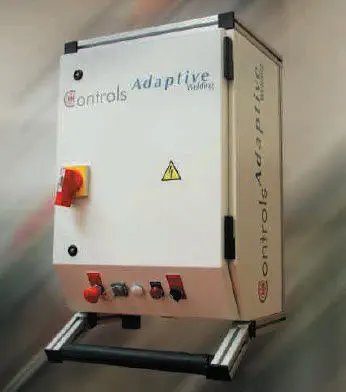
Product Specifications
- Brand
- ARO Technologies SAS
- Part Number
- SW series
- Product Type
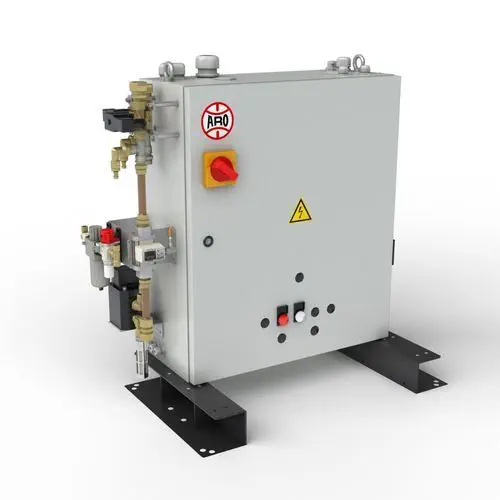
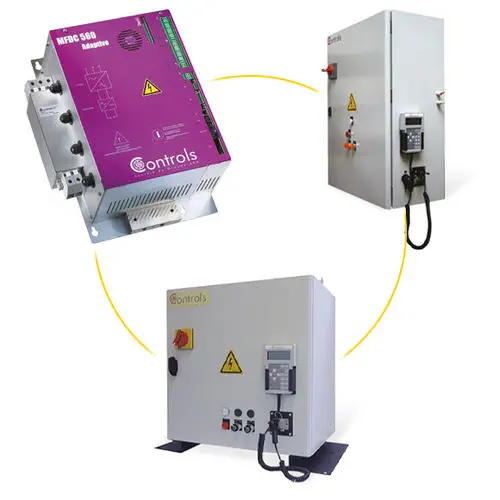
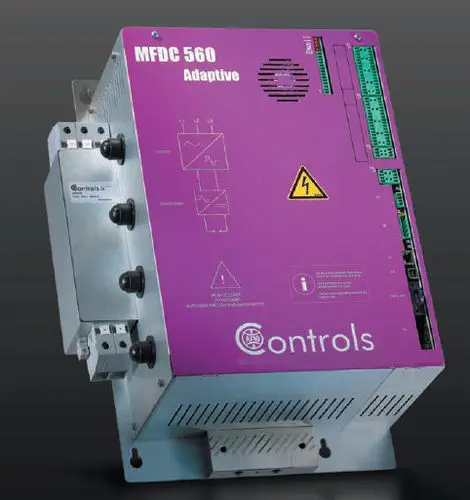
- MFDC Welding Process Control System
- Inverter Options
- 560 A, 800 A, 1,200 A, 2,400 A
- Max Welding Current
- Up to ~100 kA
- Schedules
- Up to 256 welding schedules
- Fieldbus
- EtherNet/IP, Profinet IO, DeviceNet, Profibus DP, Interbus-S
- Process Monitoring
- Adaptive Welding (AW) with self-learning mode, Steel Quality Assurance (SQA) percentage scoring
- Applications
- Robotic spot welding, manual welding (2 guns/1 operator), stationary machine welding, aerospace (Al, Ti, stainless steel)
- Force Control
- Servo-actuated guns with force sensors for force monitoring and control
Product Description
The SW series is ARO's MFDC welding control platform that shifts resistance welding from "set current and hope" to closed-loop, quality-scored process control. Unlike conventional AC or basic MFDC timers that deliver a fixed current profile regardless of what's actually happening at the weld interface, the SW controller monitors the dynamic resistance of each spot weld as it forms and adjusts the welding parameters in real time to maintain a consistent nugget — compensating for electrode tip wear, surface contaminants, varying material thickness within tolerance bands, adhesive or sealer presence between sheets, and shunting current through adjacent already-welded spots.
How does Adaptive Welding (AW) work?
Adaptive Welding continuously monitors the instantaneous resistance across the weld electrodes during the weld pulse. As the base material heats, its resistivity increases (positive temperature coefficient for steel); as it melts and the nugget grows, the resistance drops as the molten zone provides a larger cross-sectional conduction area. The resistance-vs-time curve has a characteristic shape that correlates with nugget size. AW compares the real-time resistance curve against a stored reference from a known-good weld. When deviations are detected — a slower resistance rise due to tip wear reducing current density, or a premature drop due to excessive expulsion — the controller compensates by adjusting current, weld time, or force within the same weld pulse. The self-learning mode allows an operator to make one good reference weld on a new gun or setup; the controller copies that curve signature to all other guns on the line, eliminating per-gun manual tuning.
What does the SQA quality percentage mean?
Steel Quality Assurance assigns each spot weld a quality score from 0% to 100% based on how closely the measured dynamic resistance curve matches the reference signature. A score of 95%+ indicates a weld virtually identical to the reference. Scores below a configurable threshold — typically 80–85% — trigger an alarm and can automatically route the part to a repair station. This per-spot traceability is essential for automotive Body-in-White production, where a single missed or undersized weld on a structural member can fail crash-test requirements, and for aerospace welding where each spot must be individually documented and traceable to meet certification standards.
Which fieldbus is appropriate for a given automation architecture?
The SW controller supports five fieldbus protocols without gateway modules — selectable via configuration rather than hardware swap. EtherNet/IP and Profinet IO are preferred for new installations with Rockwell or Siemens PLC architectures respectively, providing high-speed cyclic data exchange for weld schedule selection, start, and quality feedback. Profibus DP and DeviceNet remain available for legacy line upgrades. Interbus-S support addresses the European automotive tier-1 supplier installed base. All protocols provide access to the same data set: weld schedule selection, start/stop, fault codes, and per-spot SQA quality percentages for traceability databases.
Resources & Documentation
ARO SW | MFDC Welding Control System with Adaptive Quality Assurance, 560–2,400 A Inverters
Product Specifications
- Brand
- ARO Technologies SAS
- Part Number
- SW series
- Product Type
- MFDC Welding Process Control System
- Inverter Options
- 560 A, 800 A, 1,200 A, 2,400 A
- Max Welding Current
- Up to ~100 kA
- Schedules
- Up to 256 welding schedules
- Fieldbus
- EtherNet/IP, Profinet IO, DeviceNet, Profibus DP, Interbus-S
- Process Monitoring
- Adaptive Welding (AW) with self-learning mode, Steel Quality Assurance (SQA) percentage scoring
- Applications
- Robotic spot welding, manual welding (2 guns/1 operator), stationary machine welding, aerospace (Al, Ti, stainless steel)
- Force Control
- Servo-actuated guns with force sensors for force monitoring and control
Resources & Documentation
Tecna TE700
IGBT Welding Control, 300 Programs 200kA