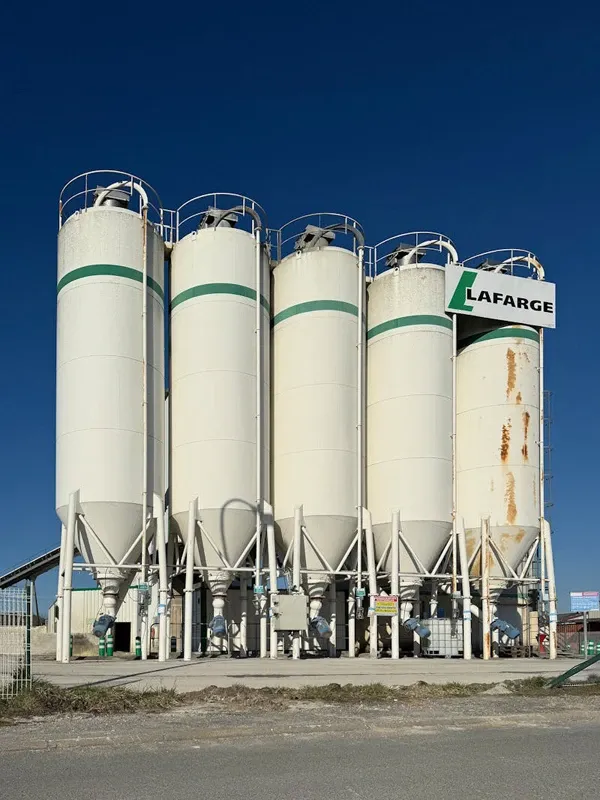
A cement silo during filling is one of the harshest measurement environments in any plant. Dust concentrations reach 50 g/m³. The material surface is a moving cone—45 degrees on a bad day. Water vapor from hot clinker condenses on the sensor antenna. And the plant operator in the control room sees "0.00 m" on the display and assumes everything is fine, because ultrasonic sensors measure the dust cloud, not the cement below it.
This is not a brand problem. Replacing one ultrasonic unit with another ultrasonic unit from a different manufacturer will not fix it. The issue is the physics of the measurement. Sound waves at 50 kHz attenuate in airborne dust exactly the way your voice gets muffled in a snowstorm—the energy scatters before it reaches the surface and returns. The table below compares the four technologies that compete for this application, ranked by their ability to handle the conditions inside a real silo.
| Technology | Beam Angle | Vulnerable To | Typical Price Point |
|---|---|---|---|
| Ultrasonic | 5–10° | Dust, vapor, temperature layers, foam | Lowest |
| 26GHz Radar | 10–15° | Tank internals, false echoes from walls | Moderate |
| 80GHz Radar | 3–4° | Minimal—narrow beam avoids most obstacles | Moderate-High |
| Guided Wave Radar | N/A (contact probe) | Probe coating with sticky solids, tensile load on cable | Highest |
Why 80GHz Radar Cuts Through Where Ultrasonic Cannot
Radar uses electromagnetic waves, not sound. Electromagnetic energy at 80 GHz passes through airborne dust with negligible attenuation—dust particles are orders of magnitude smaller than the 3.75 mm wavelength. The beam is only 3–4° wide, compared to 5–10° for ultrasonic and 10–15° for older 26 GHz radar. In a silo 3 meters in diameter and 30 meters tall, a 10° beam is 5.2 meters wide when it reaches the bottom—it hits the wall and the material surface simultaneously, and the sensor reports whichever echo arrives first. A 3° beam at the same distance is 1.6 meters wide—it fits inside the silo and strikes only the material.

Four Sensors That Handle Solids When Ultrasonic Quits
If your ultrasonic sensor is giving you false highs, dead readings, or numbers that drift every time the dust kicks up, you need a sensor built for a different set of physics. Two 80GHz free-space radars and two guided wave radars in our catalog are designed specifically for solids measurement in the conditions where ultrasonic fails:
- E+H Micropilot FMR67B
- Purpose-built for bulk solids: 80 GHz, 125-meter range, 3° beam. Its antenna is designed to operate with a layer of dust on the lens—the signal passes through dust accumulation that would blind an ultrasonic transducer within hours. Used on cement silos, fly ash hoppers, and grain elevators where the fill cycle generates a dust cloud thick enough to stop a forklift driver from seeing the far wall.
- E+H Micropilot FMR66B
- 80 GHz for solids up to 50 meters. The smaller sibling of the FMR67B. When your silo is under 50 meters and the budget matters, the FMR66B gives you the same 3° beam and dust immunity in a lower-cost antenna. For aggregate bins, foundry sand hoppers, and animal feed mills where the FMR67B's 125-meter capability is overkill.
- KROHNE OPTIFLEX 8200
- Guided wave radar for extreme conditions: high temperature, high pressure, aggressive chemicals. Instead of a free-space antenna, it uses a cable probe that contacts the material directly. Because the pulse travels down the probe—not through the air—foam, vapor, and dust are irrelevant. The trade-off: the probe must span the full measurement range and can experience tensile load from solids pulling on the cable during discharge.
- KROHNE OPTIFLEX 7200
- Guided wave radar with interface capability. If your silo or tank contains two liquids—oil on water, solvent on aqueous phase—a single probe detects both levels. No free-space radar can do this, because the upper liquid surface reflects the signal before it reaches the lower interface.
When to Use What: A Practical Decision Flow
What is the difference between 80GHz free-space radar and guided wave radar for solids?
Free-space 80GHz radar like the FMR67B measures from above—no contact with the material. It handles dusty environments and tall silos well, but a layer of sticky material buildup on the antenna eventually requires cleaning. Guided wave radar like the OPTIFLEX 8200 places a probe in direct contact with the material. It ignores dust, vapor, and foam completely, but the probe experiences mechanical load—solids pulling on the cable during discharge, abrasive wear on the probe rod, and potential breakage if large chunks of material shift inside the silo. Choose free-space radar when the material is free-flowing powder or granules. Choose guided wave when the material is sticky, the tank is agitated, or you need to measure through heavy vapor that would attenuate even an 80GHz signal.
Can 80GHz radar measure through a plastic or fiberglass tank roof?
Yes, provided the roof material is non-conductive and the thickness is consistent. Polyethylene, polypropylene, fiberglass, and PTFE tank lids are transparent to 80GHz signals. However, the roof must be flat and dry—condensation droplets on the underside of the roof create a reflective surface that blocks the radar from reaching the product below. If your tank breathes humid air and the roof temperature cycles below dew point, plan for a nozzle-mounted installation that extends the antenna past the roof, or switch to guided wave radar with a probe that penetrates the roof at a single point.
Should I replace my ultrasonic sensor with radar, or just add a dust shield?
A dust shield on an ultrasonic transducer reduces dust accumulation on the sensor face but does not solve the fundamental problem: sound waves still attenuate in the airborne dust between the sensor and the material. If your ultrasonic sensor reads correctly when the silo is idle but goes blind within 30 seconds of the fill cycle starting, a shield will not help. Replace it with an 80GHz radar. If your ultrasonic sensor reads reliably year-round and your only issue is occasional cleaning due to dust caking on the transducer face, a shield plus a more frequent cleaning schedule may be sufficient. The test: run the fill cycle. If the reading holds steady throughout, keep the ultrasonic. If it drops to zero or jumps to maximum during filling, the technology is wrong, not the maintenance.
Related Content
- Browse all level sensors — radar, ultrasonic, capacitive, and point-level switches for every material type
- Browse level transmitters — continuous level measurement with 4-20mA, HART, and Modbus output
- Browse point level switches — when you only need high/low detection, not continuous measurement
A dust cloud is not a product surface. If your sensor cannot tell them apart, it is measuring the wrong thing—and so is your inventory system.