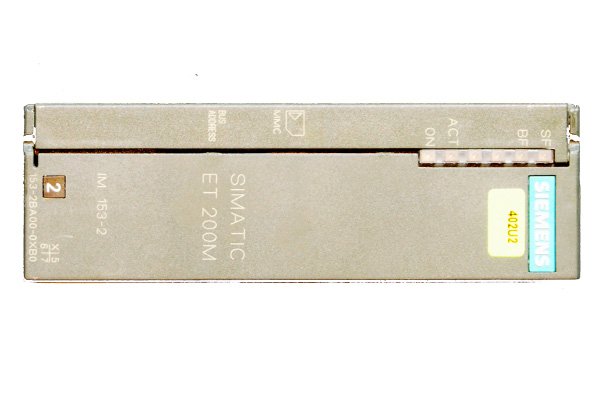
You are looking at two ET 200eco modules on a bill of materials. One is a standard 8-channel digital input. The other is the F-DI 8x PROFIsafe variant — same IP67 enclosure, same M12 connectors, same PROFINET cable. The safety version costs 3 to 5 times more. An accountant sees two identical-looking parts with an inexplicable price gap. An automation engineer sees two fundamentally different categories of device. This article explains what that price difference actually buys, how PROFIsafe manages to carry SIL 3 safety signals over the same Ethernet cable that carries your HMI traffic, and whether a distributed safety I/O module like the 6ES7146-6FF00-0AB0 (ET 200eco PN PROFIsafe F-DI 8x + F-DQ 3x) can replace the row of hardwired safety relays in your control panel.
What Makes a Safety Input Different from a Standard DI
A standard digital input does one thing: it reads a 0 or a 1 and passes that bit to the controller. If the input circuit fails, if the optocoupler drifts, if a transient flips the bit — the controller never knows. It trusts the bit blindly. A PROFIsafe F-DI module does not trust its own hardware. Every input channel is built with a dual-channel architecture: two independent sampling paths read the same physical signal, and an internal microprocessor cross-compares them before the value is declared valid. If the two paths disagree for even one cycle, the channel trips to the safe state and flags a discrepancy error.
This is the first layer of what you pay for. The silicon is different — redundant signal chains, dedicated diagnostic circuitry, and an on-board safety processor that runs firmware certified to IEC 61508 SIL 3. That certification is not a one-time lab test. It means every line of firmware was developed under a V-model software lifecycle with full traceability from safety requirement to validated binary, audited by a notified body such as TÜV. A standard DI module's firmware might be developed by two engineers over six weeks. A PROFIsafe module's safety firmware involves a team of functional safety specialists, third-party assessors, and a documentation trail measured in binders — all before the first unit ships.
The Black Channel: How SIL 3 Runs on Standard Ethernet
The single most misunderstood fact about PROFIsafe is that the PROFINET network itself is not safety-rated. You can use standard copper cable, standard RJ45 or M12 connectors, and — critically — standard unmodified PROFINET switches. PROFIsafe treats the entire communication path as an untrusted black channel. The safety function is implemented entirely in the endpoints: the F-Host (the safety CPU) and the F-Device (the safety I/O module).
The PROFIsafe layer wraps every safety telegram in four protective measures before handing it to the standard PROFINET stack:
- Consecutive numbering
- Every safety telegram carries a 24-bit sequence counter. A single missing, repeated, or reordered frame is detected and triggers a safety trip. This defeats packet loss, switch buffer replay, and man-in-the-middle insertion.
- Time monitoring with timeout
- The F-Device expects a fresh safety telegram within a configured watchdog interval — typically 10 to 50 ms. If the network cable is unplugged, if a switch port freezes, or if the F-Host's safety task stalls, the timeout expires and the outputs de-energize to the safe state. No explicit "fault" message is needed; silence itself is the trip condition.
- CRC signature — 24-bit or 32-bit
- PROFIsafe appends a cyclic redundancy check over the safety payload, the sequence number, and a unique device codename. The CRC polynomial is chosen so that the residual error probability for a corrupted message passing the check is below 10⁻⁹ per hour — well under the SIL 3 target of 10⁻⁷ dangerous failures per hour for the entire safety function.
- Unique codename (F-Address + F-Parameter CRC)
- Every F-Device is configured with a unique PROFIsafe address and a parameter CRC that encodes its expected configuration. If a maintenance technician accidentally plugs the wrong F-Device into a drop point, the CRC mismatch prevents it from joining the safety loop. This addresses one of the most common causes of safety system failure after commissioning: misconnection during replacement.
These four mechanisms together mean that the black channel can lose, delay, reorder, corrupt, or misroute packets — and the safety function will detect the fault and trip within the configured watchdog time. The PROFINET infrastructure does not need to be safety-certified. You can run PROFIsafe traffic through the same managed switches and copper that handle your standard cyclic I/O, TCP/IP diagnostics, and even video if the bandwidth allows.
Why the 3–5× Price Multiplier
Beyond the dual-channel hardware and certified firmware, several structural costs push the price of a safety module well above its standard counterpart:
- Per-unit traceability. Every PROFIsafe module carries a unique serial number linked to its production test record. If a field return investigation ever traces a systematic fault to a particular production batch, the manufacturer must be able to identify every unit in that batch and its distribution channel — a requirement that adds cost to manufacturing execution and logistics.
- Type-test recertification. If the firmware changes, if a component goes end-of-life and a substitute is qualified, or if the PCB layout is revised, the module must be re-assessed by the notified body. A standard DI module can swap an optocoupler with minimal paperwork. A safety module cannot.
- Liability and insurance. The manufacturer carries product liability for a device whose failure can result in injury or fatality. Part of the purchase price is an insurance premium built into the component cost.
- Low-unit economics. For every PROFIsafe module sold, the manufacturer ships hundreds of standard I/O modules. The non-recurring engineering cost of the safety certification is amortized over a far smaller volume.
Whether that premium is worth it depends entirely on the scale and complexity of your safety architecture — which brings us to the question that divides control panel designers.
Safety Relays vs. Distributed Safety I/O: When to Use Which
A hardwired safety relay does one safety function. You wire the e-stop, the guard switch, or the light curtain directly to its input terminals, and its force-guided output contacts interrupt the hazardous motion power path. It works. It is simple. It has been doing the job for decades. And for small machines with fewer than five safety functions, it is often still the right answer.
PROFIsafe distributed I/O changes the economics once the number of safety devices crosses a threshold. Instead of running two dedicated wires from every e-stop and guard switch back to a cabinet full of individual safety relays, you mount an IP67 F-DI module on the machine frame and connect all nearby safety devices to it with short local cables. One PROFINET cable carries all safety signals back to the controller — alongside the standard I/O data, on the same wire.
| Aspect | Hardwired Safety Relay | PROFIsafe Distributed I/O |
|---|---|---|
| Wiring per safety device | 2 conductors back to cabinet | Short local cable to field I/O block |
| Diagnostics | Contact state only — a welded contact is invisible until the next test | Per-channel status, timestamped fault logs, discrepancy alarms, health monitoring |
| Scalability | Linear — each added safety function adds one relay, more DIN rail, more cabinet wiring | Flat — add F-DI slices or connect devices to existing module capacity |
| Complex interlocking | Requires relay logic or a safety PLC anyway | Native — safety logic executes in the F-CPU with full programming flexibility |
| Best for | Fewer than 5 safety functions, simple stop-via-contactor logic, budget-constrained standalone machines | More than 10 safety devices, zoned safety, machines with modular tooling, lines that get reconfigured |
The sweet spot for a module like the ET 200eco F-DI 8x + F-DQ 3x is a medium-complexity machine cell — perhaps a robotic welding station — with two e-stops, three guard switches, a light curtain, and a couple of enable switches. Hardwired, that many safety devices would fill half a panel with relays, terminal blocks, and cross-wiring. With PROFIsafe, they terminate locally to one field-mounted block, and every device reports its individual health status to the controller.
A PROFIsafe module does not eliminate safety relays entirely. It replaces evaluation relays — the ones that monitor inputs and make safety decisions — but the output side may still use force-guided contactors to remove power from hazardous motion. The F-DQ output on the module switches a contactor coil, not the motor directly. The safety relay function moves into the network; the power isolation stays where it always was.
Do You Need an F-CPU?
Yes. A PROFIsafe F-Device cannot operate without an F-Host. The safety program that evaluates input states, applies interlocking logic, and commands outputs to the safe state runs on a fail-safe CPU — an F-CPU. The standard CPU and the F-CPU can be the same physical controller in many PLC families (Siemens S7-1500F, for example), but the safety program executes in a separate, protected execution context with its own memory space, its own watchdog, and its own firmware certification.
The F-CPU and the PROFIsafe devices together form a safety-related system whose overall safety integrity is only as strong as its weakest link. An ET 200eco F-DI module rated for SIL 3 will not deliver SIL 3 if the F-CPU is programmed with non-safety-rated logic or if the safety program fails its validation tests. The hardware creates the capability; the engineering creates the safety function.
This is also why you cannot simply add a PROFIsafe module to an existing standard PLC and expect a safety rating. The standard CPU lacks the protected safety execution environment, the safety-certified firmware, and the PROFIsafe host stack. You need an F-CPU — or a dedicated safety PLC such as the Fiessler FPSC Modular Safety PLC, which packs SIL 3/PL e with 32 inputs and 24 outputs into a DIN-rail controller expandable to 7 modules — paired with PROFIsafe or hardwired safety I/O depending on the architecture.
Can a PROFIsafe Module Replace a Safety Relay Entirely?
The short answer: yes, for the logic function. No, for the power isolation. A PROFIsafe F-DQ output is a low-power semiconductor output designed to pilot a contactor coil or drive a signaling device. It is not rated to interrupt a 7.5 kW motor under load. The safety relay's output contacts — force-guided, positively driven, mechanically linked — remain the final power disconnection element. What PROFIsafe replaces is the input evaluation relay and the safety logic relay. The output contactor stays.
There is one exception: when the hazardous motion is driven by a safety-rated variable frequency drive with Safe Torque Off (STO) inputs, the F-DQ output can wire directly to the STO terminals. In that architecture, the power electronics inside the drive provide the galvanic isolation, and the PROFIsafe module provides the safety command — no intermediate relay needed. This is increasingly common in servo-driven and VFD-driven machinery, where it eliminates a failure point and reduces panel footprint.
What is the watchdog timeout, and how short can it be?
The PROFIsafe watchdog — formally the F_WD_Time parameter — can be configured as short as 10 ms on PROFINET systems. In practice, the minimum usable watchdog is set by the F-CPU's safety task cycle time plus network jitter. For an S7-1500F running a 6 ms safety task on a lightly loaded PROFINET network, a 15–20 ms watchdog is realistic. Shorter watchdogs achieve faster safety reaction times but leave less tolerance for network retries. A watchdog expiry forces all affected F-Devices to their safe state — outputs de-energize immediately, and the F-CPU latches the fault until a safety acknowledgment resets it.
Does PROFIsafe work over PROFIBUS as well as PROFINET?
Yes. PROFIsafe is a profile, not a protocol layer — it is transport-agnostic by design. The same safety mechanisms (sequence numbering, CRC, timeout, codename) apply identically on PROFIBUS DP and PROFINET. On PROFIBUS, the safety telegram rides inside the standard cyclic DP data frame. On PROFINET, it rides inside the PN cyclic I/O frame. The black channel principle means the underlying network medium and topology do not affect the safety integrity. A mixed architecture — PROFIBUS to some safety devices, PROFINET to others, with the same F-CPU hosting both — is fully supported and widely deployed in factories that have migrated from PROFIBUS to PROFINET in stages.
Can you mix standard and safety I/O on the same ET 200eco block?
No. The ET 200eco PN family separates standard and safety modules into distinct physical blocks with different part numbers. The F-DI 8x + F-DQ 3x module (6ES7146-6FF00-0AB0) is a dedicated safety device — it communicates exclusively via PROFIsafe with an F-CPU. Standard digital I/O blocks on the same PROFINET network communicate via standard cyclic I/O with the standard CPU. They can share the same PROFINET cable, the same switch infrastructure, and the same power supply, but the safety and standard data streams are logically isolated by the PROFIsafe layer. A standard CPU can read diagnostic information from a PROFIsafe module via non-safe acyclic services, but it cannot participate in the safety loop.
Related Content
- Browse all safety relays — hardwired evaluation relays from Schmersal, Murrelektronik, Banner, and LOVATO Electric for simple to moderate safety functions
- Remote I/O modules — standard and safety distributed I/O for cabinet-free field mounting
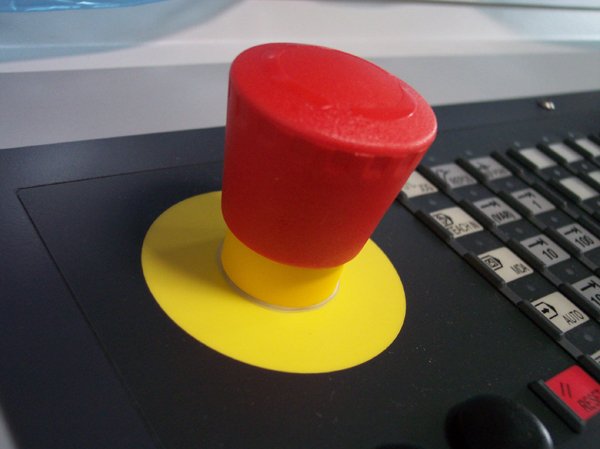
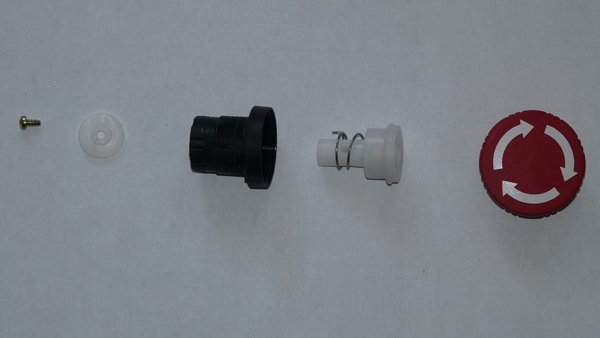
- Emergency stop devices — e-stop buttons, rope pulls, and enabling switches that connect to the safety inputs discussed in this article
- Read our related article on choosing the right safety relay for e-stops, light curtains, and two-hand controls — selection guide for hardwired safety architectures