A silo overfill event is not just a cleanup problem. When a 30-meter cement silo pressurizes because the fill line is still pumping and the vent filter is blinded, the dust cloud expelled through the relief panel is combustible, the structural load on the silo roof reverses, and the operator standing on the access platform is in the blast zone. Overfill prevention rated to SIL3 exists precisely because the consequences of getting it wrong are not "product on the ground" — they are "roof on the ground." This article compares the two dominant protection philosophies: integrated systems that link level sensing to pneumatic valve shutoff, and standalone level switches that raise an alarm and trust the operator to act.
The Integrated Protection Loop: Sense, Decide, Close
An integrated overfill prevention system closes the control loop without human intervention. A continuous level sensor — typically an 80 GHz radar or a guided-wave radar — tracks product level during filling. When the level reaches the high-high setpoint (typically 90–95% of silo capacity, set below the relief panel elevation), the system sends a close command to a pneumatically actuated valve on the fill line. The entire sequence — sense, decide, actuate — completes in under two seconds. Critically, the pneumatic valve is spring-return fail-closed: loss of instrument air or electrical power closes the fill line, not opens it. This is the defining difference from a motor-operated valve or a manually operated gate that stays in its last position on power loss.
The Standalone Level Switch Approach
A standalone level switch — vibrating fork, rotary paddle, or capacitance — detects product at a single point near the top of the silo and triggers an alarm output. The alarm may drive a horn and beacon locally, send a signal to the control room, or both. The operator must then close the fill valve manually or remotely. Between alarm activation and valve closure, product continues to flow into the silo — at rates that can exceed 100 tons per hour for pneumatic conveying systems. A two-second operator reaction time at 100 t/h adds roughly 55 kg of material above the alarm point. Over years of operation, that margin erodes the safety distance between the high-level switch and the overfill point.
What SIL Certification Means for Overfill Protection
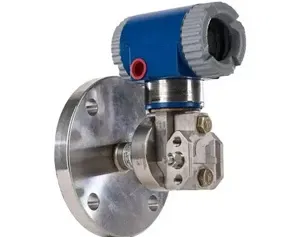
SIL (Safety Integrity Level) is not a performance rating — it is a probabilistic measure of whether the safety function will work when demanded. A SIL2-certified overfill protection loop has a probability of failure on demand (PFD) between 10⁻² and 10⁻³. A SIL3 loop — such as one built around the E+H Liquiphant FTL80 vibrating fork level switch — achieves PFD between 10⁻³ and 10⁻⁴, meaning the safety function fails to operate when needed no more than once per 1,000 to 10,000 demands. The SIL rating applies to the entire loop: sensor, logic solver, and final element (valve). A SIL3 sensor wired to a non-SIL-rated PLC driving a standard solenoid valve is not a SIL3 loop — the weakest component sets the rating.
Pneumatic Valve Selection for Overfill Shutoff
The fill-line valve in an integrated system must satisfy three requirements that do not apply to a general-purpose shutoff valve. First, it must be full-bore to avoid product bridging — a reduced-port valve in cement or flour service will eventually plug. Second, it must close against a flowing column of product, which means the actuator must be sized for the dynamic pressure of a full conveying line, not just the static head. Third, the valve position feedback — typically dual inductive proximity switches or a 4–20 mA position transmitter — must report actual valve stem position to the safety logic solver, not just the commanded position. A valve commanded closed that did not physically close is a dangerous undetected failure. For pneumatic actuation components, browse our control valves catalog.
Integration with Dust Collection and Venting
Overfill protection and dust collection are coupled: a silo that overfills into the vent filter blinds the filter elements, and a blinded vent filter allows silo pressure to rise during filling, which can distort the silo roof or burst the filter housing. The integrated approach links the overfill sensor to both the fill-line valve and the dust collector's pulse-jet controller — an overfill event triggers valve closure AND stops pulse-jet cleaning (which would aerosolize material), while a high differential pressure reading across the vent filter triggers a pre-alarm before the filter blinds completely. In an integrated system, these interactions are programmed as logic sequences. In a standalone level switch installation, each subsystem operates independently, and a filter blinding event is discovered when dust appears at the relief panel.
Cost Comparison: Upfront vs Lifetime
A standalone vibrating fork level switch with horn and beacon costs $800–2,000 installed. An integrated SIL2-certified system with radar sensor, safety PLC or logic solver, pneumatic fail-closed valve, and position feedback costs $8,000–20,000 installed. The question is not which costs less — the question is whether a single overfill event in your application costs more or less than the $6,000–18,000 difference. For a cement silo serving a concrete batch plant, one overfill event involving a ruptured filter, product loss, environmental reporting, and two days of downtime costs $25,000–50,000. The integrated system pays for itself on the first event it prevents. For a small aggregate bin filling at 5 tons per hour with a dedicated operator watching the level gauge, a standalone switch with alarm is proportionate to the risk.
Silo overfill protection sits on a spectrum from simple alarming to fully integrated safety loops. The decision driver is not technical elegance — it is the product of fill rate, consequence severity, and operator availability. When fill rates exceed 50 t/h, the product is combustible, or the silo is unmanned during filling, an integrated system with SIL-certified sensing and pneumatic fail-closed shutoff becomes the minimum defensible choice. Explore our level sensors catalog for continuous and point-level measurement options, and see solid level switches for bulk material applications.