
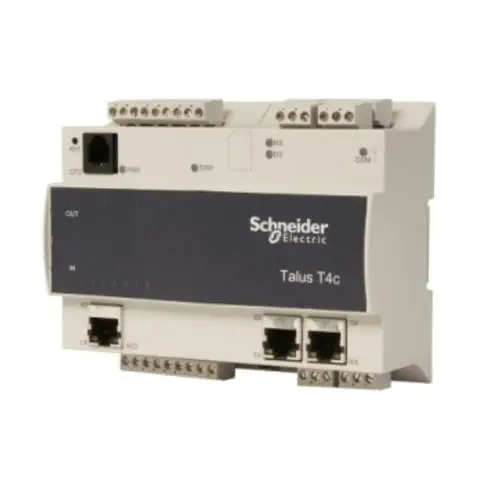
Product Specifications
- Manufacturer
- Schneider Electric
- Series
- Talus T4e (Talus T4e MKII)
- Product Type
- GSM/GPRS Remote Terminal Unit (RTU) – Telemetry Outstation
- Communication
- Onboard GSM/GPRS modem; IP (Ethernet E1 port); serial; local area network; wide area network; WITS DNP3 protocol
- Control & Processing
- IEC 61131‑3 PLC for local control applications; alarm analysis; archive data logging; on‑board management via configuration tool
- I/O Configuration
- Built‑in analogue and digital I/O; expandable I/O via Advantys™ STB module
- Enclosure & Mounting
- Compact design; DIN rail and wall‑mountable (Hitaltech 12M Modulbox)
- Applications
- Water and waste water treatment sites; environmental monitoring; abstraction points; booster and pumping stations
Product Description
The Schneider Electric Talus T4e is a compact GSM/GPRS Remote Terminal Unit (RTU) designed as a telemetry outstation for remote, unattended sites. It bridges the gap between field sensors, actuators, and the central SCADA control room by combining onboard analogue and digital I/O with an integrated GSM/GPRS modem and IP-based Ethernet communication. Crucially, the T4e is not merely a passive data relay—it incorporates a full IEC 61131‑3 programmable logic controller (PLC) that allows for local automation, plus onboard alarm analysis and archive data logging functions that operate independently of the central master. This dual capability makes the T4e suitable for applications ranging from simple remote monitoring to sophisticated local control at water and wastewater treatment works, environmental monitoring stations, abstraction points, and pumping stations where communication links may be intermittent.
Built‑In GSM/GPRS Modem for Seamless Connectivity
- Integrated GPRS Modem for Unmanned Sites: The T4e eliminates the need for an external cellular router by embedding a GSM/GPRS modem directly into the RTU. This design reduces component count, simplifies installation in space‑constrained DIN rail cabinets, and provides a single point of configuration for both RTU logic and communication parameters. The unit is specifically engineered for unmanned locations where fixed‑line communication is unavailable or cost‑prohibitive—such as remote water booster stations, river level monitoring posts, and distributed environmental sampling points.
- Multi‑Path Communication for Redundancy: In addition to the primary GPRS link, the T4e can connect directly to a local area network via its Ethernet interface, allowing communication with other local controllers and devices. This dual‑path architecture enables automatic failover between cellular and wired communication, critical for sites where continuous telemetry is required for regulatory compliance.
- WITS DNP3 Verified Protocol: The T4e is fully verified for the Water Industry Telemetry Standards (WITS) DNP3 protocol, a mandatory requirement for water utility telemetry in the United Kingdom and Ireland. This verification ensures interoperability with existing WITS‑DNP3 SCADA masters and allows the T4e to be deployed as part of large‑scale telemetry replacement programs—such as the 3,000‑outstation rollout by Northern Ireland Water—without requiring custom protocol development or additional protocol converters.
Onboard IEC 61131‑3 PLC — Operational Autonomy When Communication Fails
- Local Control Without a Separate Controller: The T4e integrates an IEC 61131‑3 programmable logic controller (PLC) directly into the RTU. This allows site‑specific automation logic—such as pump sequencing, valve interlocking, or emergency shutdown protocols—to execute locally, independent of the SCADA master. When communication to the control centre is interrupted due to cellular network congestion, maintenance activities, or infrastructure damage, the T4e continues to operate the plant according to its programmed logic, preventing service disruptions and ensuring fail‑safe operation.
- Flexible Programming Environment: The IEC 61131‑3 standard provides five programming languages (Ladder Diagram, Function Block Diagram, Structured Text, Instruction List, and Sequential Function Chart), enabling control engineers to implement logic using the language most appropriate for the task. The T4e configuration tool allows programming, simulation, and downloading of logic directly to the RTU via its Ethernet interface, reducing commissioning time and enabling remote logic updates without a site visit.
- Local Alarm Processing for Reduced Network Load: Rather than transmitting every sensor reading to the SCADA master and relying on the master to detect alarm conditions, the T4e pre‑processes alarm logic locally. It can detect and analyse alarm conditions, prioritise urgent alarms for immediate transmission, and store lower‑priority events for scheduled polling. This reduces bandwidth consumption on GPRS links and ensures that critical alarms reach the control centre even during periods of high network traffic.
Data Logging & Alarm Analysis: Reducing the Burden on Your SCADA Master
- Onboard Archive Data Logging: The T4e continuously logs process data, alarm events, and system status information to its internal memory. In the event of a prolonged communication outage—hours or even days—the RTU stores all plant data and events with timestamps for complete data recovery once the communication link is restored. This ensures data continuity for compliance reporting (e.g., discharge consent monitoring for environmental regulators) even when communication is unavailable.
- Automatic Alarm Analysis: The RTU analyses alarm patterns without requiring continuous polling from the central master. Trigger conditions can be configured based on process thresholds, rate‑of‑change, or combinatorial logic. When an alarm condition is detected, the T4e packages the alarm with associated process data and timestamps into a DNP3 event message and transmits it immediately via GPRS, ensuring the control centre is informed within seconds of the event occurrence.
- Historical Data Retrieval and Audit Trail: All archived data is accessible through the T4e Configuration Utility, enabling maintenance engineers to retrieve historical records during site visits for forensic analysis, commissioning verification, or regulatory audits. The combination of local automation, data logging, and alarm analysis means the T4e can serve as a standalone control and monitoring solution for small sites where a permanent control centre link is not economically justifiable.
Applications
- Water and wastewater treatment works: remote monitoring of flow rates, tank levels, and water quality parameters
- Environmental monitoring systems: river level, rainfall, and flood warning telemetry
- Abstraction points and boreholes: monitoring of abstraction rates, pump status, and aquifer levels
- Booster and pumping stations: local pump control, pressure monitoring, and energy optimisation
- Large‑scale telemetry replacement programs: migration of legacy outstation networks to a modern, IP‑ready telemetry infrastructure
- Any unmanned site requiring reliable GPRS telemetry with local automation capability and DNP3/WITS protocol compliance
Resources & Documentation
GSM RTU, GPRS, 61131-3 PLC, IP, Exp. I/O – T4e | Schneider
Product Specifications
- Manufacturer
- Schneider Electric
- Series
- Talus T4e (Talus T4e MKII)
- Product Type
- GSM/GPRS Remote Terminal Unit (RTU) – Telemetry Outstation
- Communication
- Onboard GSM/GPRS modem; IP (Ethernet E1 port); serial; local area network; wide area network; WITS DNP3 protocol
- Control & Processing
- IEC 61131‑3 PLC for local control applications; alarm analysis; archive data logging; on‑board management via configuration tool
- I/O Configuration
- Built‑in analogue and digital I/O; expandable I/O via Advantys™ STB module
- Enclosure & Mounting
- Compact design; DIN rail and wall‑mountable (Hitaltech 12M Modulbox)
- Applications
- Water and waste water treatment sites; environmental monitoring; abstraction points; booster and pumping stations
Resources & Documentation
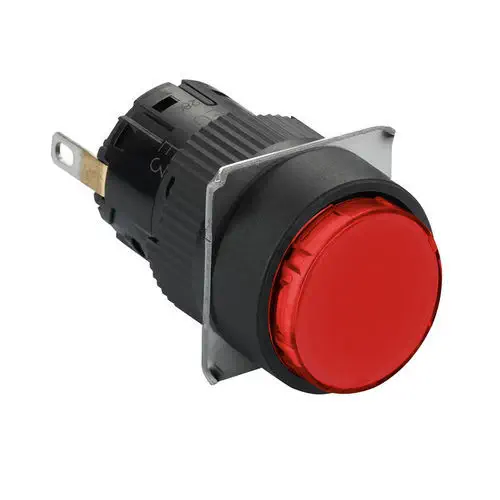
Schneider Electric XB6EAV4BP
16 mm LED pilot, IP65, 24V
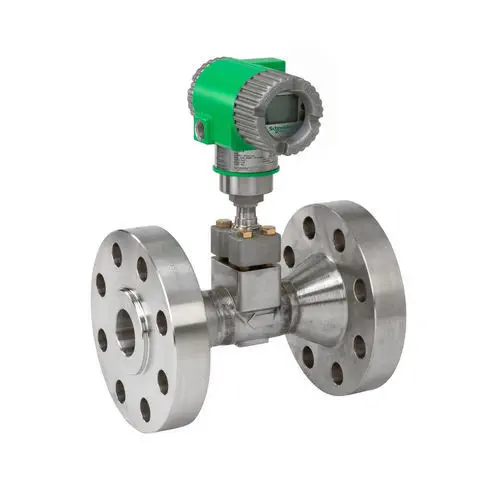
Schneider Electric 84CF
Vortex, liquid/gas/steam, 40:1 turndown
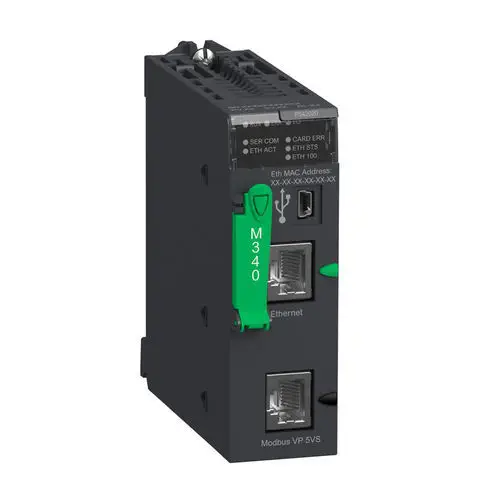
Schneider Electric BMXP342020
M340 PAC, 1024 I/O, Ethernet
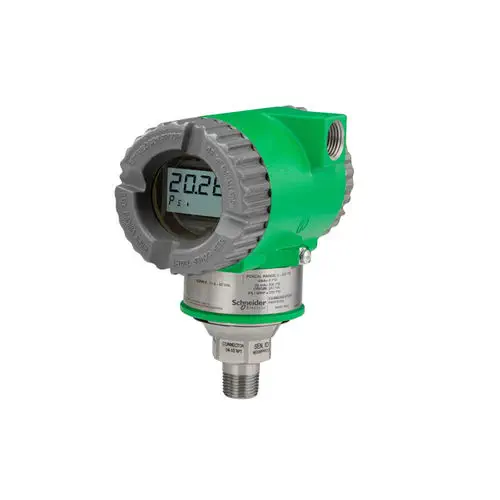
Schneider Electric IGP10S
Gauge P, ±0.05% reading, 400:1
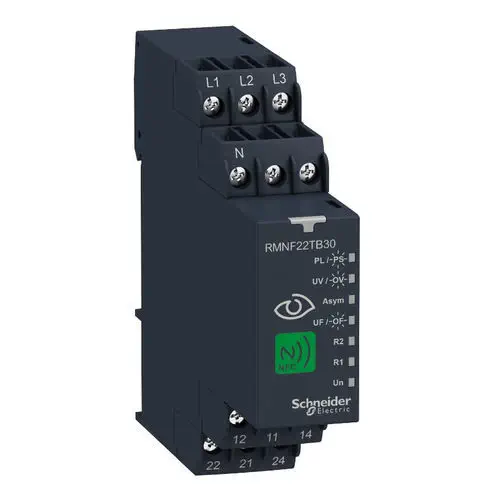
Schneider Electric RMNF22TB30
NFC 3-phase monitor, 8A
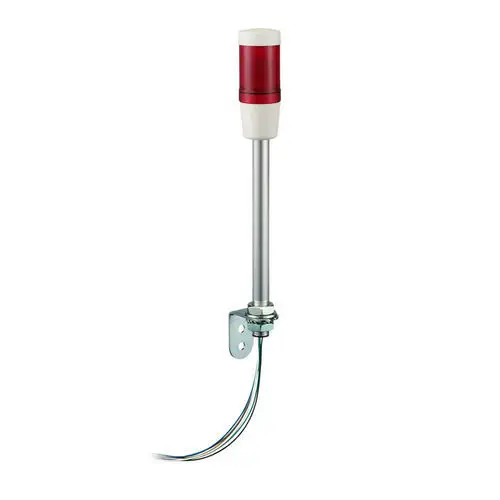
Schneider Electric XVMB2RSB
45 mm pre-wired tower, 24V

Schneider Electric 244LD
Displacer level, ±0.2%, SIL 2
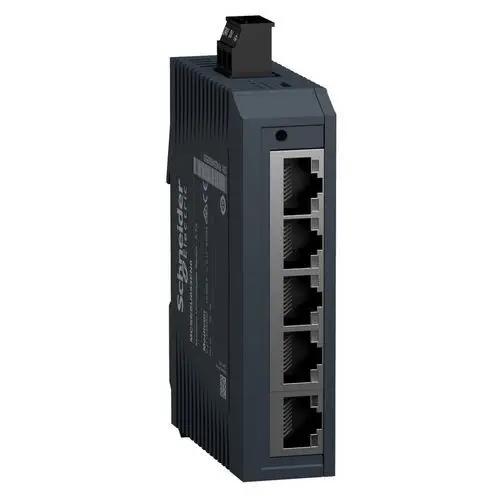
Schneider Electric MCSESU053FN0
Unmanaged, 5xRJ45
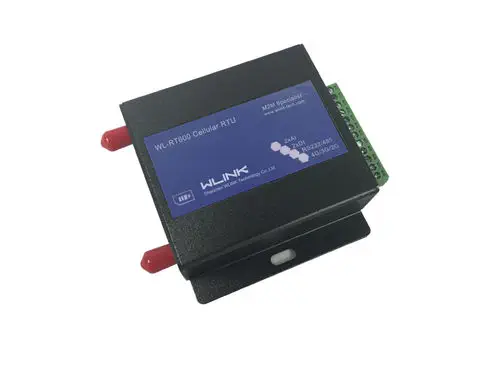
Shenzhen Wlink Technology Co., LTD RT600 Series
Auto-Reconnect, Remote Config
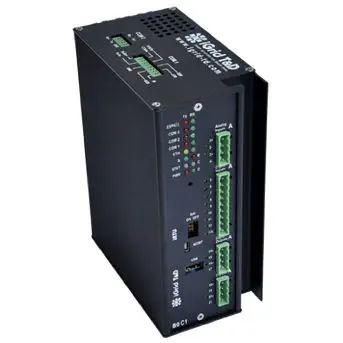
iGrid T&D iRTU Series
Modular, PRP/HSR, IEC 61850, Web
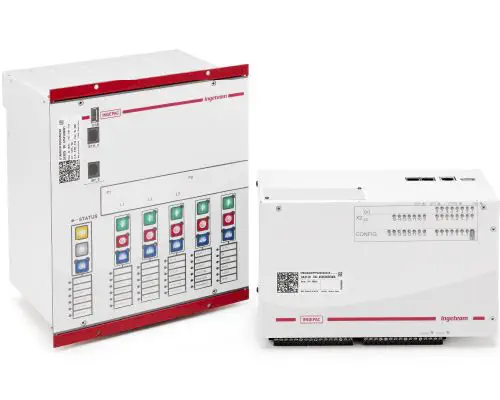
Ingeteam GmbH INGEPAC DA AU
Dir. Fault & Transfer, Modbus GW
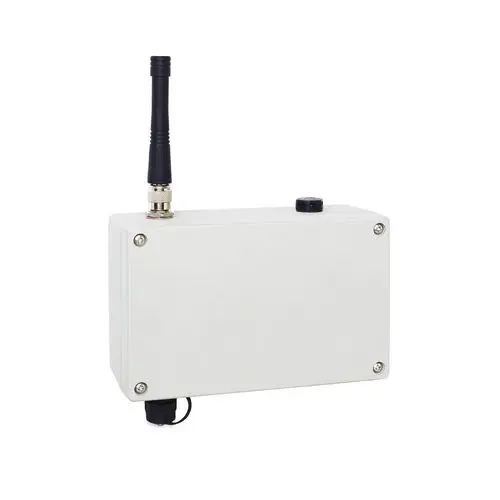
TEKBOX TBS12B
7µA Idle, ABP/OTAA
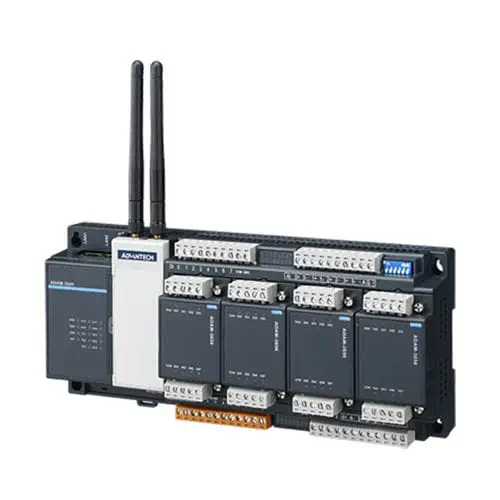
Advantech ADAM-3600-C2G
Edge Computing iRTU, 4G Ready
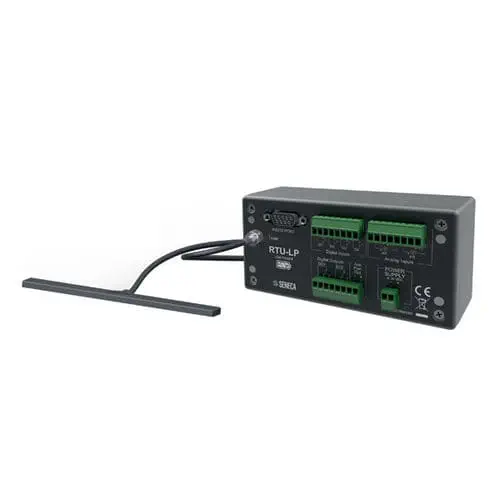
SENECA RTU-LP-ST
Ultra-Low Power GSM Telemetry
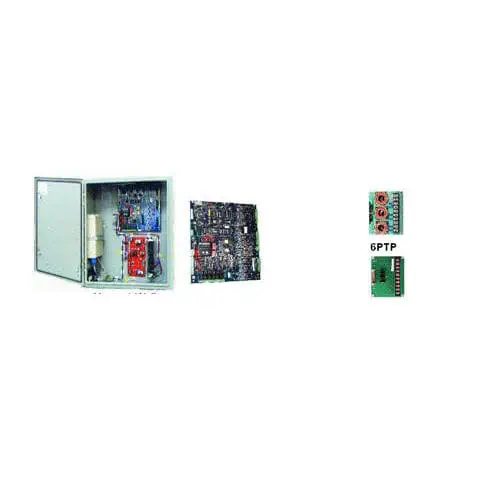
CG Power Systems DRT Series
Distributed Control for Utilities
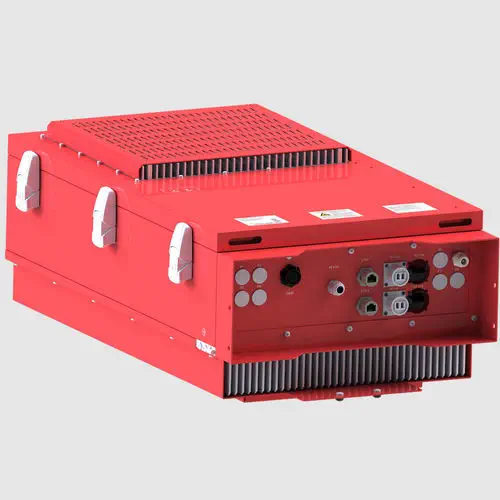
Avari Wireless VL-RU 33/37
Lossless, Redundant, Fanless