
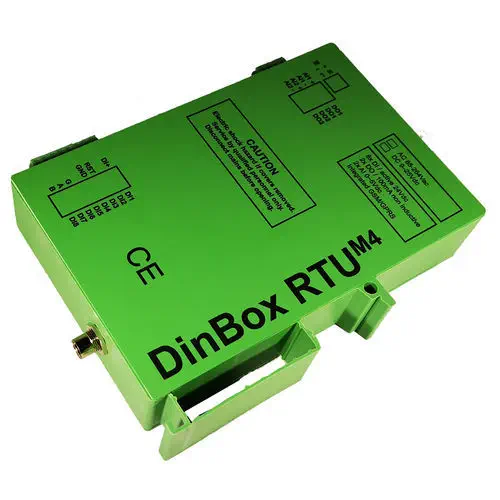
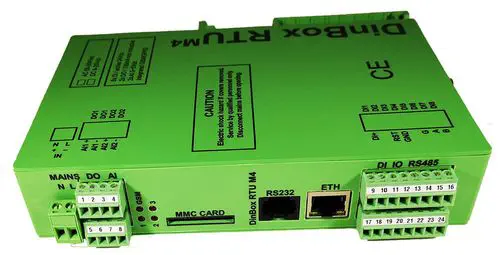
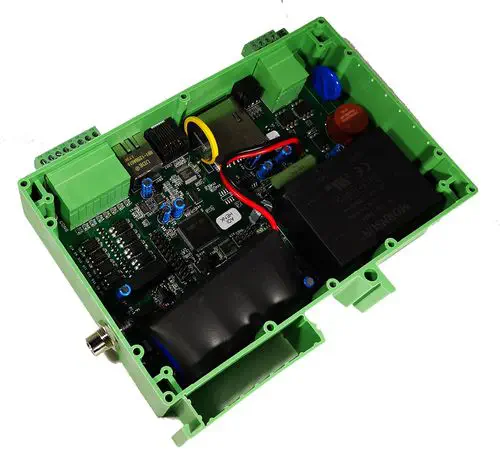
Product Specifications
- Manufacturer
- Bausch Datacom (Belgium)
- Model
- DinBox RTU M4 (DB RTU M4)
- Product Type
- IEC 60870‑5‑104 Remote Terminal Unit with 4G Modem
- Embedded Modem
- Sierra Wireless LTE Cat.1 / GPRS (2G/3G fallback)
- Protocols
- IEC 60870‑5‑104 (slave, up to 6 Masters), Modbus RTU/TCP, MQTT Client, Modbus‑to‑IEC104 mapping
- Serial Ports
- 1 × RS‑485 (galvanically isolated, 2‑wire), 1 × RS‑232 (debug)
- I/O Configuration
- 8 DI (active, opto‑isolated), 2 DO (optomos, 600 Vpeak / 90 mA), 2 AI (0‑5 VDC, non‑isolated, 12‑bit ADC)
- Power & Security
- 85‑264 VAC (optional 9‑25 VDC); supercapacitor 30 s last gasp backup; ARM Cortex M4; Ethernet WAN/LAN routing; TLS, VPN IPsec; DIN‑rail mount
Product Description
The Bausch Datacom DinBox RTU M4 is a compact IEC 60870‑5‑104 remote terminal unit purpose‑built for medium‑ and low‑voltage substation automation. It integrates an LTE Cat.1/GPRS modem (Sierra Wireless, with 2G/3G fallback), an ARM Cortex M4 processor, and a wide‑range 85–264 VAC power supply into a DIN‑rail‑mountable enclosure. The supercapacitor‑backed power supply guarantees 30 seconds of continued operation after a total loss of auxiliary mains—sufficient for the RTU to transmit a final IEC 104 "last gasp" telegram informing the SCADA master(s) of the outage before the device goes silent. This eliminates the need for a separate UPS in unmanned substations where lead‑acid battery maintenance is impractical and thermal runaway in battery cabinets poses a fire risk.
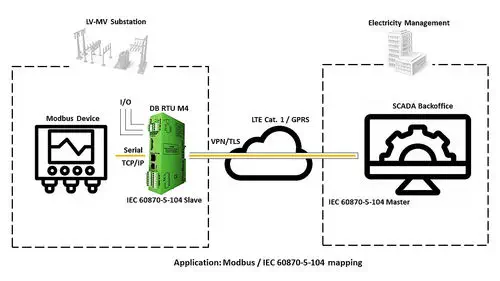
How IEC 60870‑5‑104 Native Communication Works
- Native IEC 104 Slave Stack, Not a Protocol Converter Add‑On: The DinBox RTU M4 implements a full IEC 60870‑5‑104 slave software stack—not a serial‑to‑IP gateway retrofitted with 104 support. It handles connection management, ASDUs (Application Service Data Units), cause‑of‑transmission parameters, and timed acknowledgements as defined in the IEC 60870‑5‑104 standard. Up to 6 redundant SCADA masters can connect to the RTU simultaneously, a requirement in modern distribution grids where a primary control centre, a backup centre, and a regional supervisory station all need the same real‑time data from the same substation. The RTU can also operate as an IEC 104 slave via GPRS/LTE alone, without requiring an Ethernet‑based Master connection.
- Integrated Sierra Wireless Modem with Future‑Proof Migration Path: The CF3 HL7692 modem supports 4G LTE Cat.1 with automatic fallback to 2G GPRS/EDGE. Future‑proof migration paths include NB‑IoT and LTE‑M cellular technologies, allowing the same hardware platform to be maintained across network generation transitions. The modem uses a 50 Ω FME antenna connector and supports both physical SIM cards and eSIM/eUICC profiles for remote carrier provisioning.
- MQTT for Cloud‑Native Backoffices: In parallel to the IEC 104 SCADA channel, the RTU can push selected data to an MQTT broker—useful for DSO backoffices that are migrating from traditional SCADA to cloud‑based analytics platforms without disrupting the operational 104 link to the grid control centre.
Supercapacitor Last Gasp — A Message the SCADA Master Cannot Ignore
- Why Last Gasp Matters: When a distribution substation loses auxiliary power (e.g., due to a feeder fault upstream, a blown control‑circuit fuse, or a cable theft), a conventional RTU without backup power simply ceases communicating. The SCADA master has no way to distinguish between a network failure, an RTU hardware failure, and a genuine station blackout. The DinBox RTU M4's 25F supercapacitor array stores enough energy at the moment of power loss to keep the processor and modem operational for 30 seconds—adequate to send one or more IEC 104 Cause‑of‑Transmission = 3 (spontaneous) telegrams with the DI states, AI values, and a "power lost" flag to all connected masters. This unambiguous message tells the grid operator: "I am not broken; I am not offline; the power at my location has been cut."
- No DC Battery Maintenance: Supercapacitors have a service life measured in decades. They do not require thermal management, periodic discharge testing, or replacement every 3–5 years as VRLA battery packs in RTU cabinets do. Compared to battery‑backed dual‑supply systems, the supercap solution reduces substation maintenance visits to a single annual functional check, and eliminates the need for battery monitoring systems that would otherwise add cost and complexity.
- Flexible DC Power Input: For applications where an external DC supply is available (e.g., a 12 V or 24 V battery‑backed DC bus in a larger substation), the RTU accepts an optional 9–25 VDC input. In this configuration, the DC input takes priority and the supercapacitor serves as a fail‑safe tertiary backup, ensuring the last gasp function remains operational even when the DC supply itself fails.
Modbus‑to‑IEC104 Mapping Without a Gateway
- Integrated Modbus Client/Master Implementation: The DinBox RTU M4's firmware includes both a Modbus RTU master stack (for the RS‑485 port) and a Modbus TCP client (for Ethernet). It polls connected Modbus slave devices—typically multi‑function energy meters, protection relays, fault passage indicators, temperature sensors, or tap‑changer controllers—at user‑definable intervals, and maps the acquired Modbus registers and coils to IEC 60870‑5‑104 ASDUs according to a configuration table stored in FRAM. No external protocol converter, no intermediate PLC, and no separate Ethernet‑to‑serial gateway is required.
- Transformation onto IEC 104 Objects: The mapping engine converts Modbus register values (16‑bit or 32‑bit) to IEC 104 analogue objects (short floating‑point or scaled integer) and Modbus coil/status bits to IEC 104 single‑point (SP) or double‑point (DP) digital objects. Quality bits and timestamping are applied at the point of mapping. The configuration table can be edited remotely via HTML GUI, Telnet commands, or through the DeMas management platform.
- Galvanically Isolated RS‑485 Interface: The RS‑485 port is galvanically isolated (2‑wire, 3.5 kV isolation), which prevents ground‑loop currents from affecting the RTU's internal electronics when Modbus slaves are distributed across different electrical panels within the substation. A non‑isolated RS‑232 debug port is provided for field service access only.
DeMas Management & TLS Security
- DeMas Platform for Mass Fleet Management: The DeMas (Data Management Software) backoffice platform provides centralized remote management for fleets of DinBox RTU M4 units. Functions include mass remote firmware upgrades (scheduled or immediate), remote configuration and parametrization, automatic commissioning with plug‑and‑play capability, health status monitoring, and communication infrastructure data collection. This is a critical operational tool for DSOs managing hundreds or thousands of RTU units distributed across a regional distribution network—a technician does not need to visit each substation to verify firmware versions or apply security patches.
- TLS Transport‑Layer Security: Authentication, integrity, and confidentiality for each application or service running on the RTU are provided by TLS (Transport Layer Security). For SCADA systems where the existing IEC 104 Master does not natively support TLS, a TLS Proxy service can be installed on the trusted network to serve as an endpoint towards the TLS‑secured RTU and forward decrypted traffic to the legacy Master—enabling a phased migration to secure SCADA communication without replacing the existing control centre infrastructure.
- Basic VPN IPsec: An additional layer of network‑level security is provided by a basic VPN IPsec implementation, allowing the RTU to communicate over encrypted tunnels where required by the DSO's cybersecurity policy.
Applications
- MV/LV distribution substation remote monitoring and control (IEC 60870‑5‑104 native communication)
- Integration of Modbus RTU legacy IEDs (fault passage indicators, energy meters, protection relays) into a modern IEC 104 SCADA system without replacing field hardware
- Unmanned substations where supercapacitor‑based last gasp messaging eliminates the need for UPS battery maintenance
- Renewable energy plant monitoring (solar, wind) where the RTU serves as the protocol gateway between site‑level Modbus devices and a remote IEC 104 control centre
- Distribution automation projects requiring redundant IEC 104 Master connections for primary, backup, and regional SCADA centres
- Any SCADA application where a compact, wide‑range AC powered RTU with 4G connectivity, integrated protocol conversion, and TLS security is required
IEC 104 RTU, Modbus-to-104, Last Gasp, TLS, 6 Masters – DinBox M4 | Bausch
Product Specifications
- Manufacturer
- Bausch Datacom (Belgium)
- Model
- DinBox RTU M4 (DB RTU M4)
- Product Type
- IEC 60870‑5‑104 Remote Terminal Unit with 4G Modem
- Embedded Modem
- Sierra Wireless LTE Cat.1 / GPRS (2G/3G fallback)
- Protocols
- IEC 60870‑5‑104 (slave, up to 6 Masters), Modbus RTU/TCP, MQTT Client, Modbus‑to‑IEC104 mapping
- Serial Ports
- 1 × RS‑485 (galvanically isolated, 2‑wire), 1 × RS‑232 (debug)
- I/O Configuration
- 8 DI (active, opto‑isolated), 2 DO (optomos, 600 Vpeak / 90 mA), 2 AI (0‑5 VDC, non‑isolated, 12‑bit ADC)
- Power & Security
- 85‑264 VAC (optional 9‑25 VDC); supercapacitor 30 s last gasp backup; ARM Cortex M4; Ethernet WAN/LAN routing; TLS, VPN IPsec; DIN‑rail mount
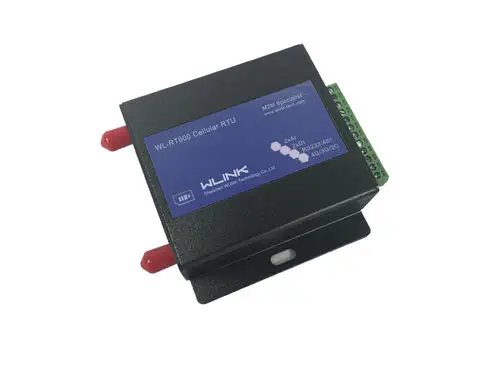
Shenzhen Wlink Technology Co., LTD RT600 Series
Auto-Reconnect, Remote Config
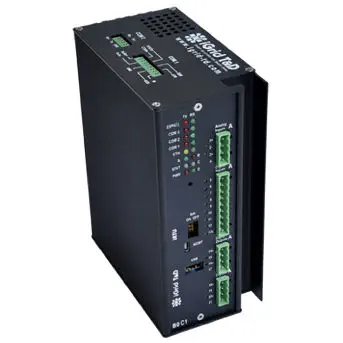
iGrid T&D iRTU Series
Modular, PRP/HSR, IEC 61850, Web
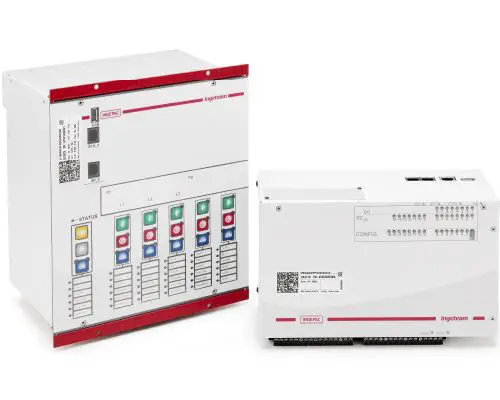
Ingeteam GmbH INGEPAC DA AU
Dir. Fault & Transfer, Modbus GW
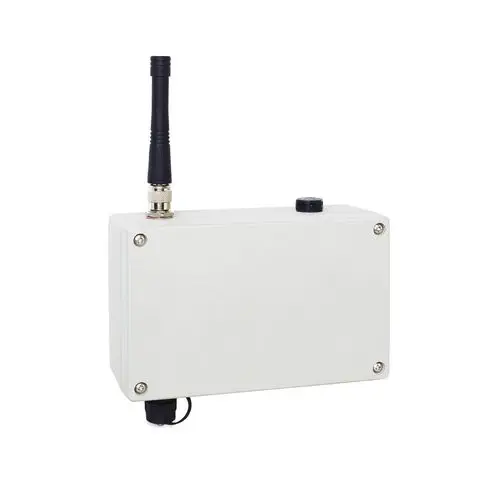
TEKBOX TBS12B
7µA Idle, ABP/OTAA
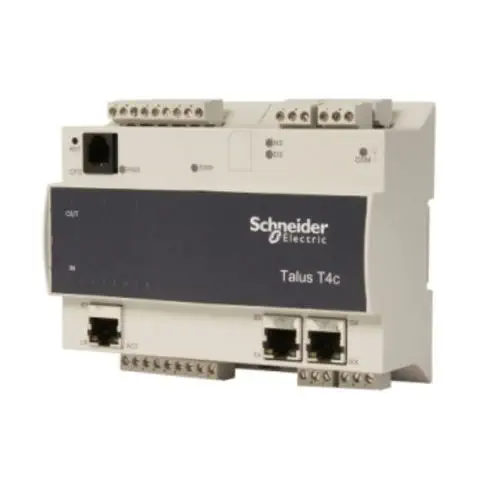
Schneider Electric Talus T4e
Archive & Alarm, Advantys STB
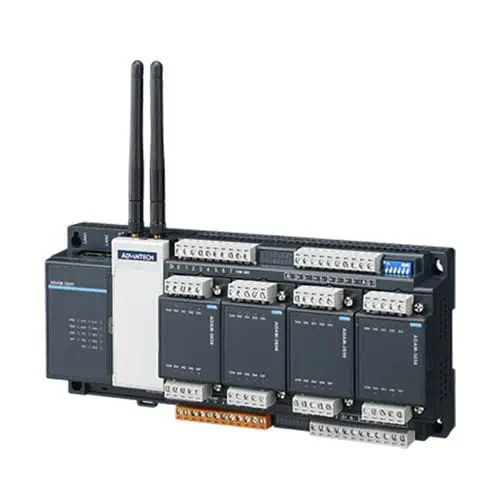
Advantech ADAM-3600-C2G
Edge Computing iRTU, 4G Ready
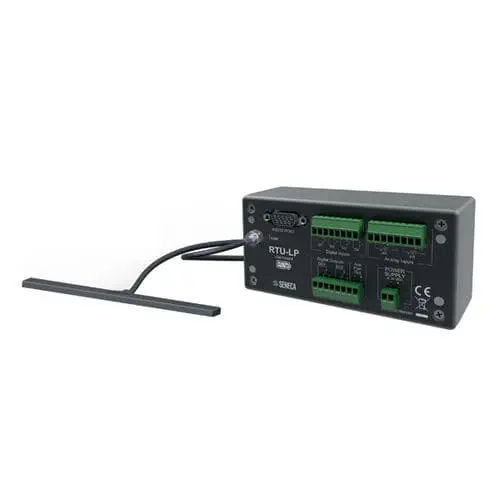
SENECA RTU-LP-ST
Ultra-Low Power GSM Telemetry
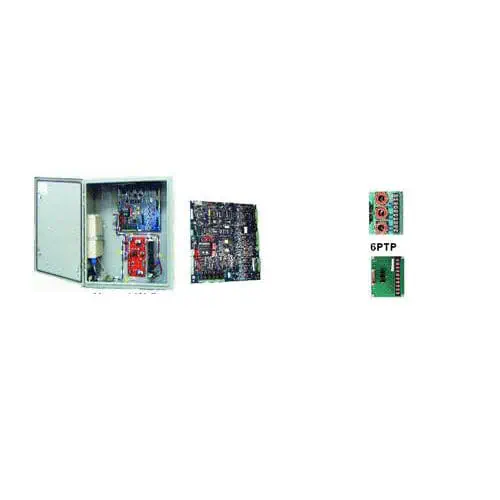
CG Power Systems DRT Series
Distributed Control for Utilities