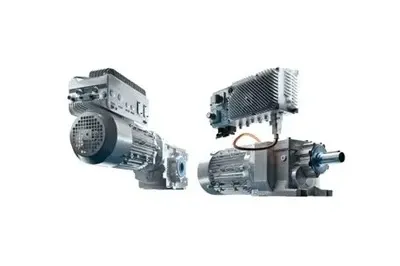
The SINAMICS G115D hangs on the wall next to its motor, which means its wiring is field plumbing, not panel craft. Three wiring styles cover the family — cable glands, connectorized sections, and true daisy-chain distributed wiring — and the difference is not cosmetic: it decides installation hours on a conveyor string and who can replace a drive at 2 a.m.
Gland wiring: the universal baseline
Standard variants terminate power and motor through cable glands — skilled work, universal, and the right answer for single wall-mount drives where conduit runs are short. A 0.37 kW 1/3-phase G115D in a small utility room is the classic case: one supply gland, one motor gland, one control gland, done.
Connectorized sections: the conveyor string answer
Distributed-drive variants bring connectors — power, motor and signal arrive and leave on plugs, so a section unbolts and swaps in minutes. On a long conveyor string with ten sections, that is the difference between a 20-minute swap and a morning with a screwdriver and drawings. The I/O-control variants such as the 5.5 kW distributed unit are built for exactly this rhythm.
Daisy chain: one bus, many sections
Where AS-Interface or a fieldbus feeds the string, control wiring becomes a true daisy chain — each drive taps the bus, and the "wiring" is topology management. Combined with connectorized power, a whole conveyor becomes modular furniture. The broader distributed drives category exists for exactly this architecture.
Which style for a brownfield retrofit?
Keep glands where conduits already exist, add connectors only on the sections you expect to swap, and let the bus daisy-chain handle control. Retrofit success is measured in spare-part swap time, and connectorized motor connections are what you will thank yourself for.
Do connectorized and gland variants share parameters?
Electrically and functionally yes — the wiring style is an order-code dimension, not a different drive. Commissioning tools and parameters carry across, so a mixed string stays uniform to the engineer.