
Product Specifications
- Brand
- Gantner Instruments
- Part Number
- Q.brixx station
- Type
- Modular DAQ Test Controller
- Series
- Q.brixx
- RS485 UART Interfaces
- 2–4 (model dependent), up to 24 Mbps
- Module Capacity
- Up to 16 per UART line, 64 total
- Max Sampling Rate
- 100 kHz per channel (8 ch simultaneous)
- System Synchronization
- IRIG-B, ±1 µs accuracy
- Data Interfaces
- Gigabit Ethernet, EtherCAT slave, CAN/CAN-FD
- Data Buffer
- 500 MB SRAM (dynamic), 4 GB Flash (static)
- Power Supply
- 10–30 VDC
- Operating Temperature
- -20°C to +60°C
Product Description
The Q.brixx station is the programmable base unit at the heart of Gantner's modular data acquisition platform. It manages up to four RS485 UART local buses — each supporting up to 16 Q.brixx or Q.bloxx measurement modules at baud rates up to 24 Mbps — for a total system capacity of 64 modules and throughput up to 200,000 measurements per second. The controller also serves as a PAC (Programmable Automation Controller), executing PID loops, data logging, transfer functions, math operations, Boolean logic, and function generators directly on the hardware without an external PC.
How does the RS485 UART bus architecture scale?
Each UART line operates as an independent RS485 local bus with 500 V isolation between channels, using an 8E1 data format at 9.6 kbps to 24 Mbps. Up to 16 measurement modules can be daisy-chained per line, and with four UARTs on the standard station model, the system reaches 64 modules total. External Q.bloxx modules can extend this further to 32 additional channels. The dynamic 500 MB SRAM buffer absorbs high-speed data bursts while 4 GB of onboard Flash provides static storage, expandable via USB and SD card.
What sampling performance and synchronization does it deliver?
Each channel samples at up to 100 kHz simultaneously across 8 channels, or 128 channels at 10 kHz. System-wide synchronization uses IRIG-B (IRIG 2) standard timecode over the RS485 bus in a master-slave topology, achieving ±1 µs channel-to-channel timing accuracy — critical for multi-channel dynamic testing where phase relationships between strain, acceleration, and temperature signals must be preserved. External time sources including DCF77, AFNOR, GPS time/position, and SNTP over Ethernet are supported for geographically distributed measurement networks.
What additional interfaces and expansion are available?
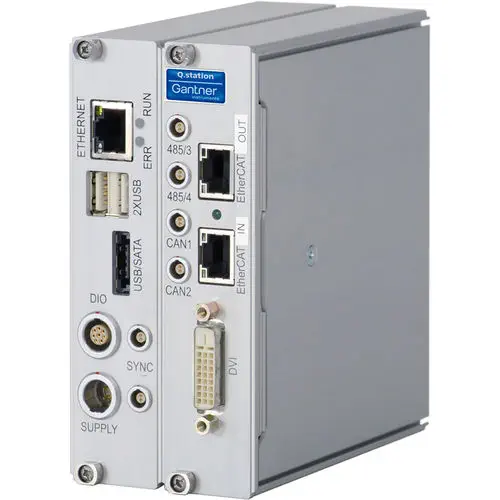
Beyond the RS485 measurement bus, the Q.brixx station provides Gigabit Ethernet (TCP/IP, UDP, Modbus TCP/IP, ASCII, FTP, web server/client), an EtherCAT slave port (RJ45, 1,024 variables at 10 kHz), and an optional CAN/CAN-FD port with CANopen support. Six digital inputs accept counter, frequency, PWM, encoder, and state signals up to 30 VDC. Two USB 2.0 ports support data export to FAT/FAT32 drives. The station T and X station B variants add a DVI display output and the test.con graphical programming environment, extending PAC functionality to complex test sequences without traditional coding.
Resources & Documentation
RS485 Modular DAQ Controller, 100 kHz ±1 µs Sync | Gantner Q.brixx station
Product Specifications
- Brand
- Gantner Instruments
- Part Number
- Q.brixx station
- Type
- Modular DAQ Test Controller
- Series
- Q.brixx
- RS485 UART Interfaces
- 2–4 (model dependent), up to 24 Mbps
- Module Capacity
- Up to 16 per UART line, 64 total
- Max Sampling Rate
- 100 kHz per channel (8 ch simultaneous)
- System Synchronization
- IRIG-B, ±1 µs accuracy
- Data Interfaces
- Gigabit Ethernet, EtherCAT slave, CAN/CAN-FD
- Data Buffer
- 500 MB SRAM (dynamic), 4 GB Flash (static)
- Power Supply
- 10–30 VDC
- Operating Temperature
- -20°C to +60°C
Resources & Documentation
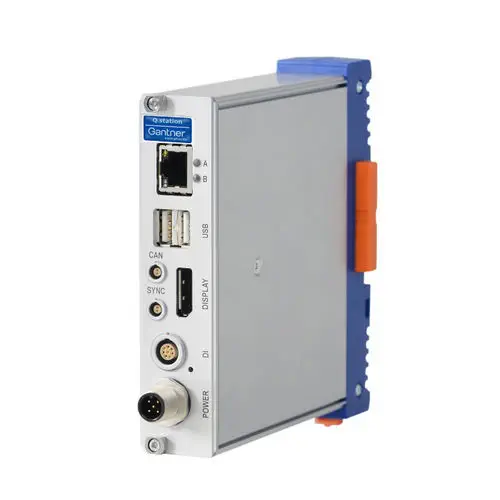
Gantner Instruments Q.station XB
Real-time Linux, PAC functionality, DIN rail mount
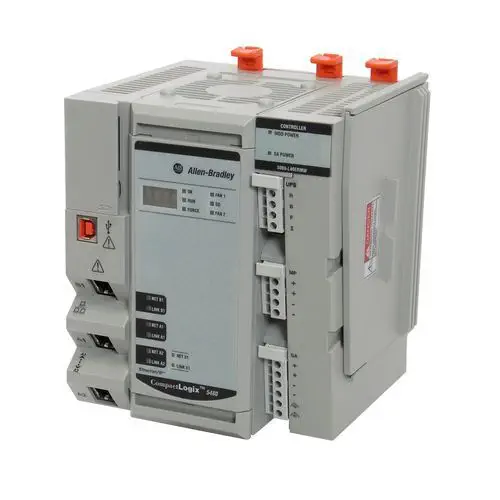
Allen-Bradley CompactLogix™ 5480
i7 quad-core, 64 GB SSD, Logix + Windows 10 IoT
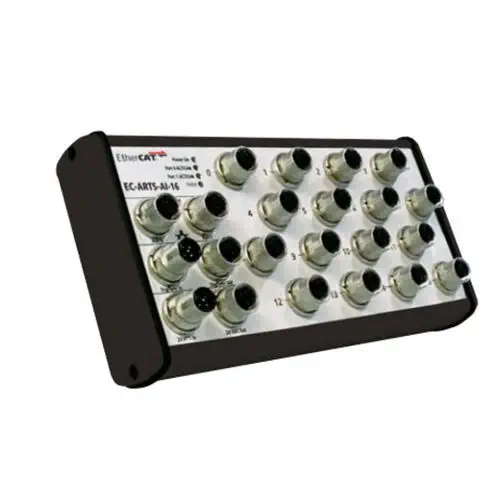
ADDI-DATA MSX-EC-3000
EtherCAT-synchronized 16-bit DAQ module
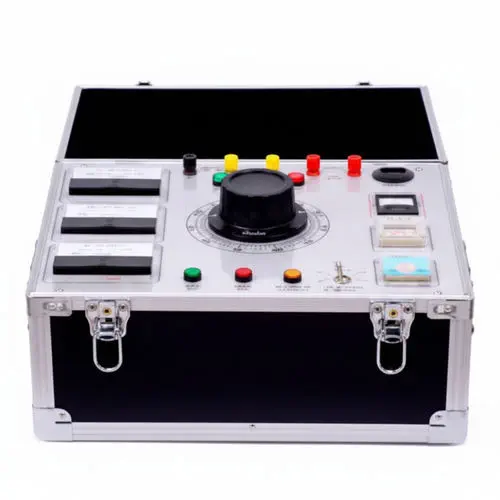
Wuhan UHV Power Technology XC/TC
Manual/motor-driven control consoles for HV withstand and leakage testing
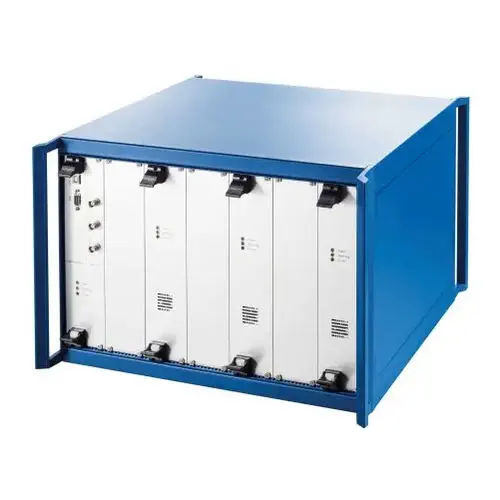
Bosch Engineering IPC series
CR injector/pump test control, 60-6000 rpm
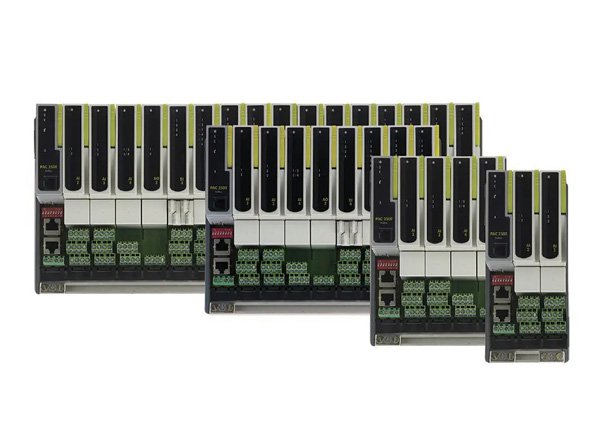
Eurotherm T2550 PAC
High Availability PAC with E-Sync Redundancy
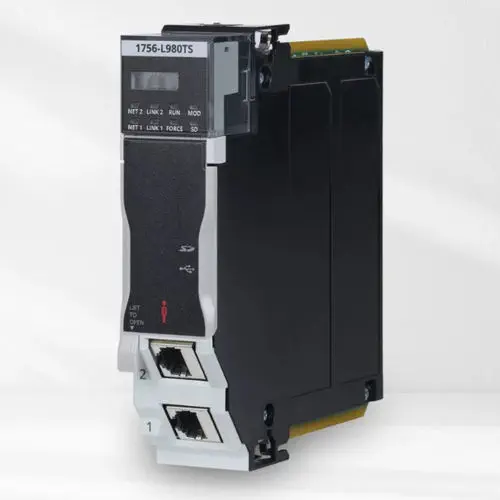
Allen-Bradley ControlLogix 5590
Up to 80 MB, 512 axes, dual 1 GbE, SIL 3 capable
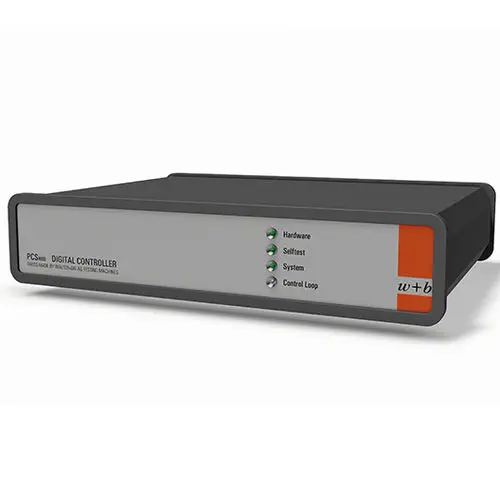
walter+bai PCS8000
Ultra-high-speed closed-loop control for materials testing machines
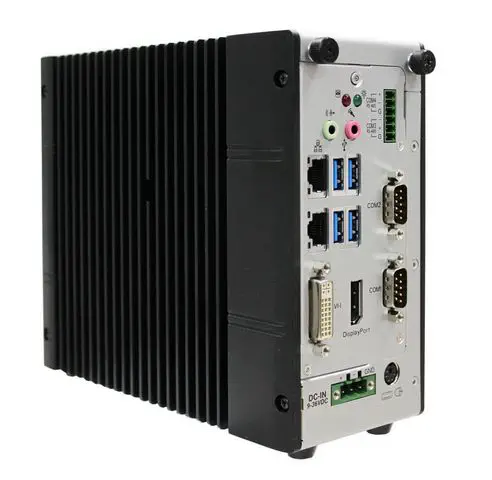
ARBOR Technology ARES-5800 Series
i5-4402E, mSATA slot