
Product Specifications
- Brand
- KUKA AG
- Part Number
- LBR iiwa series
- Type
- Collaborative robot (cobot)
- Number of Axes
- 7
- Models
- LBR iiwa 7 R800 (7 kg, 800 mm), LBR iiwa 14 R820 (14 kg, 820 mm)
- Max Payload
- 7 kg / 14 kg
- Max Reach
- 800 mm / 820 mm
- Repeatability
- ±0.1 mm (7kg) / ±0.15 mm (14kg)
- Self Weight
- ~23.9 kg (7kg) / ~29.5 kg (14kg)
- Protection Rating
- IP54
- Mounting Positions
- Ceiling, Floor, Wall
- Controller
- KUKA Sunrise Cabinet
- Operating Temperature
- 5–45 °C
- Joint Torque Accuracy
- ±2%
Product Description
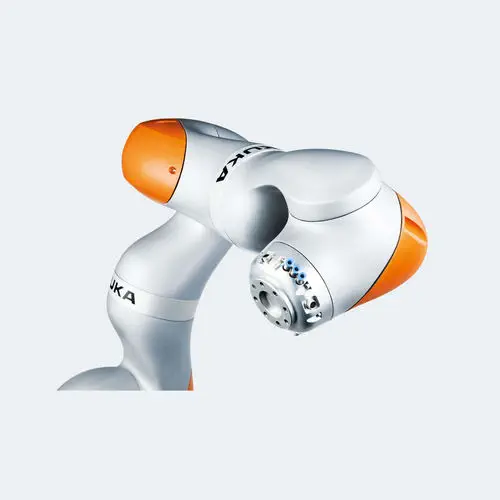
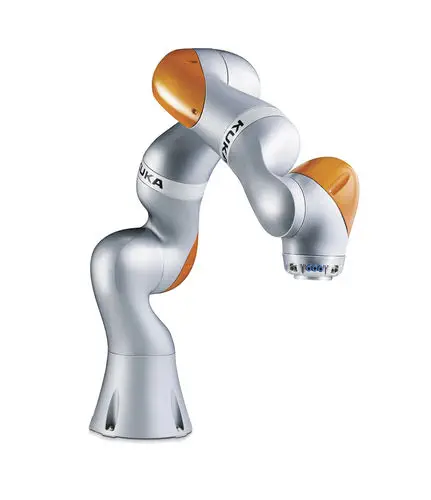
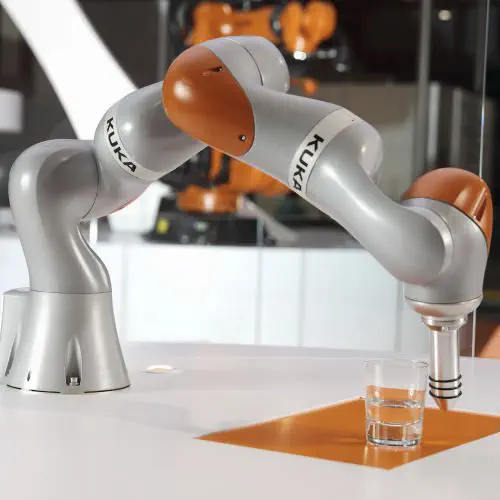
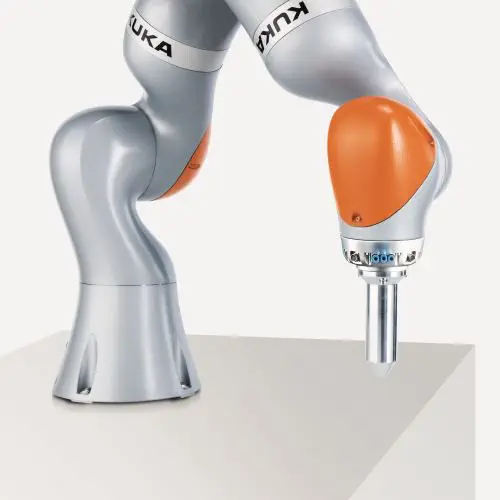
Precision assembly tasks have a fundamental conflict: the robot must reach the target position exactly, but it cannot apply too much force or it will damage the part. Traditional position-controlled robots cannot sense contact force – they either miss the insertion or crush the workpiece. KUKA LBR iiwa is the world's first series-produced sensitive robot, with torque sensors in all 7 joints that sense minimal force changes and adjust in real time. Available in 7kg and 14kg payload versions with 800mm and 820mm reach respectively, repeatability ±0.1mm / ±0.15mm, IP54 rated, mounts on floor, wall or ceiling.
Which variant: 7kg or 14kg?
LBR iiwa offers two variants: LBR iiwa 7 R800 (7kg payload, 800mm reach, 23.9kg self-weight, ±0.1mm repeatability) and LBR iiwa 14 R820 (14kg payload, 820mm reach, 29.5kg self-weight, ±0.15mm repeatability). Choose the 7kg variant for precision small-part assembly, lab automation, and electronics manufacturing. Choose the 14kg variant for heavier workpiece handling, machine tending, and general industrial assembly. Both share the same 7-axis torque-controlled architecture and IP54 protection – the difference is payload capacity and reach.
Why torque sensors in every joint, not just at the wrist?
A wrist-mounted force sensor only measures force at the tool – it cannot distinguish contact force from inertial force during fast motion, causing false readings. LBR iiwa measures torque at each of its 7 joints simultaneously. The control software reconstructs the full force profile – contact location, vector and magnitude – enabling the robot to push, slide or rotate parts like a human hand. Joint torque accuracy reaches ±2%. This replaces wrist-only sensors that fail during dynamic motion, and mechanical compliance devices that require frequent adjustment.
What does sensitive robotics deliver in production?
Precision insertion gaps are typically 0.1–0.2mm. A robot with ±0.1mm repeatability can position the part, but without force feedback it cannot sense a 0.05mm misalignment – it will either miss the insertion or jam. LBR iiwa senses the off-axis force from the misalignment and automatically adjusts wrist orientation until the insertion path aligns. No mechanical guides, no precision fixtures, no manual tweaking. This replaces passive compliance devices that require frequent maintenance and precision fixtures that are expensive to build.
Resources & Documentation
KUKA LBR iiwa Series – 7-Axis Collaborative Robot, 7/14 kg Payload, 800/820 mm Reach
Product Specifications
- Brand
- KUKA AG
- Part Number
- LBR iiwa series
- Type
- Collaborative robot (cobot)
- Number of Axes
- 7
- Models
- LBR iiwa 7 R800 (7 kg, 800 mm), LBR iiwa 14 R820 (14 kg, 820 mm)
- Max Payload
- 7 kg / 14 kg
- Max Reach
- 800 mm / 820 mm
- Repeatability
- ±0.1 mm (7kg) / ±0.15 mm (14kg)
- Self Weight
- ~23.9 kg (7kg) / ~29.5 kg (14kg)
- Protection Rating
- IP54
- Mounting Positions
- Ceiling, Floor, Wall
- Controller
- KUKA Sunrise Cabinet
- Operating Temperature
- 5–45 °C
- Joint Torque Accuracy
- ±2%
Resources & Documentation
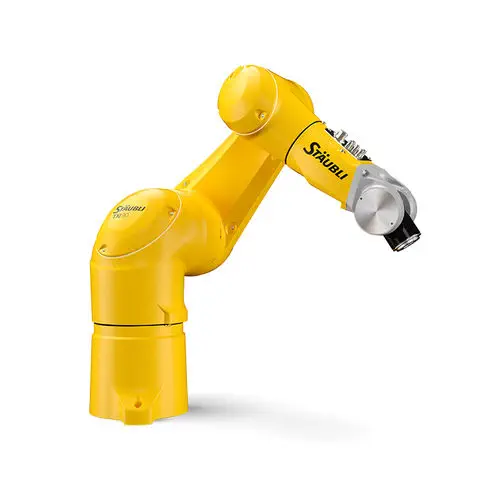
Stäubli Robotics Articulated robot - TX2-90 - Stäubli Robotics
6-Axis Collaborative Robot with 14 kg Payload
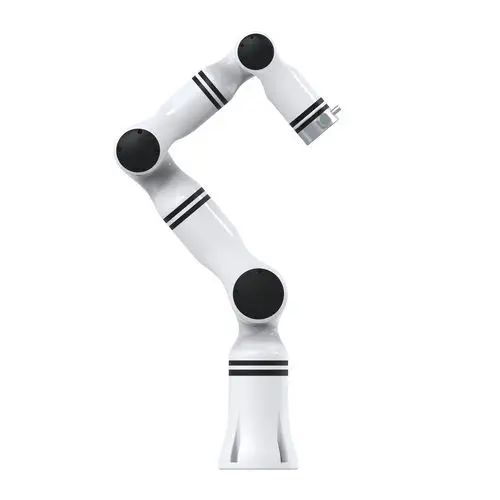
RealMan Intelligent Technology RM75-B
7-axis lightweight cobot, 5kg, 610mm
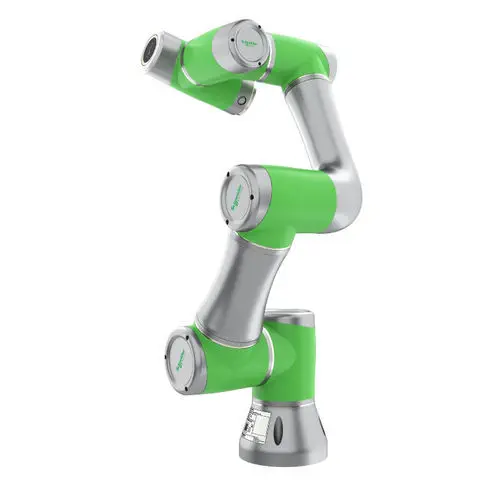
Schneider Electric LXMRL03S0000
3 kg collaborative robot with ±0.02 mm repeatability
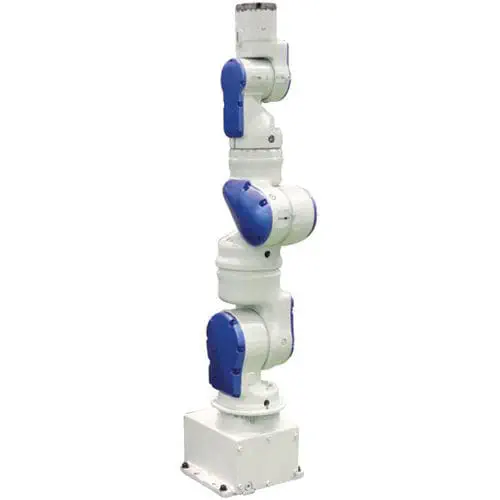
MOTOMAN SIA5D
7-axis ultra-compact robot, 5kg
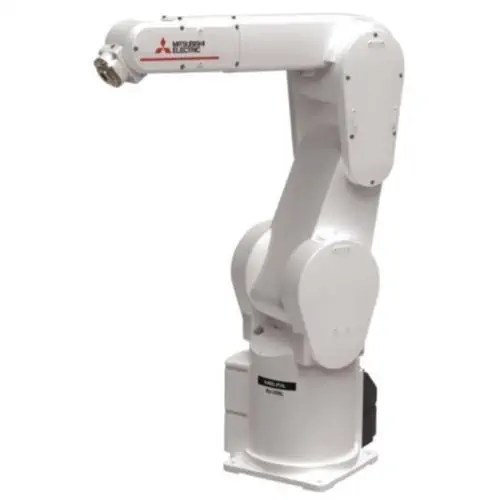
Mitsubishi Electric RV-FR series
MELFA 6-axis robot with collaborative safety functions
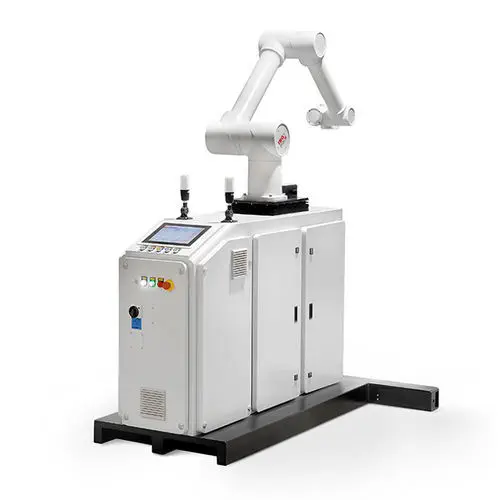
ISG Pack Cobot - Easy Pal 625-1900F - ISG Pack
Collaborative Palletizing Cobot with 25 kg Payload