
Product Specifications
- Brand
- Baker Hughes (Druck)
- Part Number
- PACE 1001
- Product Type
- Barometric Pressure Indicator
- Series
- PACE
- Pressure Range
- 750–1150 mbar abs (10.9–16.7 psi / 75–115 kPa)
- Precision Grades
- Standard ±0.10 mbar / High ±0.05 mbar / Premium ±0.025 mbar / Reference ±0.020 mbar
- Long-Term Stability
- 0.05 mbar per annum
- Display
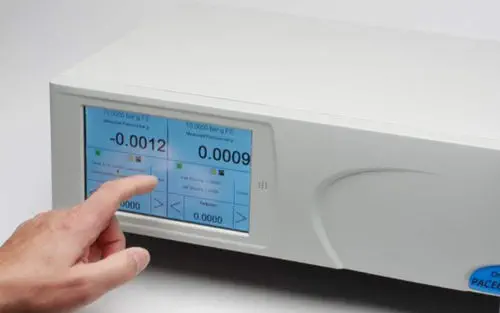
- 4.3" Color Graphic LCD with Integrated Touchscreen
- Standard Interfaces
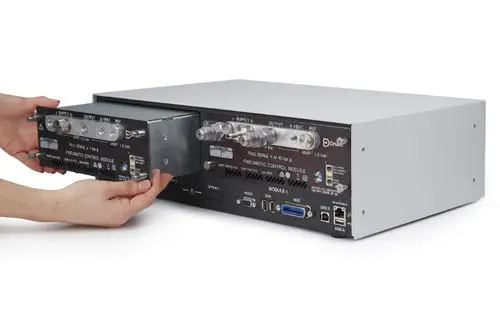
- RS232, USB, IEEE-488 (GPIB), Ethernet (VXI-11 & SCPI)
- Pressure Connection
- G 1/8 Female (1/8 NPT Female with Adapter, North America)
- Power Supply
- 90–130 VAC / 180–260 VAC, 47–63 Hz, 15 VA
- Operating Temperature
- 10°C to 50°C (Calibrated 15°C to 45°C)
- Dimensions (W × H × D)
- 218 × 88 × 250 mm (2U Rack-Mount)
- Weight
- 3.2 kg
Product Description
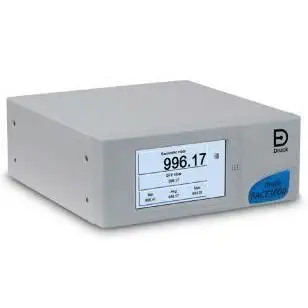
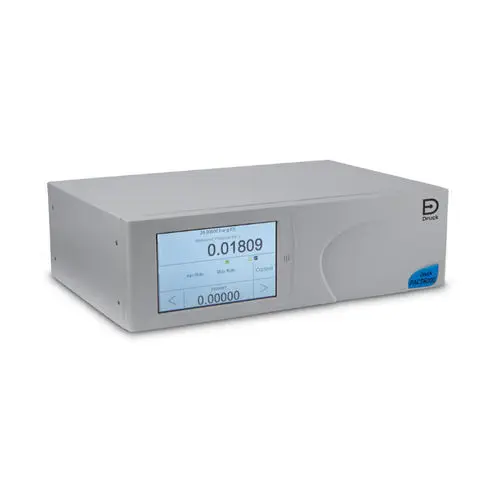
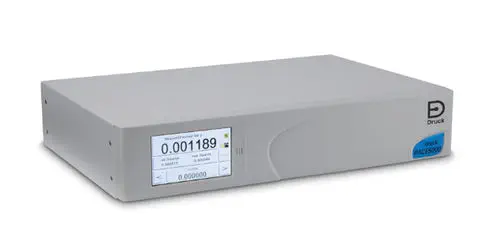
The Druck PACE 1001 is a high-precision barometric pressure indicator designed for laboratories, airfields, and calibration facilities that require a dedicated atmospheric pressure reference. As part of the modular PACE series from Baker Hughes, it combines an internal barometric sensor with a colour touchscreen interface and multi-protocol digital connectivity — functioning as a standalone barometric standard rather than a general-purpose pressure indicator.
How does the PACE 1001 differ from the PACE 1000?
The distinction is the sensor architecture. The PACE 1000 is a general-purpose precision pressure indicator that accepts external remote sensors (IDOS modules, resonant or strain-gauge transducers) for measuring gauge, absolute, or differential pressure across wide ranges. The PACE 1001 is purpose-built for barometric measurement: it houses a dedicated internal barometric sensor calibrated to the 750–1150 mbar absolute range. This makes the PACE 1001 the correct choice when atmospheric pressure monitoring is the primary task — the PACE 1000 would require an external barometric module to achieve the same function. The PACE 1001 also includes the Airfield Task as standard, displaying QFE, QFF, and QNH in either pressure units or altitude (feet/metres).
Which precision grade should you select?
Four factory-calibrated grades cover the spectrum from routine monitoring to metrology-lab reference. Standard (±0.10 mbar) suffices for general laboratory atmospheric tracking and airfield operations. High (±0.05 mbar) doubles the accuracy for ISO 17025 calibration environments. Premium (±0.025 mbar) and Reference (±0.020 mbar) grades serve as primary barometric standards where uncertainty budgets demand the lowest achievable measurement deviation — the Reference grade delivers 0.06 mbar two-sigma long-term stability over one year. All grades include non-linearity, hysteresis, repeatability, and temperature effects over the full 15–45°C calibrated range, so the specification reflects real-world performance rather than ideal-condition numbers.
What optional capabilities expand the instrument's utility?
An analogue output module provides a programmable 0–10 V, 0–5 V, ±5 V, or 0/4–20 mA signal with 0.05% FS precision at update rates up to 80 readings per second — useful for integrating the PACE 1001 into DAQ systems that lack digital bus connectivity. The volt-free contact option adds three independent NO/NC relays for triggering external alarms or sequencing equipment based on pressure thresholds. A leak test module automates pressure-decay measurement over a user-defined dwell period, reporting leak rate per second or per minute. The switch test option automates pressure switch characterisation, capturing opening and closing pressures with hysteresis.
How does data logging and connectivity work?
The instrument logs data in CSV format to an internal memory card or external USB storage at user-defined intervals starting from one second. Standard interfaces — RS232, USB, IEEE-488 (GPIB), and Ethernet — support SCPI command protocol alongside DPI141/142/150 emulation and LabVIEW drivers, so the PACE 1001 integrates into both legacy ATE systems and modern Ethernet-based test networks. Twenty-eight selectable pressure units plus four user-defined custom units eliminate manual conversion. On-screen replay of logged data with min/max/average display lets operators review barometric trends without exporting to a PC.
Resources & Documentation
Druck PACE 1001 Precision Barometric Indicator with Color Touchscreen and Digital Interfaces
Product Specifications
- Brand
- Baker Hughes (Druck)
- Part Number
- PACE 1001
- Product Type
- Barometric Pressure Indicator
- Series
- PACE
- Pressure Range
- 750–1150 mbar abs (10.9–16.7 psi / 75–115 kPa)
- Precision Grades
- Standard ±0.10 mbar / High ±0.05 mbar / Premium ±0.025 mbar / Reference ±0.020 mbar
- Long-Term Stability
- 0.05 mbar per annum
- Display
- 4.3" Color Graphic LCD with Integrated Touchscreen
- Standard Interfaces
- RS232, USB, IEEE-488 (GPIB), Ethernet (VXI-11 & SCPI)
- Pressure Connection
- G 1/8 Female (1/8 NPT Female with Adapter, North America)
- Power Supply
- 90–130 VAC / 180–260 VAC, 47–63 Hz, 15 VA
- Operating Temperature
- 10°C to 50°C (Calibrated 15°C to 45°C)
- Dimensions (W × H × D)
- 218 × 88 × 250 mm (2U Rack-Mount)
- Weight
- 3.2 kg
Resources & Documentation
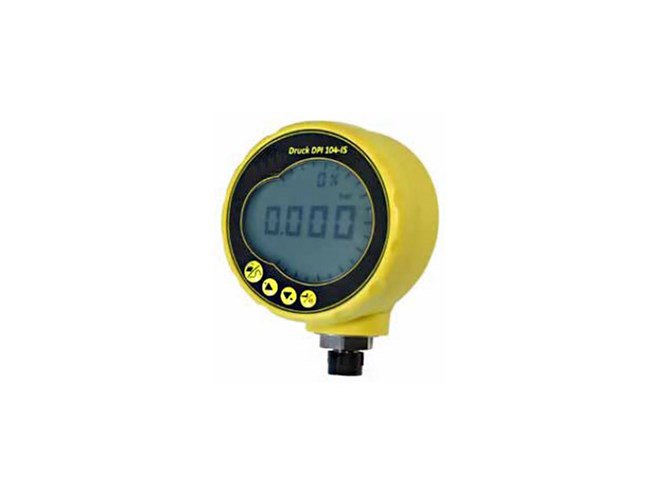
Druck DPI 104-IS
0.05% FS, ATEX/IECEx
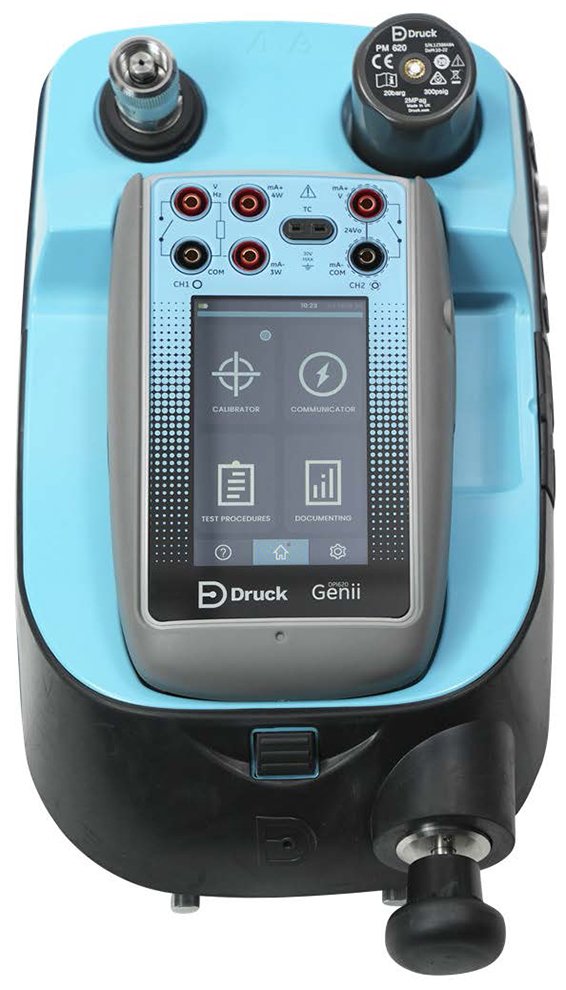
Druck DPI 620 Genii
Electrical, temperature, pressure, HART/FF optional
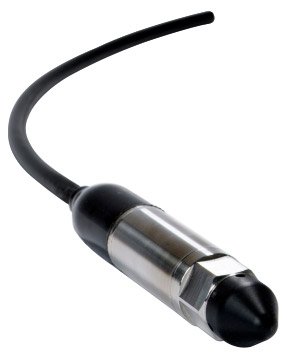
Druck DPS5000
I2C digital output, low power
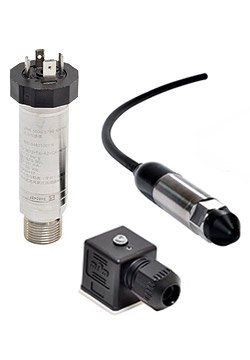
Druck UNIK 5600/5700
0.04% accuracy, marine approved
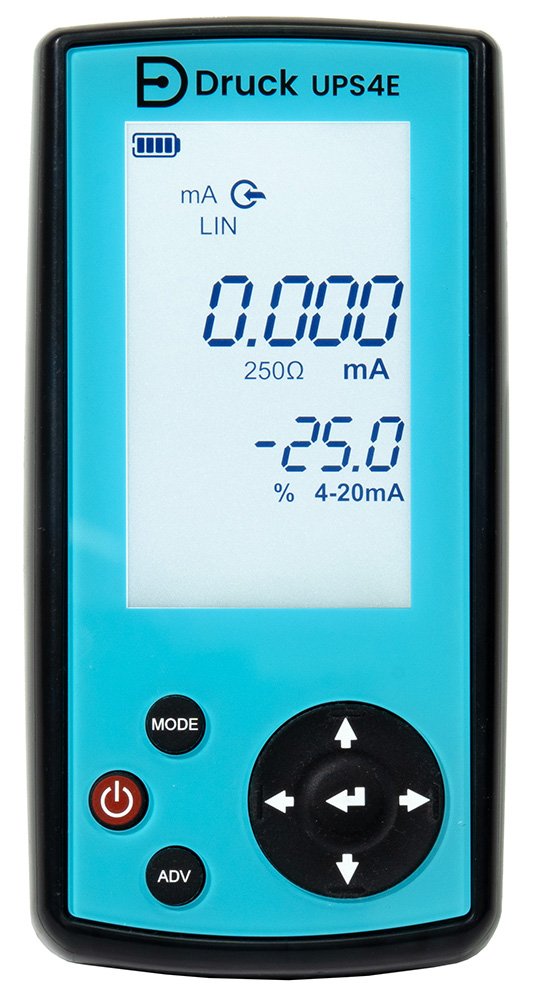
Druck UPS4E
Pocket-sized, one-hand operation for 4-20mA loops
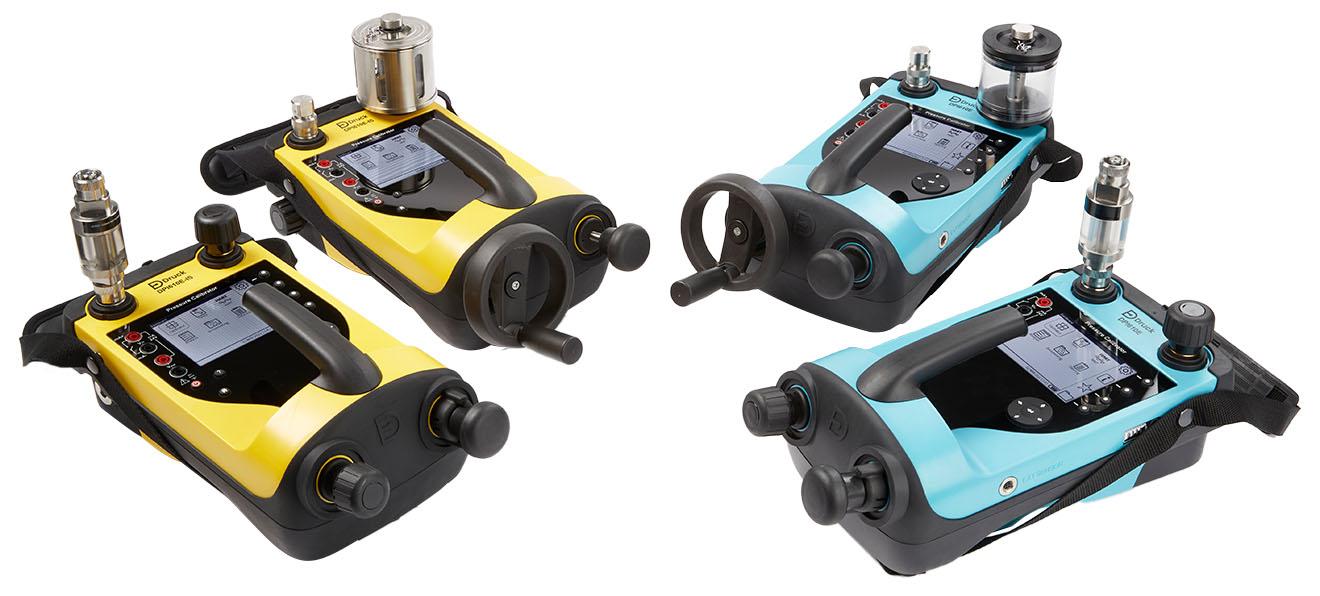
Druck DPI610E
100,000 point logging, HART, IP54, IS option, 0.025% accuracy
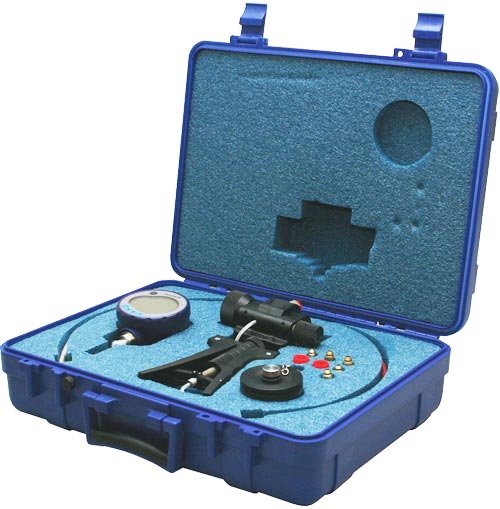
Druck DPI-104 Kit
0.05% FS accuracy, to 10,000psi, pneumatic/hydraulic pumps
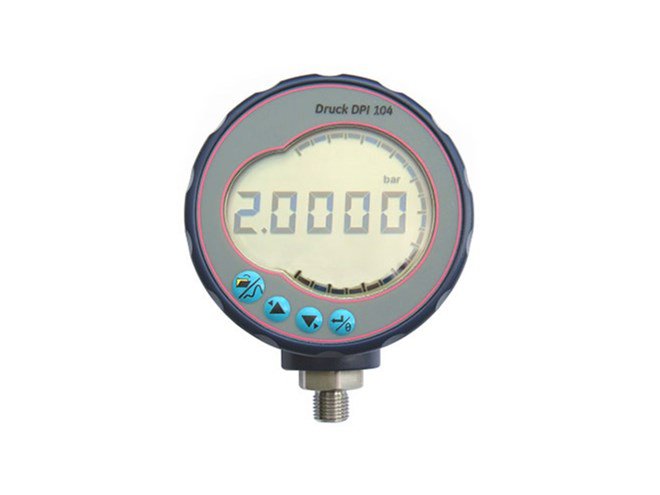
Druck DPI 104
5-digit display, pressure switch test