Solar Wireless Geophone
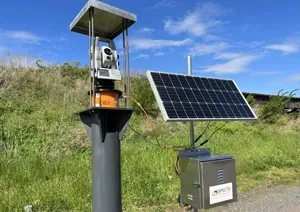
Cabled seismic arrays bury kilometers of cable and swap batteries yearly. Solar wireless nodes like Resensys SeniMax run a decade — what changes on the survey.

Selection guides, head-to-head comparisons, and field-tested configuration notes for control engineers, integrators, and maintenance teams.
Cabled seismic arrays bury kilometers of cable and swap batteries yearly. Solar wireless nodes like Resensys SeniMax run a decade — what changes on the survey.
PanelView Plus 7 Standard and Performance share FactoryTalk View ME but differ in memory, connections, alarms. Compare tiers and pick the right one.
A standalone safety controller has fixed I/O — validated once. An expandable controller adds I/O modules as the machine grows — but each expansion requires re-validation.
At 600 V a 250 HP motor draws roughly 250 A vs 312 A at 480 V — slimming cable by one gauge and reducing I2R losses. But 600 V drives are a smaller market.
Stoichiometric combustion at lambda=1 enables a three-way catalyst for near-zero NOx but sacrifices efficiency. Lean-burn at lambda=1.4-1.6 delivers higher thermal efficiency but requires SCR for NOx compliance.
Thermoplastics are heated, injected, and cooled to solidify. Rubber is injected cool into a hot mold where vulcanization cures the material — the temperature gradient runs opposite.
PowerFlex 70 is legacy, 700S high-performance regenerative, 755 the flexible flagship. Compare the three AC drives by control demand and lifecycle.
An ATS controller monitors voltage, frequency, phase rotation, and balance on both utility and generator supplies.
NEMA MCCs are built for decades of service with oversized components and no derating. IEC MCCs are compact and cost less upfront but demand disciplined thermal calculation. Which standard fits your plant maintenance culture and lifetime cost model.
Centralized I/O home-runs every sensor cable to one cabinet. Distributed I/O puts modules next to the sensors with one fieldbus cable back.
LP handles protocol conversion at 6-10 W. BP runs edge databases at 15-25 W. UP handles vision inference at 35-65 W.