
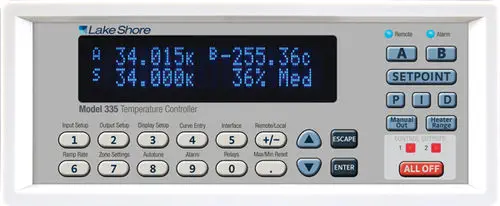
Product Specifications
- Manufacturer
- Lake Shore Cryotronics, Inc.
- Part Number
- 335
- Product Type
- Dual-Channel Cryogenic Temperature Controller
- Temperature Range
- 300 mK to 1,505 K (with appropriate sensors)
- Heater Power
- 75 W total — configurable as 50 W + 25 W or 75 W + 1 W; low-noise variable DC current source
- PID Control Loops
- Two independent, fully configurable; autotuning with automatic PID parameter calculation
- Sensor Compatibility
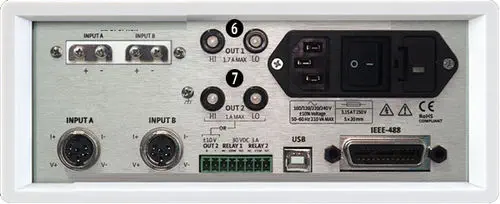
- 2 standard inputs — diode, RTD (Cernox®, silicon diodes, platinum RTDs, Rox™); thermocouple via optional Model 3060 input card; 10 excitation currents with autorange
- Zone Tuning & Interfaces
- Auto-switches sensor inputs for seamless wide-range control; USB & IEEE-488 (GPIB); ±10 V analog output; 39 user CalCurves; SoftCal algorithm for silicon diodes & platinum RTDs
Product Description
The Lake Shore Model 335 is a dual-channel cryogenic temperature controller that bridges the gap between entry-level single-loop instruments and high-end multi-channel systems. Designed for condensed matter physics, quantum transport, and superconducting magnet applications, it delivers 75 W of low-noise DC heater power across two fully configurable PID control loops. The instrument is built around Lake Shore's proprietary zone tuning architecture, which automatically switches sensor inputs and re-scales excitation currents when the measured temperature transitions beyond the usable range of one sensor—enabling truly seamless measurement and control from 300 mK to over 1,500 K without interrupting an experiment to swap sensors or manually re-tune PID parameters.
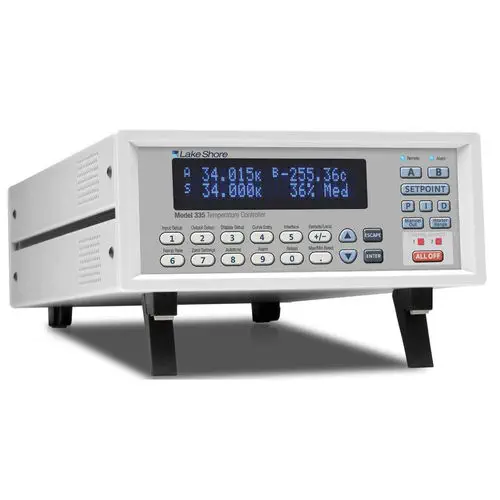
Zone Tuning — Seamless Control Across 4 Orders of Magnitude
- The Problem It Solves: In a typical cryogenic temperature sweep, a single sensor type cannot cover the full temperature range. A Cernox® RTD works well from 300 mK to 100 K, but above 100 K a silicon diode or thermocouple is needed. With a conventional PID controller, the user must manually switch sensors and re-tune PID parameters at each transition—a tedious process that risks thermal overshoot and loss of temperature stability.
- How Zone Tuning Works: The Model 335 allows the user to define up to 10 temperature zones, each associated with a specific sensor input, excitation current, and PID parameter set. As the setpoint crosses from one zone into the next, the controller automatically transfers control authority to the appropriate sensor, scales the excitation current to prevent sensor self-heating, and loads the pre-optimized PID values for that zone. The transition is seamless—no manual intervention, no loss of temperature control.
- Sensor Excitation Autorange: The instrument provides 10 pre-loaded excitation current settings optimized for NTC RTDs such as Cernox® and ruthenium oxide (Rox™). In autorange mode, the controller scales the excitation current in real time as the sensor resistance changes by orders of magnitude during cooldown, preventing self-heating at low temperatures while maintaining measurement resolution at high temperatures.
75 W Low-Noise Heater Power — Clean, Configurable, and Direct
- Two Configurable Outputs: The heater outputs are variable DC current sources—not PWM or time-proportioned relays. Output 1 delivers up to 50 W (or 75 W in the 75 W + 1 W configuration). Output 2 can be configured as a second heater output (25 W or 1 W) or switched to voltage mode, where it functions as a ±10 V analog output while still providing 1 W of PID-controlled heater power.
- Why DC Current Matters: Unlike PWM switching, a linear DC current source produces no high-frequency noise at the heater terminals. This is critical for noise-sensitive electrical transport measurements and scanning probe microscopy, where even microvolt-level interference can obscure a quantum Hall plateau or a superconducting gap feature.
- Comparison to Model 331/332: The Model 335 triples the total heater power of the popular Model 331 (75 W vs 25 W) within the same half-rack form factor. In the 75 W + 1 W configuration, a single output can drive a 25 Ω heater load directly—sufficient to warm a typical VTI sample stage from 1.5 K to 300 K in a fraction of the time required by its predecessors.
PID Autotuning & Setpoint Ramp
- Autotuning: The improved autotuning feature automatically measures the thermal response of the system, calculates optimal P, I, and D parameters, and provides feedback to assist the user in constructing zone tables. This is particularly valuable during first-time system commissioning or when changing between different cryostat configurations.
- Setpoint Ramp: The ramp function provides smooth, continuous setpoint changes with user-defined ramp rates, preventing the thermal shock and overshoot that can occur with step changes. For lambda-point measurements (He I to He II transition), the ramp rate can be set as low as 0.1 K/min for precise thermodynamic control across the superfluid transition.
- Manual PID Override: For experienced users who have developed custom PID tables for specific cryostat configurations, all PID parameters remain fully accessible via the front panel keypad or programmatic interfaces.
Sensor Flexibility — CalCurves, SoftCal, and Current Reversal
- Standard Curves Built In: The Model 335 ships with factory-loaded temperature response curves for silicon diodes, platinum RTDs, ruthenium oxide RTDs, and thermocouples. Non-volatile memory stores up to 39 user-defined 200-point CalCurves for calibrated sensors, accessible via USB, IEEE-488, or Lake Shore's Curve Handler software.
- SoftCal Algorithm: The built-in SoftCal function generates calibration curves for silicon diodes and platinum RTDs from as few as 3 reference temperature points, enabling rapid in-situ sensor calibration without external software. The generated curves are stored as user curves and are immediately usable for closed-loop temperature control.
- Current Reversal: For resistance sensors, the instrument employs excitation current reversal to cancel thermal EMF errors. By measuring the sensor resistance with current flowing in both directions and averaging the result, the controller mathematically eliminates DC offset voltages from thermocouple junctions at the connector contacts—a technique inherited from Lake Shore's precision DC resistance bridges.
- Thermocouple Option: The field-installable Model 3060 input card adds Type E, K, and T thermocouple support to both sensor inputs, extending the high-temperature measurement range to over 1,500 K.
Connectivity & Automation
- USB and IEEE-488 (GPIB): Both interfaces are standard, with full command sets for reading sensor temperatures, setting PID parameters, configuring zones, and downloading CalCurves. The controller also emulates Model 331 and 332 command syntax, preserving backward compatibility with existing LabVIEW, Python, and EPICS automation frameworks.
- Alarms & Relays: Two high and two low alarm setpoints per sensor input—eight alarm thresholds in total—are paired with two independent mechanical relays for automated shutdown of heaters, activation of cooling systems, or triggering of external interlocks.
- ±10 V Analog Output: When Output 2 is configured in voltage mode, the analog output can drive an external power supply, a piezo actuator, or a valve positioner, while still providing 1 W of closed-loop PID heater power on the same channel.
Applications
- Condensed matter physics: resistivity, Hall effect, and specific heat measurements from 300 mK to 1,500 K
- Superconducting magnet systems: NbTi and Nb₃Sn magnet temperature monitoring and quench protection
- Dilution refrigerator temperature control: continuous regulation of mixing chamber temperature with sub-millikelvin stability
- Quantum transport measurements: ultra-low-noise heater power for gate-defined quantum dots and 2DEG heterostructures
- Cryogenic sensor calibration: SoftCal algorithm and 39 CalCurves for rapid in-situ sensor characterization
- Scanning probe microscopy: clean DC heater power for variable-temperature STM and AFM stages
Resources & Documentation
Lake Shore Model 335 Cryogenic Temperature Controller, PID Zone Tuning
Product Specifications
- Manufacturer
- Lake Shore Cryotronics, Inc.
- Part Number
- 335
- Product Type
- Dual-Channel Cryogenic Temperature Controller
- Temperature Range
- 300 mK to 1,505 K (with appropriate sensors)
- Heater Power
- 75 W total — configurable as 50 W + 25 W or 75 W + 1 W; low-noise variable DC current source
- PID Control Loops
- Two independent, fully configurable; autotuning with automatic PID parameter calculation
- Sensor Compatibility
- 2 standard inputs — diode, RTD (Cernox®, silicon diodes, platinum RTDs, Rox™); thermocouple via optional Model 3060 input card; 10 excitation currents with autorange
- Zone Tuning & Interfaces
- Auto-switches sensor inputs for seamless wide-range control; USB & IEEE-488 (GPIB); ±10 V analog output; 39 user CalCurves; SoftCal algorithm for silicon diodes & platinum RTDs
Resources & Documentation
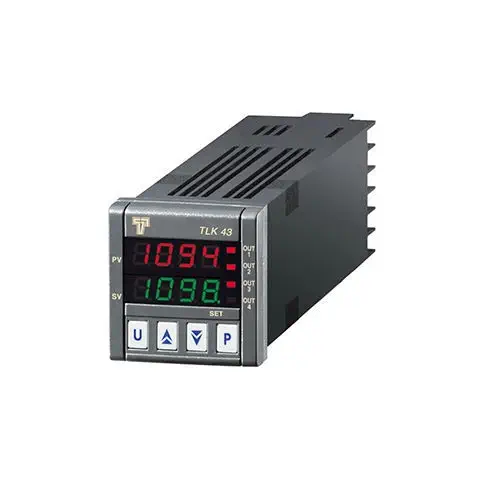
Regulation France TLK43 Series
2-DOF PID, 4 Outputs, 0.2% Acc.

ZUMBACH AUTAC 300
Convective heat flow measurement for cable extrusion preheater control

Backer Hotwatt 100 Series
Sensor Break Cutoff, Adj. BW
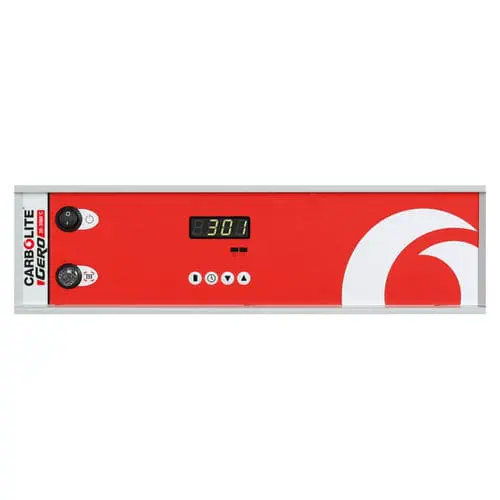
Carbolite Gero Ltd. 301
Large LED display, 99h timer
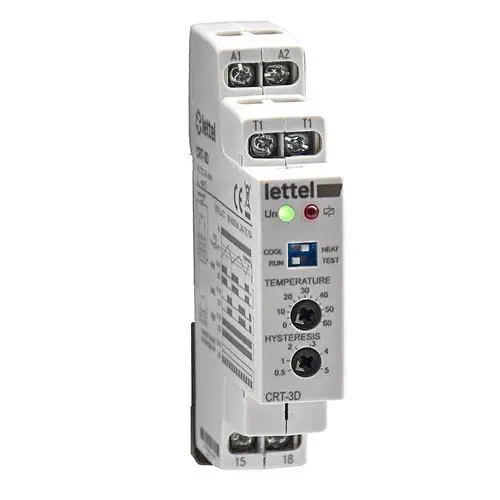
Lettel CRT-3D
35mm DIN Rail, Modular Design
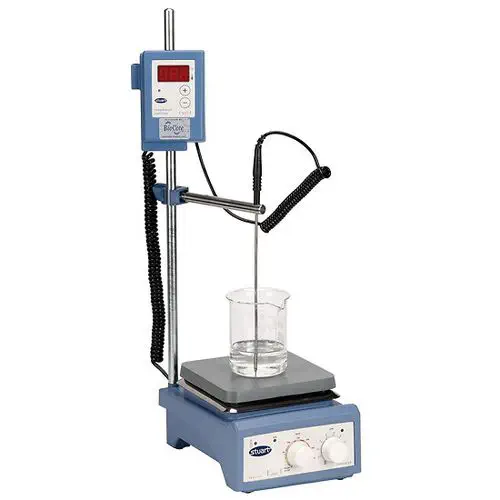
Eurotherm 3208
±0.1% FS, 1/8 DIN vertical
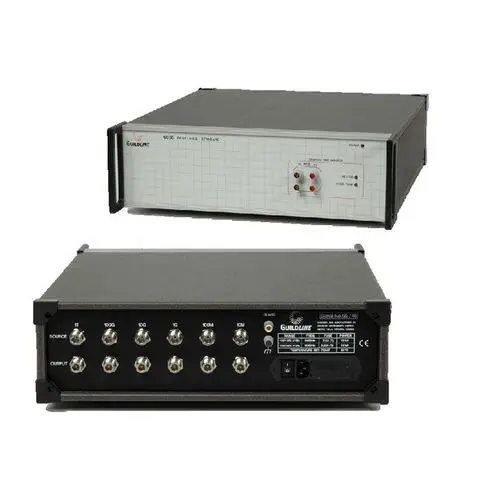
EVOMESURE 6636 Series
Potentiometer set, J/K/Pt100
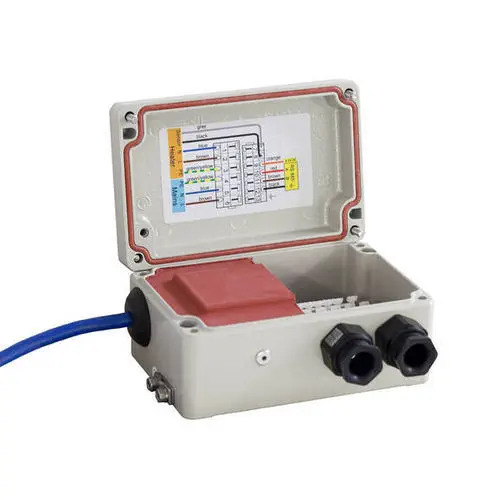
INTERTEC-Hess GmbH TC D
Triac, Modbus RTU, IP66