
Product Specifications
- Manufacturer
- Regin
- Series
- OPTIGO OP10 (OP10, OP10-230)
- Product Type
- Pre-Programmed Graphic Temperature Controller
- Display & Operation
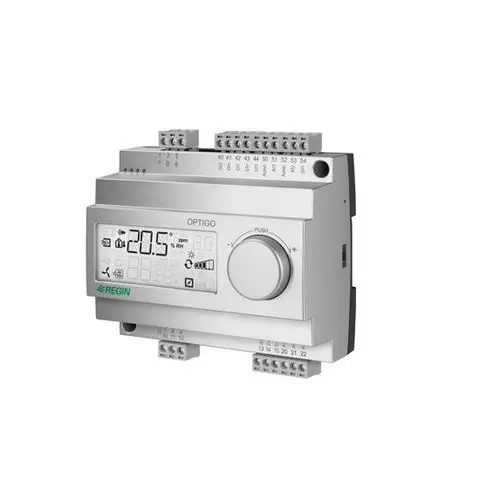
- Backlit LCD, numeric/graphic, language-independent symbols; one encoder knob for navigation & configuration
- Control Functions
- 5 selectable modes: Supply air PI; Supply air with outdoor compensation; Cascade control; Radiator circuit with outdoor curve; Domestic hot water PID
- I/O Configuration
- 7 modules: 2 AI (PT1000), 1 UI (PT1000 or digital), 2 DI (free contact), 2 AO (0…10 V DC), 3 DO (Triac 24 V AC 0.5 A + Relay 230 V AC 5 A fan start)
- Power Supply & Consumption
- OP10: 24 V AC ±15%, 50/60 Hz, 4 VA; OP10-230: 230 V AC +10/-15%, 50/60 Hz
- Construction & Environment
- 123 × 123 × 60 mm; DIN‑rail or surface mount; IP20; ambient 0…50 °C, max. 95% RH; storage -40…50 °C; polycarbonate casing
Product Description
The Regin OPTIGO OP10 is a compact, pre-programmed, configurable, stand-alone graphic temperature controller designed for simple temperature control applications without the overhead of a DDC or PLC system. The controller uses a backlit LCD display with language-independent symbols and a single encoder knob for navigation and configuration. It is intended for European and IEC-standard markets, and is commonly used in ventilation control, radiator heating, and domestic hot water systems. It requires no proprietary commissioning software or communication bus for standalone operation—all settings are made directly on the front panel knob.
Five Selectable Control Modes, One Controller
- Mode 1 — Supply Air Temperature Control: A PID-based control loop maintains the supply air temperature at a setpoint by modulating two analogue outputs (AO1 and AO2), which would typically drive a heating coil valve and a cooling coil valve via 0–10 V actuators. This mode does not use outdoor temperature compensation and is suitable for simple air handling units.
- Mode 2 — Supply Air Control with Outdoor Compensation: The supply air temperature setpoint is automatically adjusted based on the outdoor temperature measured by a sensor on AI2. Compensation starts at an outdoor temperature of 10 °C (default, adjustable between -30…50 °C) with an offset of 5 °C at -20 °C outdoor temperature. This is common in Northern European climates where a downstream reheat coil trims the supply temperature in response to outdoor conditions.
- Mode 3 — Cascade Control (Room / Extract Air): A primary supply air control loop is supervised by a secondary room temperature or extract air temperature sensor. If the room temperature deviates from the setpoint, the supply air setpoint is automatically offset within a configurable range (Min. at cascade 0…99 °C, Max. at cascade 0…99 °C). This mode is used for VAV (Variable Air Volume) boxes, constant-volume air handlers, and comfort-controlled zones where precise room temperature is the primary objective.
- Mode 4 — Radiator Circuit Control with Outdoor Curve: The supply water temperature to radiator circuits is regulated according to an outdoor-temperature-dependent heating curve. Default curve points: 60 °C at -20 °C outdoor temperature and 20 °C at 20 °C outdoor temperature. An optional room sensor (connected to UI1) can further influence the water temperature setpoint with a range of 10…40 °C.
- Mode 5 — Domestic Hot Water (DHW) Control: A PID control loop maintains constant supply water temperature using a hot water sensor on AI1 and a primary hot water valve connected to AO1. Applications include storage tank heating, calorifier temperature control, or hot water circulation systems.
- All modes include a fixed frost protection temperature of 7 °C, which activates heating regardless of the operating mode when the relevant temperature drops below the threshold.
Built-In I/O Resources and Wiring Diagram
- 7 physical I/O modules are mapped to the controller functions depending on the selected control mode. The analogue inputs (AI1 and AI2) are factory-configured for PT1000 sensors. The universal input (UI1) accepts a PT1000 temperature sensor, a digital signal, or a 0…10 V DC analogue signal.
- Analogue outputs (AO1, AO2) deliver 0…10 V DC signals with 8-bit resolution and short-circuit protection. These are used to position actuators (heating coil valves, cooling coil valves, VAV dampers). The two Triac digital outputs (DO1, DO2) provide 24 V AC at 0.5 A and are intended for 3-point control actuators. The SPDT relay output (DO3) switches 230 V AC at 5 A and is typically assigned to fan start control.
- External setpoint device support: From firmware revision R20, an external PT1000 setpoint device (e.g., Regin TG-R4/PT1000 or TBI-PT1000) can be connected to the SPI terminal. The device range is 0…40 °C and works with control modes 1–4.
Installation, Physical Dimensions, and Two Versions
- Compact form factor: The controller occupies 7 DIN modules with dimensions of 123 × 123 × 60 mm (122 × 120 × 64 mm including terminal blocks). Weight: 215 g for the OP10 (24 V model), 370 g for the OP10-230 (230 V model).
- Mounting options: Standard DIN-rail mounting (35 mm top-hat rail). The controller can also be surface-mounted using the two screw pockets on the rear or installed in a cabinet door using the optional FMCO front-mounting kit. When front-mounted, only the display and encoder knob are accessible from outside the panel.
- Two supply voltage versions: OP10 (24 V AC ±15%, 4 VA) and OP10-230 (230 V AC +10/-15%, 4 VA). The OP10-230 has internal protection that requires installation in an enclosure rated for LVD compliance (IP20 or better) and overvoltage category 3.
- Environmental tolerance: Operating temperature 0…50 °C, storage temperature -40…50 °C (OP10) or -20…70 °C (OP10-230), and 0–95% RH non‑condensing. The casing is polycarbonate with IP20 protection and pollution degree 2 rating.
Setpoint Adjustment and Application Example
- Out-of-the-box default values: Supply air temperature setpoint: 21 °C (adjustable 10…80 °C). Cascade control room setpoint: 21 °C (10…50 °C). DHW setpoint: 55 °C (10…80 °C). PID control starting values: P-band 15 °C, I-time 60 s, D-factor 0.
- Typical commissioning steps: Install on DIN rail → connect power (24 V AC or 230 V AC) → wire sensors and actuators → select control mode from configuration menu → adjust setpoint and optional outdoor compensation curve → test outputs using I/O status screen → adjust PID parameters (P-band, I-time, D-factor) if oscillation or slow response is observed during initial operation.
- Factory reset: Setting control mode 5 (DHW) with D-factor = 99 restores all factory defaults.
Applications
- Air handling units (AHU) requiring supply air temperature control with or without outdoor temperature compensation
- Radiator heating circuits in multi-family residential or commercial buildings with weather-compensated control
- Domestic hot water calorifier or storage tank temperature regulation
- Fan coil unit or VAV box temperature control with cascade room temperature supervision
- Retrofit projects replacing outdated electromechanical controllers with a modern, pre-programmed digital alternative
Regin OPTIGO OP10 Programmable Graphic Temperature Controller, 5-in-1 HVAC Control
Product Specifications
- Manufacturer
- Regin
- Series
- OPTIGO OP10 (OP10, OP10-230)
- Product Type
- Pre-Programmed Graphic Temperature Controller
- Display & Operation
- Backlit LCD, numeric/graphic, language-independent symbols; one encoder knob for navigation & configuration
- Control Functions
- 5 selectable modes: Supply air PI; Supply air with outdoor compensation; Cascade control; Radiator circuit with outdoor curve; Domestic hot water PID
- I/O Configuration
- 7 modules: 2 AI (PT1000), 1 UI (PT1000 or digital), 2 DI (free contact), 2 AO (0…10 V DC), 3 DO (Triac 24 V AC 0.5 A + Relay 230 V AC 5 A fan start)
- Power Supply & Consumption
- OP10: 24 V AC ±15%, 50/60 Hz, 4 VA; OP10-230: 230 V AC +10/-15%, 50/60 Hz
- Construction & Environment
- 123 × 123 × 60 mm; DIN‑rail or surface mount; IP20; ambient 0…50 °C, max. 95% RH; storage -40…50 °C; polycarbonate casing
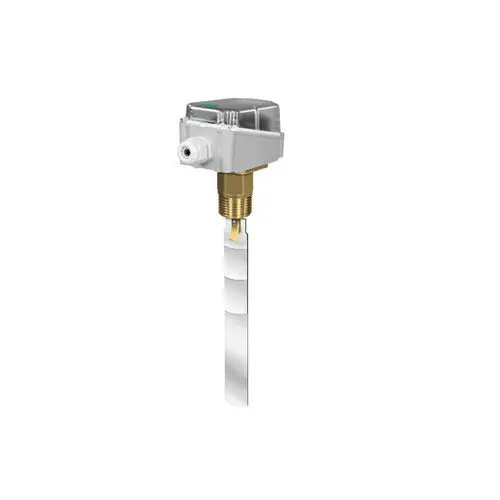
Regin FLS304X
SPDT 15A, IP65, brass body
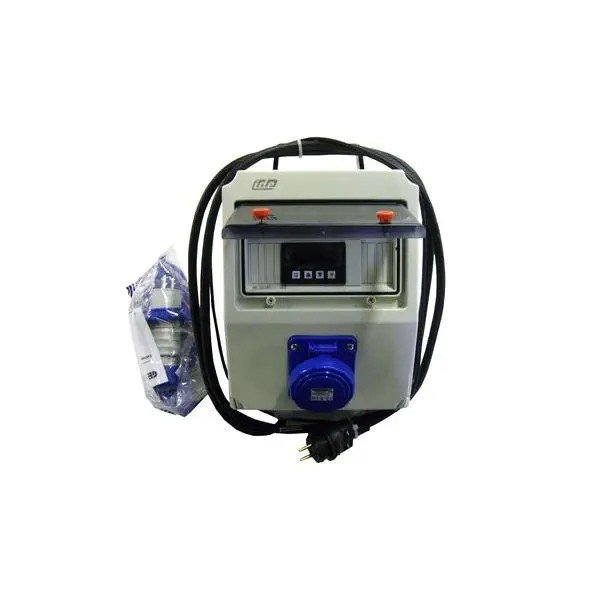
3a Telec THP3A
16A load, IP67, with handle
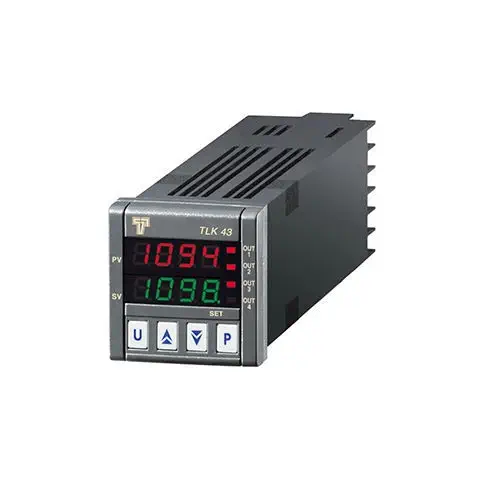
Regulation France TLK43 Series
2-DOF PID, 4 Outputs, 0.2% Acc.

ZUMBACH AUTAC 300
Convective heat flow measurement for cable extrusion preheater control

Backer Hotwatt 100 Series
Sensor Break Cutoff, Adj. BW
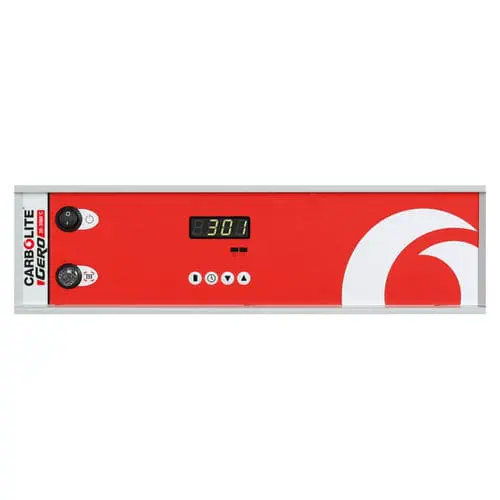
Carbolite Gero Ltd. 301
Large LED display, 99h timer
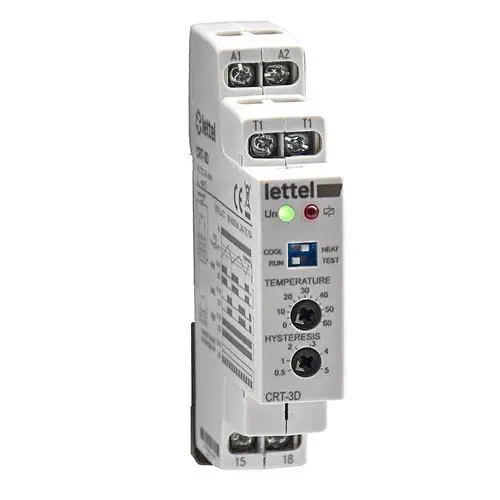
Lettel CRT-3D
35mm DIN Rail, Modular Design
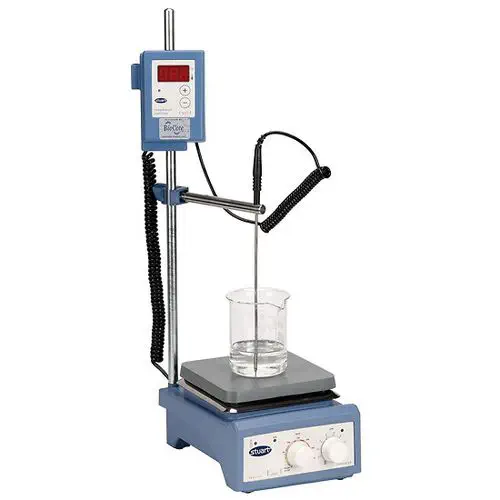
Eurotherm 3208
±0.1% FS, 1/8 DIN vertical
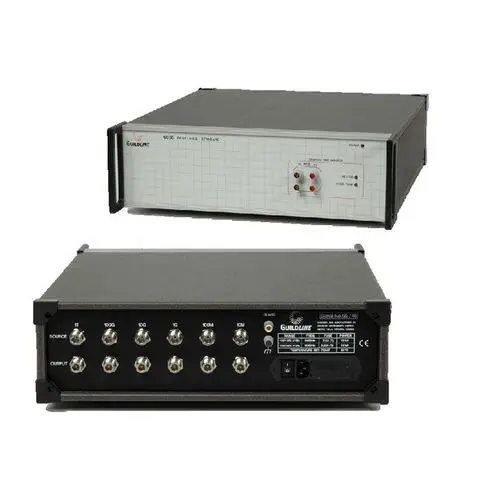
EVOMESURE 6636 Series
Potentiometer set, J/K/Pt100