
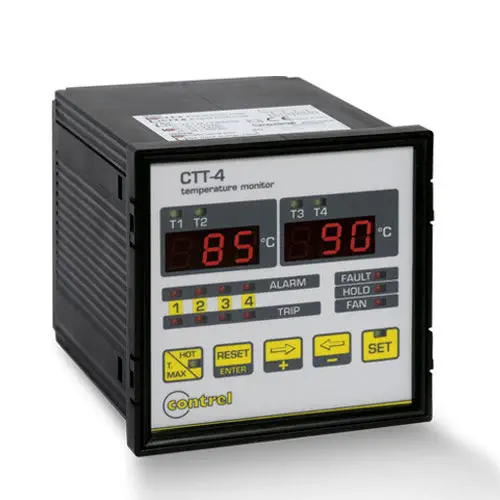
Product Specifications
- Manufacturer
- Contrel elettronica s.r.l. (Italy)
- Series
- CTT-4
- Product Type
- Digital Temperature Regulator / Transformer Temperature Monitoring Device
- Sensor Input
- 4 × Pt100 RTD (3‑wire, also supports 2‑wire and 4‑wire)
- Temperature Range
- 0 °C to +220 °C; accuracy ±2 °C
- Relay Outputs
- 4 (ALARM, TRIP, FAN, FAULT) – exchange contacts; alarm/trip 5 s delay, 2 °C hysteresis, HOLD function; FAULT de‑energised on power loss
- Communication & Analog
- RS‑485 Modbus RTU (optional); 1 × 0/4‑20 mA analog output (optional)
- Power & Mounting
- 20–250 V AC/DC or 115–230–400 V AC (optional); 4 VA; flush panel mount 96 × 96 mm; 500 g; IP52 front / IP20 terminals; −10 °C to +55 °C operating
Product Description
The Contrel CTT-4 is a microprocessor-based digital temperature regulator designed for comprehensive thermal protection of electrical machines—power transformers, motors, generators, and medium‑voltage switchgear. It continuously monitors up to four independent Pt100 RTD sensors and, based on user‑programmed setpoints, drives four dedicated relay outputs that provide a complete layered protection strategy: an early‑warning alarm threshold, a critical‑level trip threshold that can be wired to cut off the load, a ventilat ion control output that activates cooling fans, and a FAULT self‑diagnostic relay that signals sensor failure or internal device malfunction. This layered architecture—early warning, load cutoff, forced cooling, fault signaling—enables the CTT‑4 to protect equipment through multiple progressive intervention levels, from simple over‑temperature alerting to automatic load disconnection and forced cooldown.
Flexible Per‑Channel Programming and Threshold Management
- Independent Alarms for Each Channel: Each of the four Pt100 measurement channels can have its own alarm, trip, and fan thresholds programmed independently. The alarm relay energises when the measured temperature exceeds the setpoint by +1 °C (configurable) after a 5‑second delay, and automatically resets when the temperature drops 2 °C below the threshold. The trip relay follows the same timing logic and is specifically designed to de‑energise the load when the temperature reaches the critical level.
- HOLD Function for Process Safety: When the HOLD function is enabled, once a trip condition is detected on any channel, the TRIP relay remains energised even after the temperature has fallen below the threshold—the relay stays latched until manually reset by an operator. This prevents automatic re‑energisation of equipment that may have an unresolved fault condition, such as a blocked ventilation path or a deteriorating winding insulation. A dedicated Reset button on the front panel allows the operator to manually release the hold after verifying the cause of the trip.
- Ventilation Control (FAN): The FAN relay can be programmed to close at a moderate temperature threshold—well below the alarm setpoint—to activate cooling fans before the temperature reaches the alarm level. This proactive cooling can prevent the temperature from ever reaching the alarm state, extending equipment life and reducing nuisance trips caused by transient temperature spikes in hot weather.
Self‑Diagnostics and Fault Signalling
- Built‑In Probe Diagnostics: The CTT‑4 continuously monitors all connected Pt100 sensors for open circuit (displayed as OPE), short circuit (SHr), or out‑of‑range temperature values (F DC). When a probe fault is detected on any channel, the corresponding channel LED flashes and the FAULT relay opens, providing an independent hard‑wired signal to the plant control system that distinguishes between an actual over‑temperature event and a sensor failure—preventing unnecessary load disconnections.
- Power‑Loss Fault Protection: During normal powered operation, the FAULT relay remains energised and its N.O. contact is closed. If the device loses its auxiliary power supply—due to a supply failure, a blown fuse, or an internal electronics fault—the FAULT relay de‑energises and its contact opens immediately, providing fail‑safe signalling to the supervisory system that the temperature monitoring function is no longer operational.
Analog Output, Communication and Applications
- 0/4‑20 mA Retransmission: The optional configurable analog output (0/4‑20 mA with 200 °C end‑scale) allows the CTT‑4 to forward the temperature of a selected channel, or the highest temperature among all active channels, to a remote SCADA system, DCS, or chart recorder. This single output can represent the critical thermal condition of the entire equipment set, eliminating the need for multiple transmitters.
- RS‑485 Modbus RTU: The optional RS‑485 serial port with MODBUS‑RTU protocol enables connection to PLCs, SCADA systems, and PC‑based management platforms. All temperature values, alarm states, and setpoints can be read and written remotely. A Windows‑compatible management software is available for data logging, alarm recording, and remote programming.
Applications
- Oil‑immersed power transformer winding temperature monitoring and protection (3‑phase coils + core)
- Dry‑type transformer overtemperature protection with automatic load shedding and ventilation control
- Large industrial motor and generator winding temperature surveillance
- Medium‑voltage switchgear thermal monitoring and preventive alarm management
- Legacy substation retrofit projects where only 2‑wire PT100 probes are installed (CTT‑4 supports 2‑wire probes via field‑configurable short‑circuit terminals)
4-ch Transformer Temperature Monitor, Alarm/Trip/Fan, RS-485 – CTT-4 | Contrel
Product Specifications
- Manufacturer
- Contrel elettronica s.r.l. (Italy)
- Series
- CTT-4
- Product Type
- Digital Temperature Regulator / Transformer Temperature Monitoring Device
- Sensor Input
- 4 × Pt100 RTD (3‑wire, also supports 2‑wire and 4‑wire)
- Temperature Range
- 0 °C to +220 °C; accuracy ±2 °C
- Relay Outputs
- 4 (ALARM, TRIP, FAN, FAULT) – exchange contacts; alarm/trip 5 s delay, 2 °C hysteresis, HOLD function; FAULT de‑energised on power loss
- Communication & Analog
- RS‑485 Modbus RTU (optional); 1 × 0/4‑20 mA analog output (optional)
- Power & Mounting
- 20–250 V AC/DC or 115–230–400 V AC (optional); 4 VA; flush panel mount 96 × 96 mm; 500 g; IP52 front / IP20 terminals; −10 °C to +55 °C operating
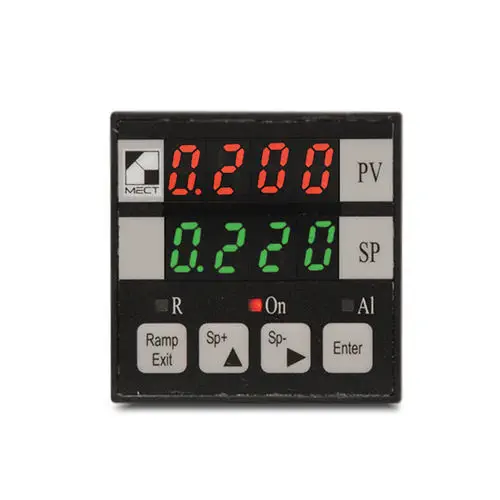
MECT SRL MPT91 M1
Self-Tuning PID, Soft-Start
BRAINCHILD ELECTRONIC BTC-9090 Series
HBA & LBA, Ramp-Soak
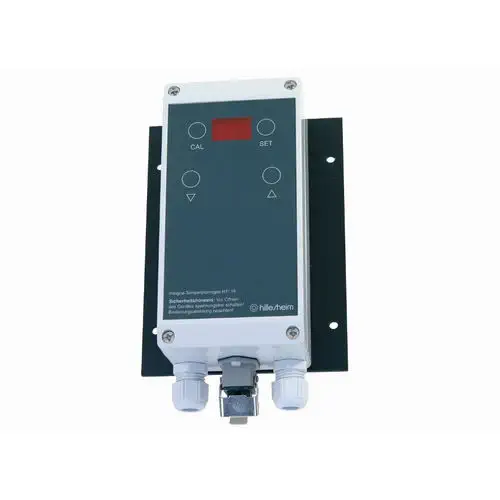
Hillesheim GmbH HTI 16 Series
4-Segment Presets, Triac, IP65
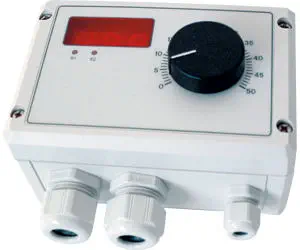
Lm-therm Elektrotechnik AG Ted 105-F
Adj. Differential, Wall Mount
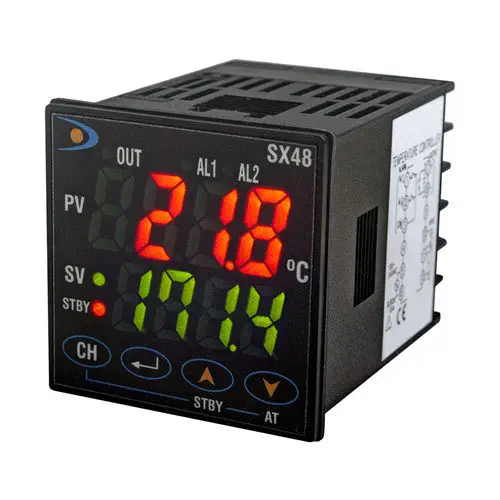
DITEL Syros SX48
62mm Depth, Soft-Start, IP65
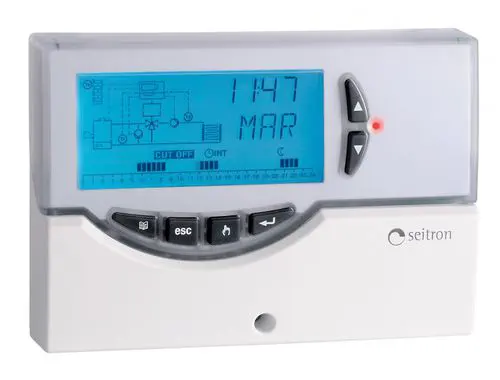
Seitron SpA RKP01M
Freeze & Anti-Condensate, ±5°C
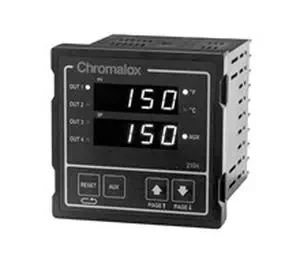
Chromalox 200 Series
SMART Auto‑Tune, NEMA 4X
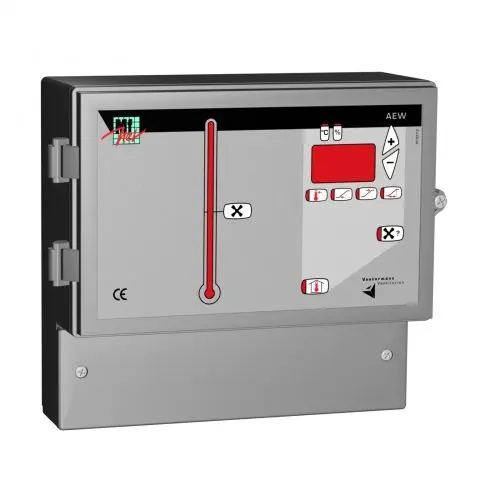
Vostermans Ventilation BV AEW 6.3
0-10V Prog. Output, Override