
Product Specifications
- Manufacturer
- BRAINCHILD ELECTRONIC CO., LTD. (Taiwan)
- Series
- BTC-9090
- Product Type
- Fuzzy Logic + PID Digital Temperature Regulator
- Display & Input
- Dual 4‑digit LED (PV red, SV green); 18‑bit A/D universal input (TC: J, K, T, E, B, R, S, N, L; RTD: Pt100 DIN & JIS; mA, mV, V); input 2 optional (CT, mA, V)
- Control Algorithm
- Fuzzy logic + PID with auto‑tuning; proportional band 0‑500 °C, integral 0‑1000 s, derivative 0‑360 s; ramp rate 0‑500 °C/min or °C/hr, dwell 0‑6553.5 min; soft‑start & sleep modes
- Output Options
- Relay 2 A/240 VAC; SSR drive 5 V or 14 V/30 mA; Triac 1 A/240 VAC; Analog 4‑20 mA, 0‑20 mA, 0‑5 V, 1‑5 V, 0‑10 V (15‑bit D/A); dual output + alarm relay
- Communication & Safety
- RS‑485 Modbus RTU (up to 247 units); heater break alarm (CT); loop break alarm; sensor break bumpless transfer; digital filter 0‑60 s; NEMA 4X front panel
- Power, Size & Certifications
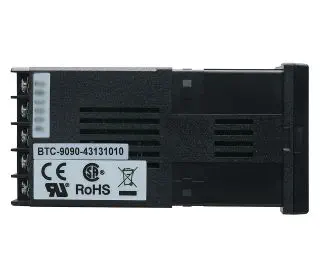
- 90‑264 VAC 47‑63 Hz (< 5 VA); 48 × 48 mm (1/16 DIN); panel cut‑out 45 × 45 mm; depth 66 mm; UL, CSA, CE certified
Product Description
The BRAINCHILD BTC-9090 is a 1/16 DIN (48×48 mm) fuzzy logic + PID temperature regulator for single-loop process and temperature control. It combines an 18‑bit universal input stage—accepting 9 thermocouple types, Pt100 RTDs, and linear mA/V signals—with dual control outputs (relay, SSR, Triac, or analog 4‑20 mA/0‑10 V) and a dedicated alarm relay. The fuzzy‑PID algorithm provides auto‑tuning for rapid setpoint attainment, adaptive response to process disturbances, and minimal overshoot. A ramp/dwell timer enables controlled temperature profiling, while soft‑start and sleep modes reduce thermal shock and energy consumption. Sensor break bumpless transfer, heater break alarm (HBA), and loop break alarm (LBA) are integrated, making the BTC‑9090 suitable for critical heating applications where equipment protection and process continuity are required. RS‑485 Modbus RTU communication supports up to 247 networked units, enabling centralized supervision in multi‑zone systems.
Fuzzy PID Control with Auto‑Tuning
- Fuzzy Logic Enhancement: Traditional PID controllers require manual fine‑tuning for each load configuration. The BTC‑9090's fuzzy logic layer monitors the real‑time temperature trajectory—rate of change, overshoot tendency, and approach speed—and dynamically adjusts the PID output. The result is faster stabilization, reduced overshoot, and stable control even under sudden load changes or external disturbances.
- Auto‑Tuning (Cold Start & Hot Start): The cold‑start auto‑tuning function measures the thermal response of the connected system during initial heat‑up and automatically calculates the optimal PID parameters. Hot‑start auto‑tuning refines these parameters during operation without interrupting the process. Manual PID entry and ON/OFF control with adjustable hysteresis (0–20% of span) are also available.
- Ramp/Dwell Soft‑Start: The ramp rate function (0–500 °C/min or °C/hr) controls the rate of temperature rise to prevent thermal shock to heating elements and product. Once the setpoint is reached, the dwell timer (0–6553.5 min) holds the temperature for a configurable period before switching off or transitioning to the next setpoint. Combined with soft‑start, these functions enable unattended multi‑stage thermal processes.
- Power Limit and Sleep Mode: The output power limit (0–100%) prevents overheating during startup by capping the maximum energy delivered to the heater. Sleep mode suspends control output and alarms during idle periods, reducing energy consumption and preventing nuisance alarms during maintenance.
Universal Input and Configurable Output Architecture
- 18‑bit Universal Input: Input 1 accepts 9 thermocouple types (J, K, T, E, B, R, S, N, L), Pt100 RTD (DIN and JIS), and linear signals (mA, mV, V) without hardware modification. Input 2 can be configured as a CT input (0–50 A) for heater current monitoring, or as a second analog input (mA/V) for cascade control, remote setpoint, or differential temperature measurement.
- Dual Control Outputs + Alarm Relay: Output 1 and Output 2 are independently configurable—one can drive an SSR for heating while the other provides a 4‑20 mA signal for cooling control. The dedicated alarm relay (Form A or Form C) supports 4 configurable alarm modes: Normal, Latching, Hold, and Latching/Hold. All outputs are available in multiple hardware variants (relay 2 A/240 VAC, SSR drive 5 V or 14 V/30 mA, Triac 1 A, analog 4‑20 mA/0‑10 V with 15‑bit D/A resolution).
- Event Input & Remote Setpoint: An opto‑isolated event input accepts external contacts to switch between two PID sets, reset alarms, or disable outputs. The remote setpoint function allows the target temperature to be supplied via an analog signal, enabling the BTC‑9090 to operate as a follower in cascade control loops.
Safety, Diagnostics, and Communication
- Heater Break Alarm (HBA) with CT Input: The CT input monitors the heater load current (0–50 A). When the controller calls for heat and the measured current falls below a configurable threshold, the HBA relay activates immediately, preventing undetected heater failure from causing process temperature drops. The measured heater current is displayed in real time on the controller.
- Loop Break Alarm (LBA): The LBA function detects a broken control loop—failed SSR, open contactor, or wiring fault—by monitoring the relationship between control output and process response. If the temperature fails to rise (or fall, in cooling mode) despite 100% output, the LBA alarm triggers within a configurable detection window.
- Sensor Break Bumpless Transfer: On sensor failure (open or short circuit), the controller automatically switches to manual mode and holds the last output value. This bumpless transfer maintains process continuity until the sensor is replaced, preventing complete shutdown during transient faults. The response time is 4 seconds for TC/RTD/mV inputs and 0.1 seconds for 4‑20 mA/1‑5 V inputs.
- Programmable Digital Filter: A first‑order digital filter with 10 selectable time constants (0–60 seconds) suppresses input fluctuations caused by electrical noise or turbulent flow, providing stable readings without sacrificing response time.
- RS‑485 Modbus RTU (up to 247 Units): The BTC‑9090 supports RS‑232 (point‑to‑point) and RS‑485 (multi‑drop) communication with Modbus RTU protocol at baud rates from 0.3 to 38.4 kbps. Up to 247 controllers can be daisy‑chained on a single RS‑485 bus, enabling centralized monitoring, setpoint adjustment, and data logging from a PC or PLC. Analog retransmission (4‑20 mA, 0‑10 V) is also available for direct signal output to chart recorders and remote indicators.
Compact 1/16 DIN Panel Mount with NEMA 4X Front
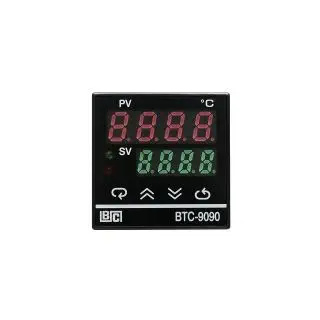
- Space‑Saving 48×48 mm Format: The standard 1/16 DIN panel cut‑out (45×45 mm) fits into densely packed control cabinets alongside contactors, motor protectors, and circuit breakers. The front panel depth is 66 mm behind the panel surface. The dual 4‑digit LED display provides simultaneous process value (PV, red) and setpoint (SV, green) indication visible under various lighting conditions.
- NEMA 4X / IP65 Front Protection: The sealed front fascia withstands dust ingress, hose‑directed water, and corrosion, making the BTC‑9090 suitable for washdown environments in food processing, pharmaceutical cleanrooms, and outdoor installations.
- Wide‑Range Power Supply: The BTC‑9090 operates from any supply voltage between 90 V AC and 264 V AC at 47–63 Hz, with power consumption below 5 VA. Optional low‑voltage variants accept 11–26 V AC/DC or 20–32 V AC/DC for integration into low‑voltage control panels. Global certifications include UL, CSA, and CE.
- SEL Function for Customized Operator Access: Each parameter can be selectively exposed or hidden in the operator menu level via the SEL command, allowing OEMs and system integrators to limit operator access to only the parameters relevant to daily operation—setpoint, alarm status, and output monitoring—while protecting critical PID and configuration settings.
Applications
- Plastics extrusion and injection molding barrel temperature control
- Packaging machinery: heat sealing, blister forming, shrink‑wrap tunnels
- Industrial ovens and furnaces for heat treatment and curing
- Food processing: ovens, fryers, pasteurization equipment
- Chemical reactors and pharmaceutical processes requiring multi‑step thermal profiles
- Any industrial application requiring fuzzy PID control, heater break detection, and Modbus communication in a compact 1/16 DIN format
Resources & Documentation
Fuzzy PID Regulator, Auto-Tune, Universal In, 48×48mm – BTC-9090 | BrainChild
Product Specifications
- Manufacturer
- BRAINCHILD ELECTRONIC CO., LTD. (Taiwan)
- Series
- BTC-9090
- Product Type
- Fuzzy Logic + PID Digital Temperature Regulator
- Display & Input
- Dual 4‑digit LED (PV red, SV green); 18‑bit A/D universal input (TC: J, K, T, E, B, R, S, N, L; RTD: Pt100 DIN & JIS; mA, mV, V); input 2 optional (CT, mA, V)
- Control Algorithm
- Fuzzy logic + PID with auto‑tuning; proportional band 0‑500 °C, integral 0‑1000 s, derivative 0‑360 s; ramp rate 0‑500 °C/min or °C/hr, dwell 0‑6553.5 min; soft‑start & sleep modes
- Output Options
- Relay 2 A/240 VAC; SSR drive 5 V or 14 V/30 mA; Triac 1 A/240 VAC; Analog 4‑20 mA, 0‑20 mA, 0‑5 V, 1‑5 V, 0‑10 V (15‑bit D/A); dual output + alarm relay
- Communication & Safety
- RS‑485 Modbus RTU (up to 247 units); heater break alarm (CT); loop break alarm; sensor break bumpless transfer; digital filter 0‑60 s; NEMA 4X front panel
- Power, Size & Certifications
- 90‑264 VAC 47‑63 Hz (< 5 VA); 48 × 48 mm (1/16 DIN); panel cut‑out 45 × 45 mm; depth 66 mm; UL, CSA, CE certified
Resources & Documentation
Rotork ExReg-D
-40°C, IP66, Temp. & Humidity
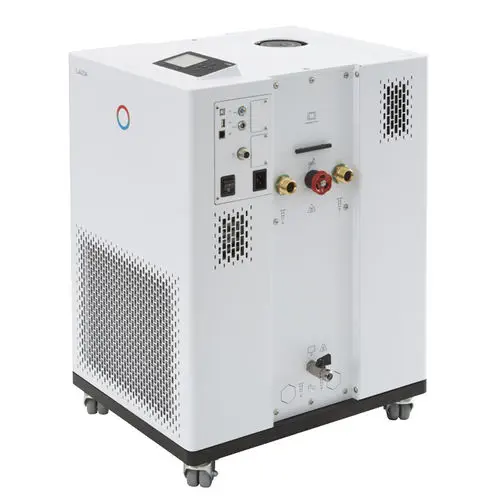
LAUDA Integral IN T/TW Series
SelfCheck, SmartCool, 150 Seg.
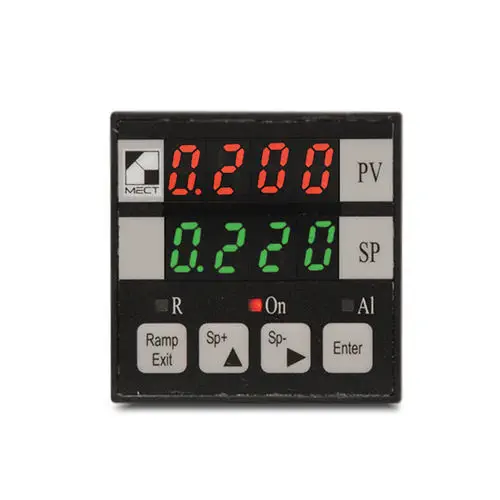
MECT SRL MPT91 M1
Self-Tuning PID, Soft-Start
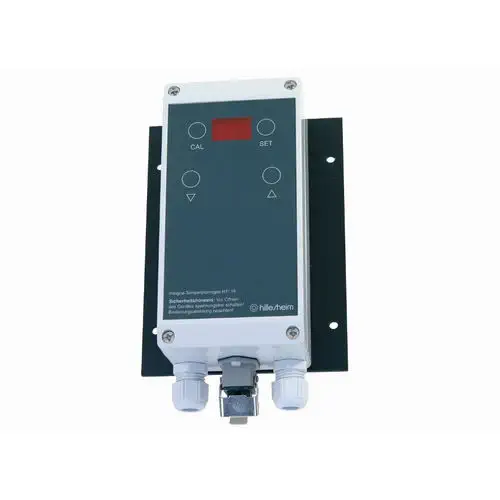
Hillesheim GmbH HTI 16 Series
4-Segment Presets, Triac, IP65
Lm-therm Elektrotechnik AG Ted 105-F
Adj. Differential, Wall Mount
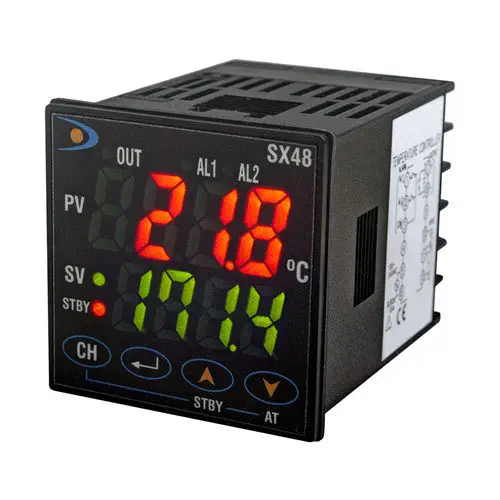
DITEL Syros SX48
62mm Depth, Soft-Start, IP65
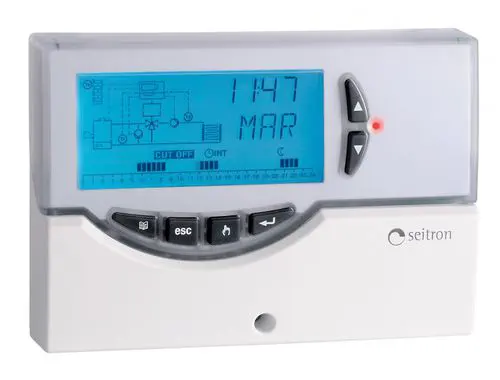
Seitron SpA RKP01M
Freeze & Anti-Condensate, ±5°C
Chromalox 200 Series
SMART Auto‑Tune, NEMA 4X