
Product Specifications
- Manufacturer
- Huber Kältemaschinenbau SE
- Series
- Unistat Hybrid
- Product Type
- Digital Temperature Control Unit (Fluid Circulation)
- Temperature Range
- -90 °C to 400 °C
- Max. Cooling Capacity
- 400 kW @ 0 °C (via plant chiller); 150 kW @ 0 °C (23-stage system); 10 kW @ -80 °C
- Max. Heating Capacity
- 200 kW (electric); 100 kW (standard built-in); steam module up to 180 °C
- Control System
- Pilot ONE 5.7″ touchscreen; Com.G@te DIGITAL interfaces; external Pt100 reactor temperature sensor
- Cooling & Heating Methods
- Steam, electric heater, cooling water, chiller, liquid nitrogen; hydraulically sealed Unistat circulator with external heat exchangers
Product Description
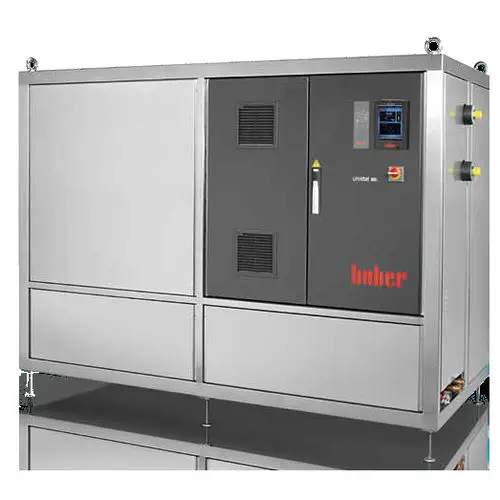
The Huber Unistat Hybrid is a fluid circulation temperature control unit that integrates a hydraulically sealed Unistat system with the existing centralised heating and cooling infrastructure—steam, cooling water, and liquid nitrogen—of large-scale production plants. Instead of replacing a refinery or pharmaceutical complex's existing energy system, it modernises it by placing a Unistat circulation thermostat and external heat exchangers between the plant's energy sources and the reactor jacket. This partial modernisation achieves the same precise, repeatable temperature control of a standalone Unistat while leveraging existing steam boilers and cooling water towers that would otherwise be scrapped. All four cooling methods—water, chiller, liquid nitrogen, and Unistat's own refrigeration—are automatically controlled from a single Pilot ONE 5.7″ touchscreen, which also monitors the reactor temperature directly through an external Pt100 sensor in the reactor.
Four Cooling & Heating Methods
- Method 1 — Steam Heating: Steam from the plant's existing boiler is transferred through an external heat exchanger to the thermal fluid. This provides an economical heating source for temperatures up to approximately 180 °C, with the Unistat further raising the temperature to a maximum of 400 °C when required.
- Method 2 — Electric Heating: Built-in Unistat electric heaters provide up to 200 kW of direct heating power. This is used for applications requiring higher temperatures beyond steam capabilities, or for plants without an operational steam supply. Standard configuration includes 100 kW of electric heating.
- Method 3 — Cooling Water & Chiller: The plant's existing cooling water (down to approximately -20 °C) is run through an external heat exchanger to provide primary cooling. A dedicated chiller provides additional cooling capacity down to lower temperatures. Huber can supply a chiller with up to 400 kW of cooling capacity at 0 °C for demanding applications.
- Method 4 — Liquid Nitrogen (LN2): When temperatures below those achievable with water or mechanical chillers are required, liquid nitrogen is introduced into an external LN2-to-thermal-fluid heat exchanger. The Unistat precisely controls the dosing of LN2 to maintain stable low temperatures down to -120 °C without overcooling the reactor.
Automatic Control and Process Monitoring
- Pilot ONE Multi-Touch Controller: All energy sources—steam, electricity, cooling water, chiller, and LN2—are automatically controlled from the 5.7″ Pilot ONE touchscreen. The controller's adaptive, self-optimising algorithm continuously adjusts heating and cooling output to maintain the reactor temperature at the setpoint. Important operating parameters and temperature values are clearly displayed, and a favourites menu allows operators to save frequently used settings for rapid recall.
- Com.G@te DIGITAL Interface: Standard digital interfaces enable integration with plant-wide SCADA, DCS, and industrial monitoring systems. The connections can be expanded at any time via additional modules and gateways. An optional Com.G@te PLUS module adds analogue interfaces for legacy plant controllers.
- Reactor Temperature Monitoring: The Unistat monitors the actual reactor temperature directly through an external Pt100 sensor mounted in the reactor vessel. This closed-loop monitoring eliminates the delay and offset inherent in jacket-temperature control algorithms, ensuring that the reaction temperature—not the heat transfer fluid temperature—remains at the setpoint. All control loops are hydraulically sealed, preventing fluid oxidisation and extending the life of the heat transfer fluid.
Applications
- Large-scale reactor temperature control in pharmaceutical and chemical manufacturing (≥ 10 m³ reactors)
- Partial modernisation of existing centralised heating/cooling plants without complete system replacement
- Process engineering and thermal process development in production-scale environments
- Industrial applications utilising steam, cooling water, or liquid nitrogen as primary energy sources
Resources & Documentation
Huber Unistat Hybrid Fluid Circulation Temperature Control Unit, 400kW Cool, -90~400°C
Product Specifications
- Manufacturer
- Huber Kältemaschinenbau SE
- Series
- Unistat Hybrid
- Product Type
- Digital Temperature Control Unit (Fluid Circulation)
- Temperature Range
- -90 °C to 400 °C
- Max. Cooling Capacity
- 400 kW @ 0 °C (via plant chiller); 150 kW @ 0 °C (23-stage system); 10 kW @ -80 °C
- Max. Heating Capacity
- 200 kW (electric); 100 kW (standard built-in); steam module up to 180 °C
- Control System
- Pilot ONE 5.7″ touchscreen; Com.G@te DIGITAL interfaces; external Pt100 reactor temperature sensor
- Cooling & Heating Methods
- Steam, electric heater, cooling water, chiller, liquid nitrogen; hydraulically sealed Unistat circulator with external heat exchangers
Resources & Documentation
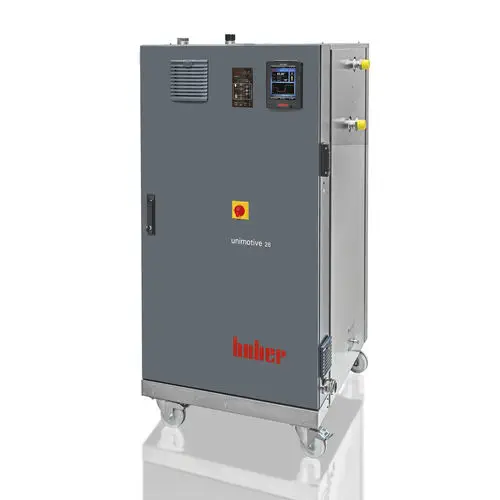
Huber Kältemaschinenbau SE Unimotive 08w
±0.01°C Stability, Water-Glycol
Vulcanic 10811 Series
10-90°C, Autofill, 400V 3P

Vimosa d.o.o. custom-built digital temp
Custom Panel, PnP

Maplan GmbH MAP.dci Series
Precision dci Interface, Water/Oil Ready
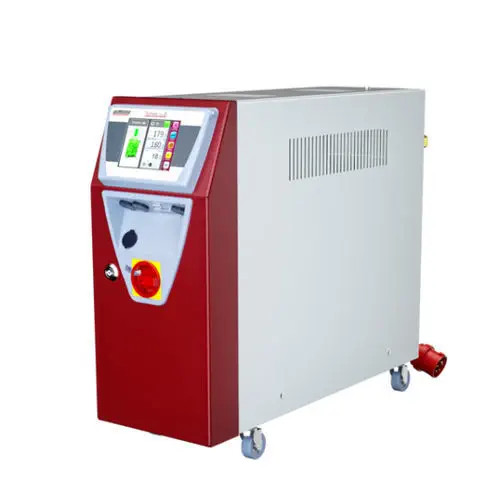
WITTMANN TEMPRO plus D90
90°C Water, Maintenance-free Pump
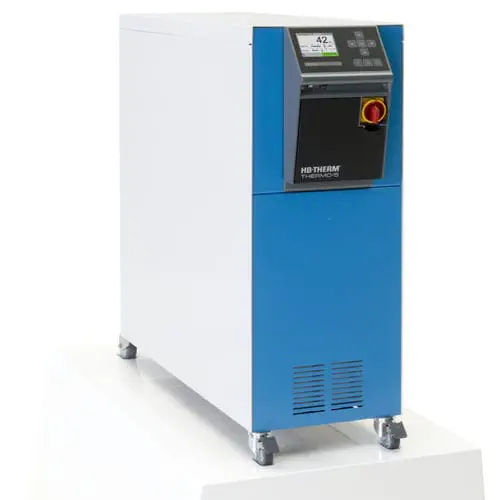
HB-THERM Thermo-5 Series
Lifetime Warranty, Cleanroom
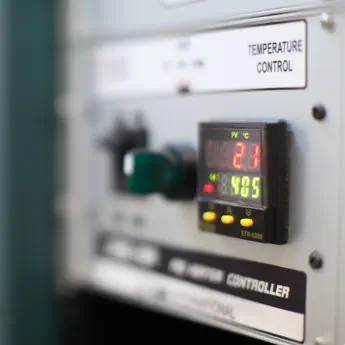
Fujifilm NDT Systems TC2000™
High-Precision NDT Control, LCD Interface

Musashi Engineering Europe GmbH MASTER TCU Series
±0.1 °C Fluid TCU, Peltier
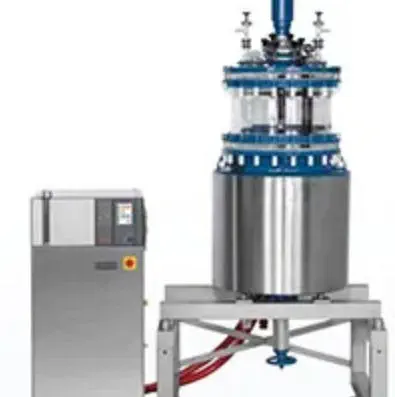
Büchi AG Jacketed Reactors
Oil circulation, pressure control