This guide compares five KROHNE electromagnetic flow meters that cover the 1-to-24-inch line size range — the bracket that spans everything from a chemical dosing line to a water trunk main. All five measure flow by Faraday's Law: a conductive fluid passing through a magnetic field generates a voltage proportional to its velocity, picked up by two electrodes flush with the pipe wall. But the liner material, electrode alloy, transmitter diagnostics, and whether the meter body is full-bore or reduced-cross-section determine which one fits which job — and the wrong choice shows up as a drifting zero, a corroded electrode, or a meter that will not survive the next flooded vault.
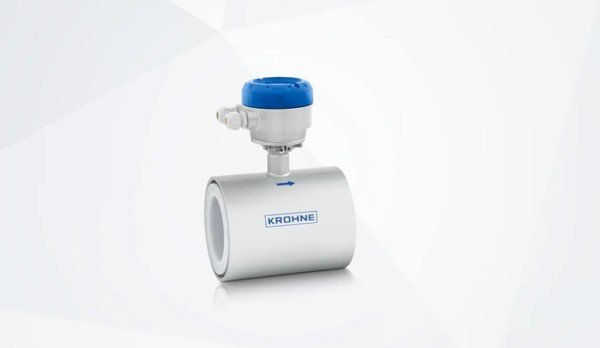
This guide focuses on the KROHNE electromagnetic portfolio for clean water, raw water, and treated wastewater — the fluids that dominate municipal and industrial water infrastructure. For chemical injection, custody transfer, or sanitary process lines, the selection criteria shift, and the recommendations change accordingly.
What Separates One Magmeter from Another
Before comparing specific models, four design decisions determine whether a magmeter works in your line or fails within the first year:
- Liner material
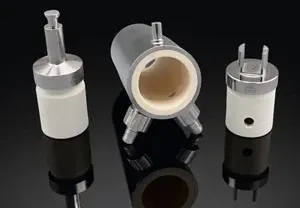
- The insulating liner between the fluid and the steel meter body. Hard rubber (NR) is the water/wastewater standard — handles 0–80°C continuous, resists abrasion from suspended solids, and costs the least. Polyurethane (PUR) extends wear life in sludge and raw sewage where grit scours the liner. PTFE/PFA liners handle aggressive chemicals and temperatures to 150°C but cost more and are mechanically softer — a chunk of gravel in a PTFE-lined meter body leaves a permanent gouge. Ceramic (Al₂O₃) in the OPTIFLUX 5000 series handles abrasive slurries, high temperature, and vacuum conditions simultaneously but is outside the scope of the 1–24 inch water/wastewater focus of this guide.
- Electrode material
- Hastelloy C-276 is the default for water and municipal wastewater — it resists the weak galvanic corrosion from the electrode-to-fluid potential difference. Platinum and tantalum electrodes step up for acids, caustics, and seawater. The electrode material matters less in clean drinking water than in raw wastewater, where hydrogen sulfide and low pH can pit a standard Hastelloy electrode within five years.
- Full-bore vs. reduced cross-section
- A full-bore magmeter matches the pipe diameter and maintains the same flow area through the meter body. A reduced-cross-section (RCS) meter necks the flow through a smaller measuring section — the fluid accelerates, the flow signal strengthens, and the meter body becomes shorter and lighter than a full-bore equivalent. The trade-off is a permanent pressure drop of 50–150 mbar across the RCS section. For gravity-fed lines with limited head, verify this pressure drop against your available hydraulic gradient before choosing RCS.
- Diagnostic coverage
- KROHNE's 3x100% diagnostic suite continuously verifies the magnetic field circuit, the electrode signal circuit, and the reference ground — without removing the meter from the line or stopping flow. Entry-level models may run only basic coil-current checks; a full 3x100% implementation detects electrode coating, liner deterioration, and ground faults while the meter is live. For a billing meter or a regulatory discharge point, the diagnostic trail proves the measurement was valid at the time of recording.
OPTIFLUX 1000 — The Economical Entry Point
The KROHNE OPTIFLUX 1000 is the budget electromagnetic option for straightforward water and wastewater applications where advanced diagnostics are not mandatory. It uses a compact transmitter with a two-line LCD, hard rubber or PTFE liner, and Hastelloy C electrodes. The signal converter runs basic self-checks but does not include the full 3x100% diagnostic suite of the higher-tier OPTIFLUX models.
- Sizes
- DN25 to DN600 (1 to 24 inches)
- Liner
- Hard rubber (standard) or PTFE
- Accuracy
- ±0.5% of reading above 0.5 m/s
- Outputs
- 4–20 mA, pulse, status; optional HART or Modbus
- Best fit
- Budget-sensitive water distribution, simple batching, non-custody flow totals
- Skip when
- You need IP68 submersion, onboard verification without process shutdown, or accuracy below ±0.3%
ENVIROMAG 2000 — The Water/Wastewater Specialist
The KROHNE ENVIROMAG 2000 was designed for the realities of buried vaults and flooded chambers. The sensor is IP68-submersible — a flooded pit does not kill the measurement. It is a reduced-cross-section design: the flow necks down inside the meter body, increasing velocity through the measuring section and boosting the signal-to-noise ratio at low flow. The shorter lay length and lower weight compared to a full-bore DN500 make it the practical choice when you are placing a meter into a concrete vault with limited overhead clearance.
- Sizes
- DN25 to DN600 (1 to 24 inches)
- Liner
- Hard rubber (standard) or polyurethane for abrasive sludge
- Electrodes
- Hastelloy C-276
- Accuracy
- ±0.4% of reading; ±0.2% with on-site flow calibration
- Protection
- Sensor IP68, converter IP67
- Outputs
- 4–20 mA, pulse, status; optional Modbus RTU or HART
- Best fit
- Water distribution vaults, wastewater effluent lines, any below-grade installation where flooding is possible
- Skip when
- The available head cannot tolerate the RCS pressure drop, or the line size exceeds 24 inches (step up to OPTIFLUX 4000)
WATERFLUX 3070 — The Compact Water Meter for Tight Spaces
The KROHNE WATERFLUX 3070 reduces the magmeter to its essentials — a reduced-cross-section sensor body, hard rubber liner, Hastelloy electrodes, and a choice of compact or remote-mounted converter. What sets it apart is the battery-powered option: the WATERFLUX 3070 can run for up to 15 years on an internal battery pack, making it the go-to solution for district metered areas (DMA) where there is no mains power at the measurement kiosk. The integrated pressure sensor option adds a second measurement — flow plus line pressure — from a single process penetration.
- Sizes
- DN25 to DN600 (1 to 24 inches)
- Liner
- Hard rubber
- Power
- Mains (85–250 VAC / 24 VDC) or internal battery (up to 15 years)
- Special
- Optional integrated pressure sensor for flow + pressure from one tap point
- Best fit
- Remote distribution points without power, DMA inflow/outflow metering, leak detection zones
- Skip when
- You need advanced diagnostics (the battery-powered version minimizes power draw by limiting diagnostic routines), or the fluid carries heavy grit (step up to ENVIROMAG 2000 with polyurethane liner)
WATERFLUX 3000 — The High-Capacity Water Trunk Meter
The KROHNE WATERFLUX 3000 shares the WATERFLUX lineage — reduced cross-section, hard rubber liner, water-optimized signal processing — but targets larger sizes and higher flows. Its converter supports multiple I/O expansions and digital communication protocols suited for integration with SCADA and telemetry systems. Like the WATERFLUX 3070, it offers a battery-powered configuration, but the 3000 prioritizes measurement performance over power conservation: the sampling rate is higher, diagnostic coverage is broader, and the accuracy specification tightens at the bottom of the flow range.
- Sizes
- DN50 to DN600 (2 to 24 inches)
- Liner
- Hard rubber
- Accuracy
- ±0.3% of reading above 0.3 m/s
- Outputs
- 4–20 mA, pulse, status; optional HART, Modbus, or PROFIBUS
- Best fit
- Large-diameter water transmission mains, pump station discharge monitoring, water balance compliance metering
- Skip when
- The line size is below 2 inches (the WATERFLUX 3070 covers the smaller diameters)
OPTIFLUX 4000 — The Full-Featured Workhorse for Any Fluid
The KROHNE OPTIFLUX 4000 spans 1/10 inch to 120 inches — from a laboratory dosing line to a hydroelectric penstock. It is the only meter in this comparison with the full 3x100% diagnostic suite as standard: continuous verification of the magnetic field circuit, the electrode signal path, and the reference ground — all without removing the sensor from the line or interrupting flow. If your application demands documented verification for a regulatory permit or a custody-transfer audit trail, the OPTIFLUX 4000 is the default choice.
- Sizes
- DN2.5 to DN3000 (1/10 to 120 inches)
- Liner options
- Hard rubber, PTFE, PFA, polyurethane, or Ebonite — the widest selection in the KROHNE electromagnetic portfolio
- Electrodes
- Hastelloy C-276 (standard), platinum, tantalum, or Monel
- Accuracy
- ±0.2% of reading standard; ±0.15% with matched-pair calibration
- Diagnostics
- 3x100% onboard verification as standard — coil, electrode, and ground circuits verified continuously
- Best fit
- Custody transfer, regulatory discharge monitoring, any line where the meter must self-diagnose without a process shutdown
- Skip when
- Budget is the primary constraint and the application does not require ±0.2% accuracy or full diagnostics (the OPTIFLUX 1000 saves cost)
Matching the Model to Your Application
If you are replacing a failing mechanical meter in a municipal distribution vault that floods every wet season, the ENVIROMAG 2000 is the straightforward answer — its IP68 sensor body is designed for that exact scenario, and the reduced-cross-section body likely fits the existing spool length without pipe modifications. For a district metering project with no available power at the measurement kiosk, the WATERFLUX 3070 battery-powered configuration eliminates the need for a power drop entirely. If the meter reading feeds a billing system or a regulatory discharge report, the OPTIFLUX 4000 earns its additional cost through the 3x100% diagnostic trail that proves the measurement was valid at the time of recording.
A common pitfall: selecting a meter by price and ignoring the liner. Raw wastewater with occasional grit and a pH that dips to 5 during industrial discharge events will delaminate a standard hard rubber liner within 3–5 years. The polyurethane liner option on the ENVIROMAG 2000 or the multi-liner platform on the OPTIFLUX 4000 is the difference between a 10-year service life and a mid-cycle replacement. If the fluid chemistry is uncertain, the OPTIFLUX 4000's liner selection gives you room to change your mind without changing the meter architecture.
Browse the full electromagnetic flow meter category for all KROHNE magmeters alongside comparable models from Rosemount, Endress+Hauser, and Siemens. For clean-water applications — drinking water distribution, pump station discharge, raw water transfer — the water flow meter category narrows the selection to meters optimized for potable and raw water service. When the fluid is post-treatment effluent, sludge, or mixed liquor, shift your focus to the wastewater flow meter range — liner durability and electrode fouling resistance overtake accuracy as the deciding specifications. And if none of the five models above fits your specific constraint — line size above 24 inches, a chemical that attacks standard liner materials, or an installation that demands a technology other than electromagnetic — the broader flow meter catalog includes ultrasonic, Coriolis, vortex, and turbine alternatives to compare side by side.
Can the ENVIROMAG 2000 handle potable water, or is it only for wastewater?
It handles both. The hard rubber liner and Hastelloy electrodes are compatible with drinking water and meet NSF/ANSI 61 requirements for contact with potable water. The ENVIROMAG 2000 is installed in drinking water distribution networks and finished-water pump stations as often as in wastewater effluent lines. The IP68 sensor is equally useful in a treated-water vault as in a sewage lift station — a flooded vault is a flooded vault, regardless of what is in the pipe.
What separates the WATERFLUX 3070 from the WATERFLUX 3000 in practice?
The WATERFLUX 3000 tightens the accuracy to ±0.3% (vs. ±0.5% typical on the 3070) and covers only larger diameters — the 3070 starts at DN25 while the 3000 starts at DN50. More importantly, the 3000 converter runs a higher sampling rate and broader diagnostic coverage. If you are metering a 16-inch water trunk main for a water-balance compliance program, the 3000 is the correct pick. For a 3-inch DMA inflow point in a residential neighborhood, the 3070 does everything needed for less cost.
Do I need a full-bore or a reduced-cross-section magmeter?
Reduced-cross-section meters are lighter, shorter, and cost less than their full-bore equivalents — and they improve low-flow signal quality by increasing fluid velocity through the measuring section. The trade-off is a permanent pressure drop of 50–150 mbar. In pumped systems, this pressure drop is negligible against the pump discharge head. In gravity systems with limited available head — a treatment plant effluent channel with 300 mm of freeboard — the RCS pressure drop may push the upstream water level above the channel rim. If your hydraulic analysis shows less than 300 mm of available head above the meter's rated pressure drop at peak flow, switch to a full-bore model.
Can the OPTIFLUX 4000 diagnostics detect electrode coating before the reading drifts?
Yes. The electrode circuit diagnostic measures the electrode-to-fluid impedance continuously. As a conductive or insulating coating builds on the electrode surface, the impedance shifts. The transmitter tracks this drift and triggers a warning before the coating resistance is high enough to introduce a measurement error. This is the key advantage over a basic coil-current check — you get a pre-failure warning, not a post-failure alarm. For lines where the meter runs unattended between quarterly maintenance visits, this early warning is the difference between a scheduled electrode cleaning and an unscheduled process shutdown.