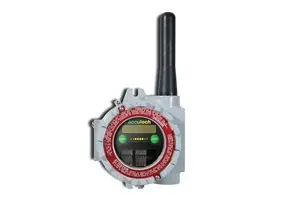
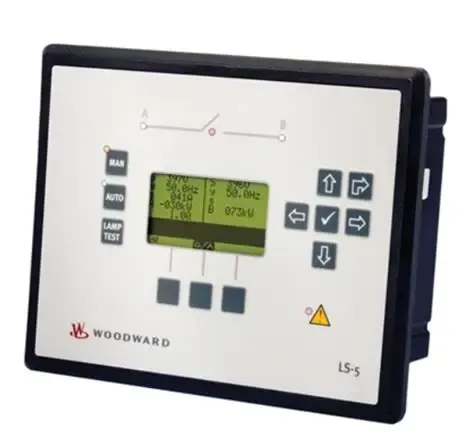
Field terminal modules (FTMs) rarely make spec sheets sing, but they define how a control system touches the world: where the field wires land, what the local operator sees, and how the emergency stop enters the architecture. Woodward's two FTM philosophies — the 5437-523 analog terminal module and the 5437-672 NetCon terminal with its 24-character LED and local E-stop — are the two ends of that contract.
The analog FTM: pure signal plumbing
The 5437-523 carries field signals to the control chassis with no local intelligence — a clean, dense termination field for analog and discrete I/O. Its philosophy is centralization: all logic, all indication, all decisions live in the control room, and the field module is honest copper. Panels built on that philosophy commission fast and troubleshoot from one place — until the operator needs something at the machine.
The NetCon terminal: local eyes and the red button
The 5437-672 adds the local layer: a 24-character LED that reports status where the technician stands, and a local emergency stop wired into the safety path. Its philosophy is distribution — the machine-side operator gets the minimum viable interface, and the safety chain gains a local actuation point that does not depend on walking to the control room. On long machine trains and remote skids, that local layer is not a luxury; it is the difference between a five-minute stop and a five-minute run.
The decision rule
Centralized philosophy with trusted communications and local nobody: analog FTM. Distributed machines, remote skids, or a safety study that wants a local stop: the NetCon terminal. Both land in the plant's control architecture as wiring layers — the choice is about who acts where, not about signal quality.
The 5437-523 is discontinued — what now?
It is a legacy part in an installed fleet, and replacement planning follows the platform path: current-generation terminal modules carry the same field-wiring philosophy forward, and the migration is a chassis conversation, not a rewiring one. Budget the migration as panel work, not as field work.
Does a local E-stop complicate the safety loop?
It extends it — properly wired, a local E-stop is one more input to the same safety logic, with the same performance level. The complication is administrative (documenting the device), not architectural.