
Product Specifications
- Brand
- PBP Optel
- Part Number
- opScanner
- Product Type
- Ultrasonic Scanner
- Axes Range
- 210 mm × 210 mm (standard, customizable)
- Maximum Hardware Resolution
- 0.00339 mm
- Scan Modes
- A-scan, B-scan, C-scan (2D and 3D)
- Data Acquisition
- Up to 100 MHz sampling
- Included Probes
- 10 MHz focused, 5 MHz focused, 10 MHz flat (2 each)
- Interface
- RS-232
Product Description
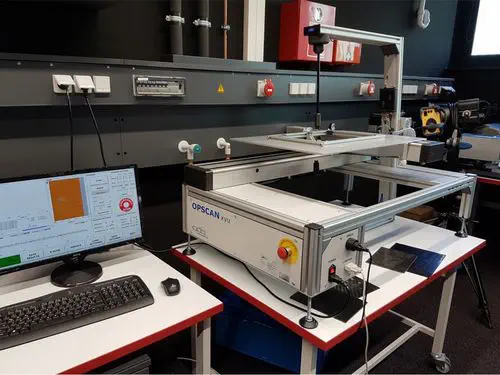
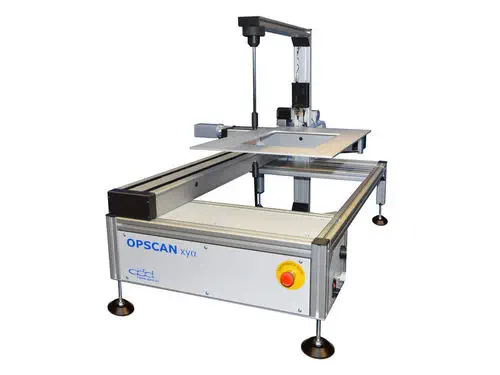
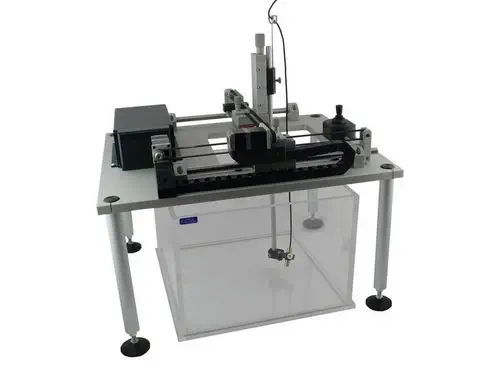
The opScanner is an XYZ ultrasonic scanning system from PBP Optel designed for high-resolution non-destructive testing in industrial and laboratory environments. It combines precision-ground mechanical axes with belt-driven stepper motor actuation and the OPCARD 2.0 or OPBOX data acquisition platform to capture ultrasonic field distributions at hardware resolutions down to 0.00339 mm. The system supports pulse-echo, through-transmission, and TOFD techniques, making it suitable for inspecting welds, composites, bonded joints, and material homogeneity.
What makes the mechanical design suitable for high-frequency ultrasonics?
Ultrasonic measurements at 10 MHz and above are sensitive to mechanical vibration — even sub-micrometre oscillations in the scanning mechanism introduce noise that obscures defect signals. The opScanner addresses this through elastic belt drives that decouple motor vibration from the probe carriage, precision-ground linear rails, and stepper motors with high gear ratios driven in microstepping mode. The body and drive train are designed as a unified vibration-damping structure, enabling clean A-scan acquisition across the full 210 × 210 mm scanning envelope.
Which scan modes and visualizations are available?
The system supports three fundamental ultrasonic imaging modes. A-scan displays the raw amplitude-versus-time waveform at each probe position — the primary defect detection view used to identify echoes from material interfaces. B-scan generates a cross-sectional slice by stacking A-scans along one linear axis, revealing the depth profile of internal features. C-scan produces a top-down plan-view map of amplitude or time-of-flight at a defined gate depth, widely used for corrosion mapping and delamination detection. All three modes are available in 2D and 3D renderings, with optional SAFT (Synthetic Aperture Focusing Technique) reconstruction for enhanced lateral resolution.
How configurable is the system?
The opScanner is modular at three levels. Axes: the standard 210 × 210 mm XY stage can be scaled to customer dimensions, and a third vertical axis is available in manual or motorized configurations for height adjustment and focus control. Probes: the system ships with six transducers — two each of 10 MHz focused (28 mm focal length), 5 MHz focused (28 mm), and 10 MHz flat — covering common NDT frequencies, and accepts third-party probes via the included adjustable-angle holders. Electronics: users can pair the scanner with either the benchtop OPCARD 2.0 PCI card (100 MHz, 132 MB/s transfer) or the portable OPBOX 2.1 USB unit (100 MHz, 310 g) depending on whether the application demands stationary lab throughput or field portability. An optional external multiplexer extends channel count for multi-probe array configurations.
Resources & Documentation
PBP Optel opScanner XYZ Ultrasonic Scanning System for Non-Destructive Testing
Product Specifications
- Brand
- PBP Optel
- Part Number
- opScanner
- Product Type
- Ultrasonic Scanner
- Axes Range
- 210 mm × 210 mm (standard, customizable)
- Maximum Hardware Resolution
- 0.00339 mm
- Scan Modes
- A-scan, B-scan, C-scan (2D and 3D)
- Data Acquisition
- Up to 100 MHz sampling
- Included Probes
- 10 MHz focused, 5 MHz focused, 10 MHz flat (2 each)
- Interface
- RS-232
Resources & Documentation
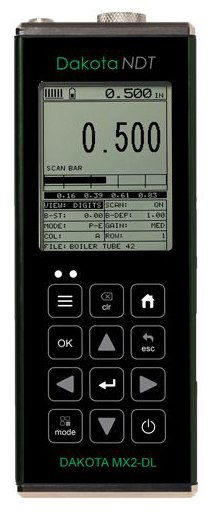
Dakota NDT MX2-DL
A-Scan, B-Scan, 250 readings/sec, 4GB memory
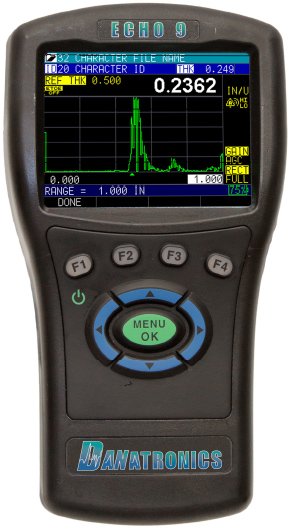
Danatronics ECHO Series
4 models: ECHO 7/8/9 and FD flaw detector
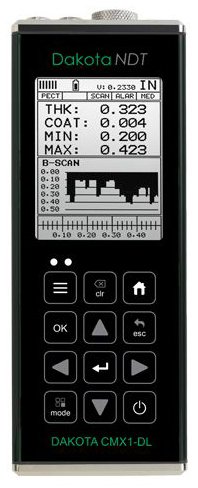
Dakota NDT CMX Series
PECT, PETP, Echo-Echo modes, 4GB memory
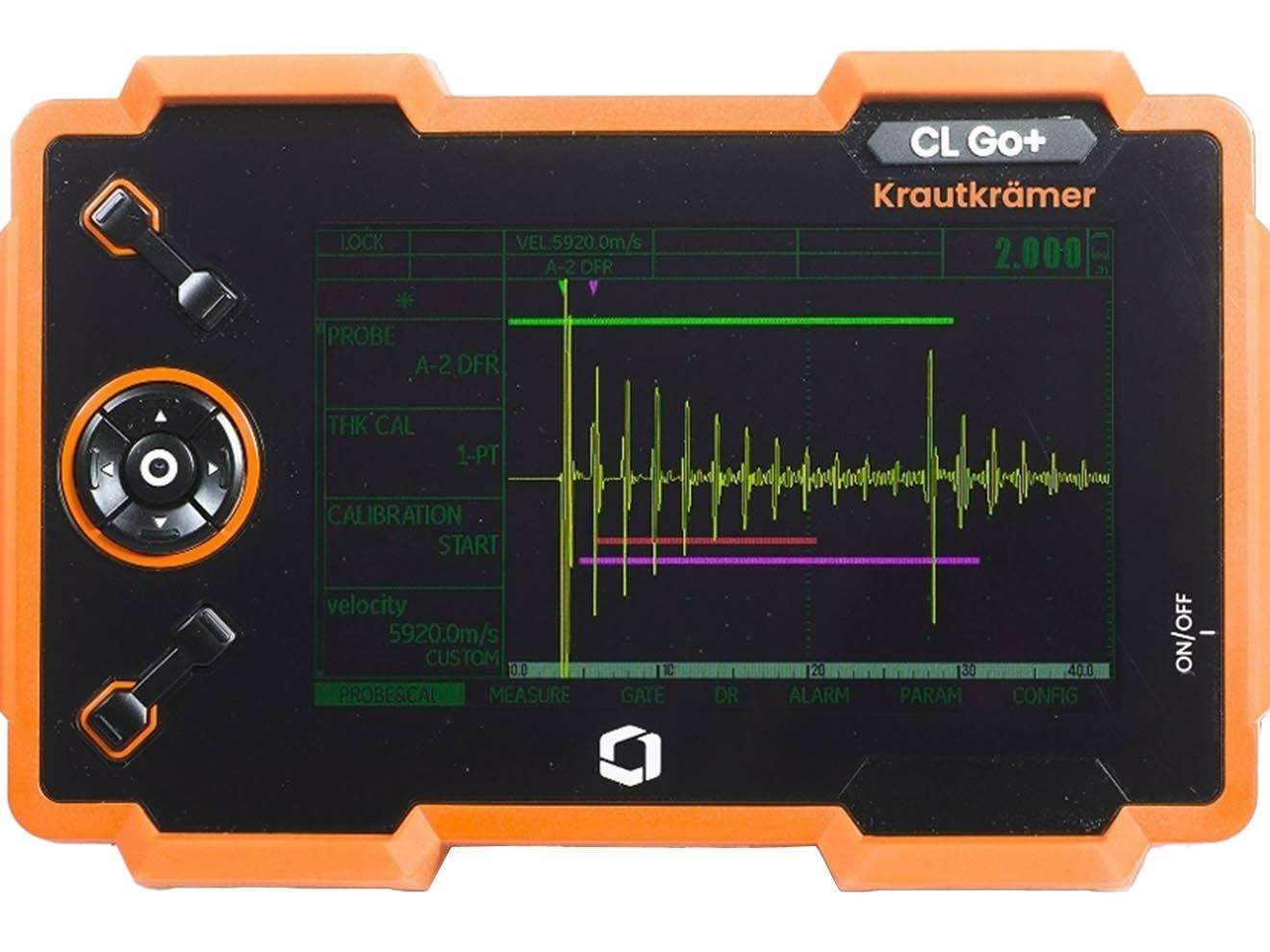
Waygate Technologies CL Go+
0.005-20in range, IP67, SD card data storage
Waygate Technologies USM 36
Workhorse Flaw Detector, 7in LCD, IP66
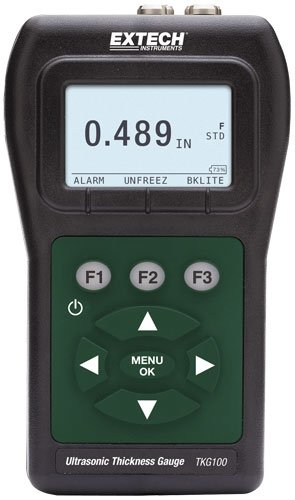
Extech TKG100
Hold/Freeze modes, 0.040-20in range, IP54
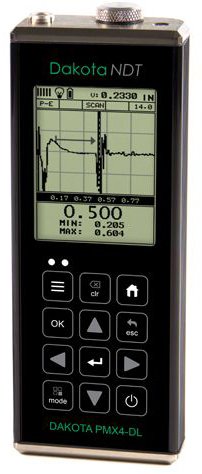
Dakota NDT PMX4-DL
500kHz-10MHz, multiple pulser types, 4GB memory
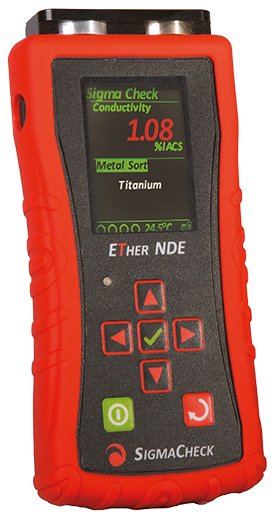
ETher NDE KISIG001B
High-precision conductivity meter