
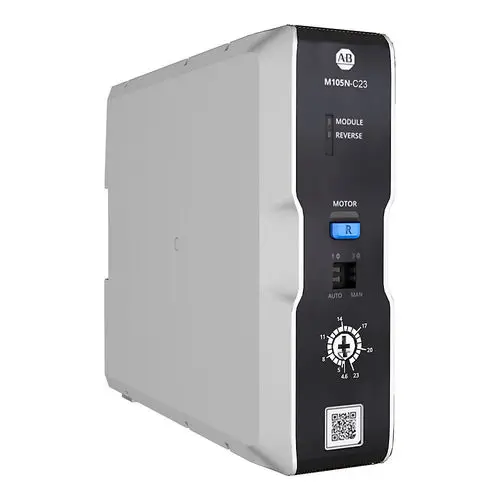
Product Specifications
- Brand
- Rockwell Automation, Inc.
- Part Number
- M100
- Type
- Electronic Motor Starter
- Series
- Bulletin M100
- Current Range
- 0.75–9 A and 4.6–23 A (Two Frames)
- Motor Voltage
- Up to 480V AC, 3-Pole
- Control Voltage
- 24V DC (SELV/PELV)
- Overload Protection
- Electronic Class 10, Phase Loss, Phase Imbalance, Contact Weld
- Functional Safety (STO Models)
- SIL 3, PLe, Category 3 per TÜV
- Operating Temperature
- −20 °C to +55 °C (Zero Stacking)
- Certifications
- TÜV Rheinland, CE, cULus, IEC 61508, EN ISO 13849-1
Product Description
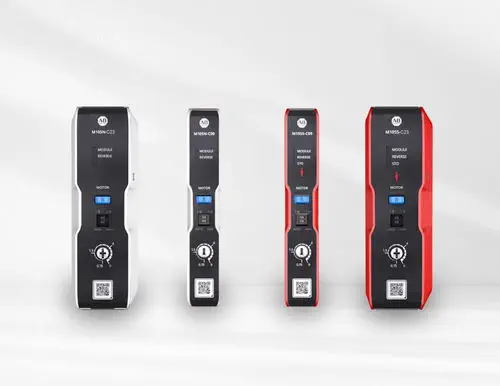
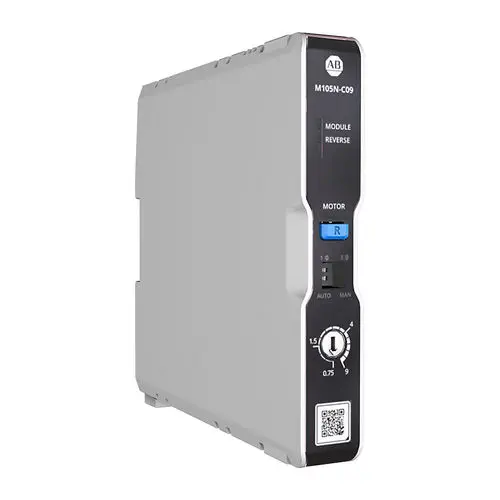
The Allen-Bradley Bulletin M100 rethinks the motor starter from the ground up. For decades, a motor starter meant a contactor plus a separate thermal overload relay plus interlocking hardware for reversing plus an external safety contactor for STO — three to five discrete components, consuming 90 mm or more of DIN rail width. The M100 consolidates all of these functions into a single device occupying 22.5 mm (up to 9 A) or 45 mm (up to 23 A) — a 50% or greater panel width reduction. The components it eliminates are not just space-consuming; they are the primary sources of wiring errors, thermal load on the enclosure, and contact wear in conventional designs.
How does Point-on-Wave switching improve starter life?
Traditional electromechanical contactors close their contacts at an arbitrary point on the AC sine wave. If closure happens near the voltage peak, inrush current can reach several times the steady-state value, creating a brief arc that erodes the contact surface. The M100 uses electronic control to sense the AC waveform and close the contacts precisely at the voltage zero-crossing — the moment of minimum available energy. Similarly, it opens the contacts near current zero, when the arc extinguishes naturally. The result is reduced contact wear, lower inrush stress on upstream breakers and cables, less radiated EMI, and extended service intervals. The integrated electronic overload — based on the same technology as the Allen-Bradley E100 relay — provides a Class 10 trip curve with phase loss detection (0.1 s warning, 3 s trip), phase imbalance monitoring (50% threshold, 10 s delay), and contact weld detection that trips instantly.
How does the STO option simplify safety design?
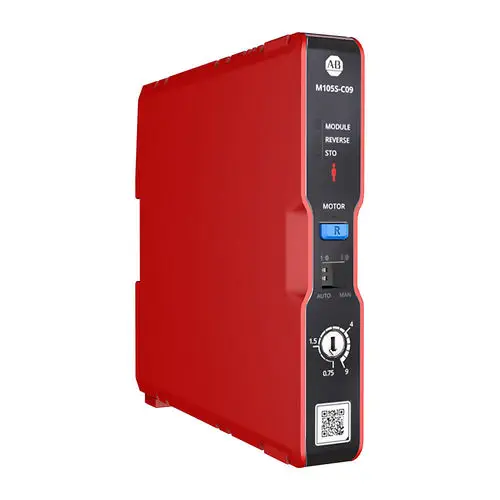
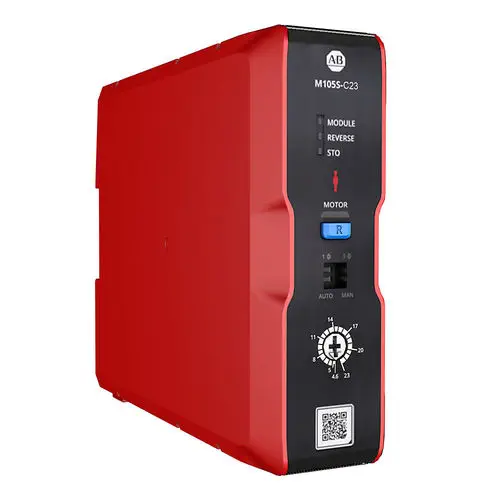
On STO-equipped M100 models, two 24V DC safety inputs (S12 and S22) accept dry-contact or OSSD pulse-tested signals from a safety relay or safety PLC output. Removing the safety input signal disables the motor torque within 100 milliseconds without removing mains power from the starter. This eliminates the external safety contactor pair traditionally wired in series with the motor leads — components that accounted for significant panel width, additional I/O points, and a separate failure rate contribution in the safety calculation. TÜV Rheinland has certified the M100 STO function to SIL 3 per IEC 61508 and PLe/Category 3 per ISO 13849-1, with a PFH of 5.31 × 10⁻⁹ (9 A models) and a 20-year proof test interval — meaning the STO function does not require periodic manual testing over the expected life of the machine.
Resources & Documentation
Allen-Bradley M100 | 22.5 mm Electronic Motor Starter, Point-on-Wave, SIL 3 STO
Product Specifications
- Brand
- Rockwell Automation, Inc.
- Part Number
- M100
- Type
- Electronic Motor Starter
- Series
- Bulletin M100
- Current Range
- 0.75–9 A and 4.6–23 A (Two Frames)
- Motor Voltage
- Up to 480V AC, 3-Pole
- Control Voltage
- 24V DC (SELV/PELV)
- Overload Protection
- Electronic Class 10, Phase Loss, Phase Imbalance, Contact Weld
- Functional Safety (STO Models)
- SIL 3, PLe, Category 3 per TÜV
- Operating Temperature
- −20 °C to +55 °C (Zero Stacking)
- Certifications
- TÜV Rheinland, CE, cULus, IEC 61508, EN ISO 13849-1
Resources & Documentation
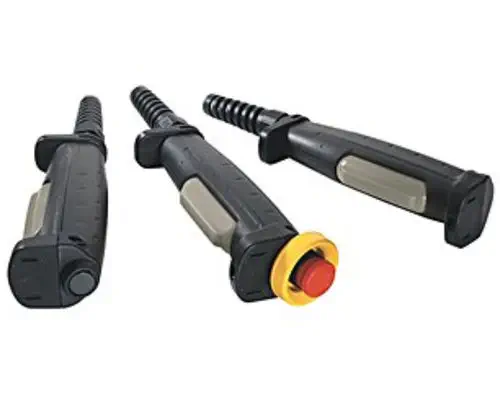
Allen-Bradley 440J series
3-position: mid=run, release and squeeze=stop
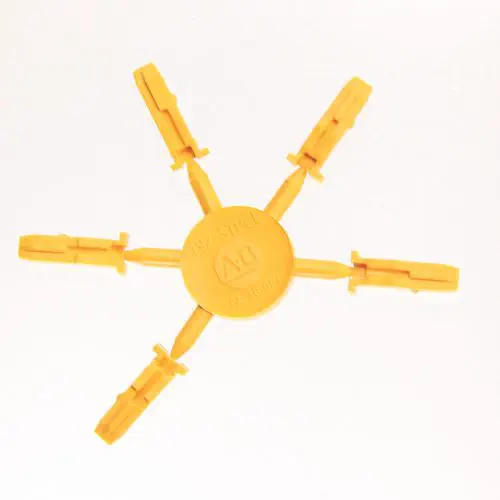
Allen-Bradley 1492-G
High-density narrow IEC breaker
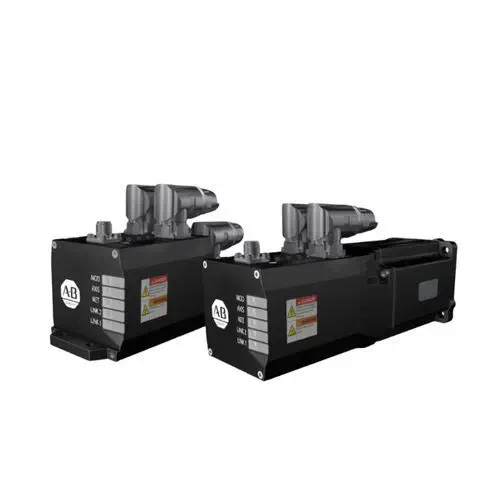
Allen-Bradley ArmorKinetix
On-machine servo, one hybrid cable, 24 axes
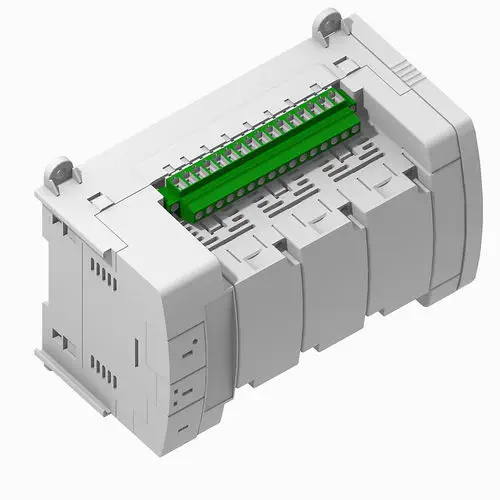
Allen-Bradley Micro850 series
OEM focused, CCW, 6ch HSC
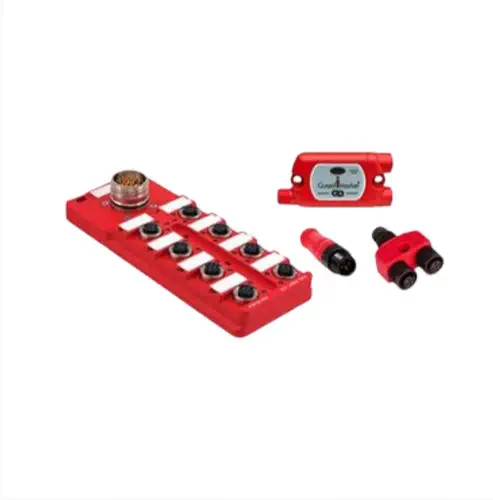
Allen-Bradley Guardmaster®
GuardLink: 32 devices, one cable
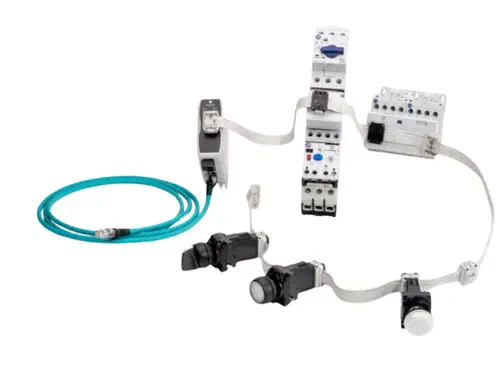
Allen-Bradley Allen-Bradley
One cabinet for the cell's network gear
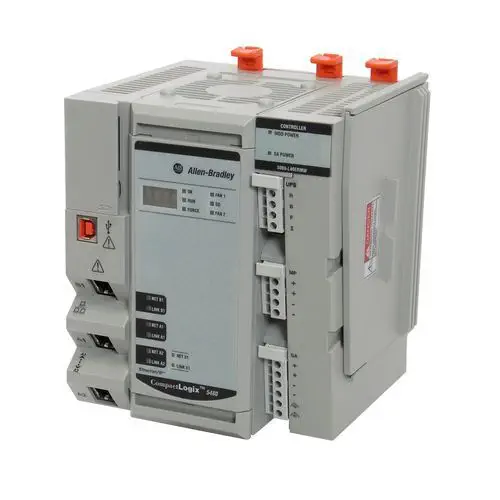
Allen-Bradley CompactLogix™ 5480
i7 quad-core, 64 GB SSD, Logix + Windows 10 IoT
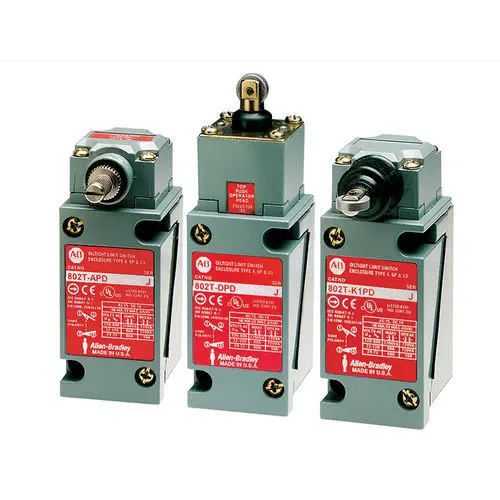
Allen-Bradley 802T Series
NEMA 6P metal body — lever, roller, wobble, push
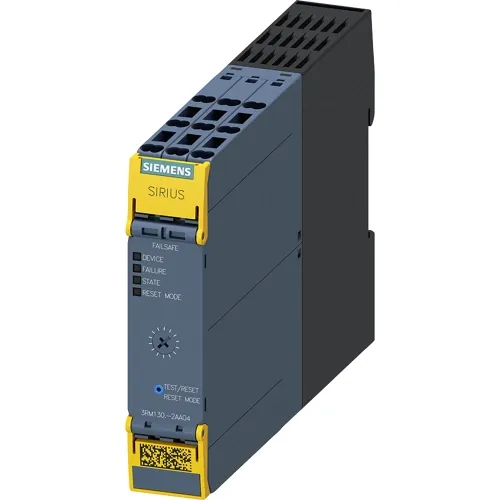
Siemens 3RM1302-2AA04
0.75kW, 2A, 24V DC

Getriebebau NORD GmbH SK 155E
NORDAC LINK SK 155E Soft Starter
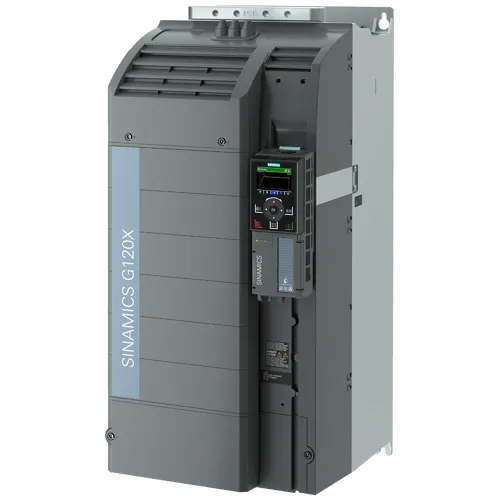
Siemens 6SL3230-3YE46-1AP0
110 kW FSF, C2 + 3C3, P Variant
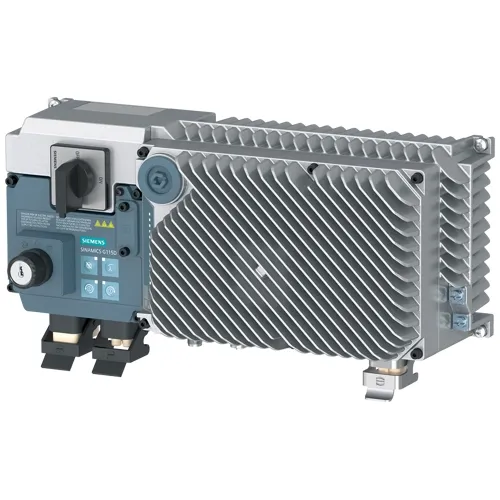
Siemens 6SL3520-0XB40-5AB0
B-connector 0.55kW FSA, standard terminal
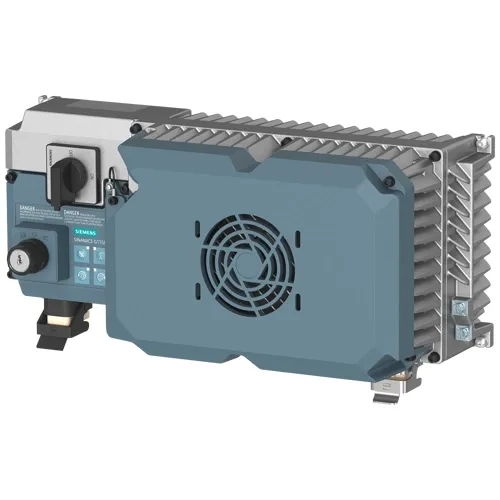
Siemens 6SL3520-1XH67-5AF0
FSC 7.5 kW with PROFINET
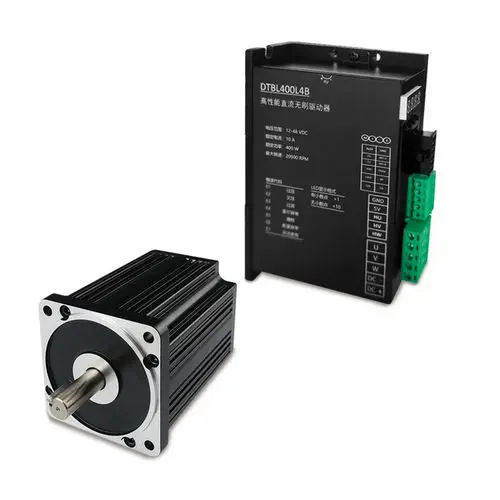
Tecoo Electronics EMS103
Compact BLDC motor driver for industrial speed control
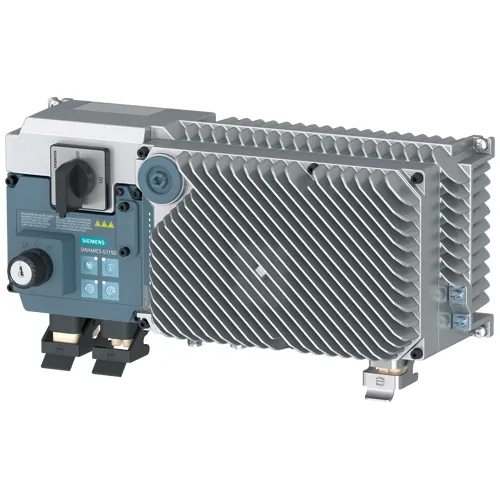
Siemens 6SL3520-0XM01-1AF0
1.1 kW FSA Drive for TIA Portal Commissioning and Motor Pairing
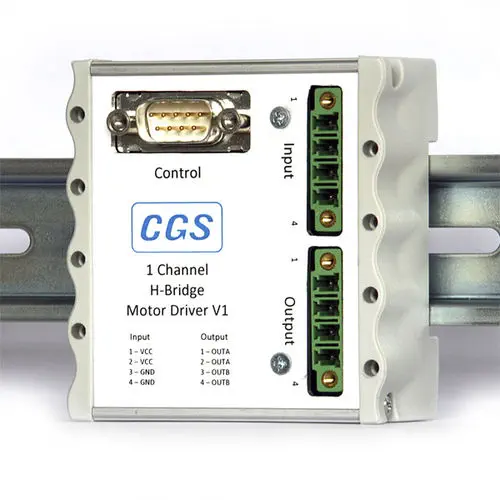
CGS MCM
Brush DC motor controller with 16 A continuous output at 5.5–16 V